By Nomathemba Pearl Dzinotyiwei

As a Christian who practices both indigenous customs and spiritual healing, I encounter debates about the Old Testament laws, particularly those in Deuteronomy, and how they apply to us today. Fundamentalist Christians frequently quote these laws from the Bible to condemn practices like divination and witchcraft. But is this interpretation accurate?
Let’s take a deeper look at the origins of Deuteronomy and its relevance to modern believers.
The Historical Context of Deuteronomy
The Book of Deuteronomy was written during a critical period in Jewish history: the Babylonian exile. After Jerusalem fell to Nebuchadnezzar’s forces, many were taken into captivity, including the royal family and men of rank. The remaining Jewish leaders, particularly the priests, rewrote the Mosaic law during this time.
Why did they do this? They hoped that stricter adherence to God’s laws would prevent future disasters. The Jewish people had strayed from God, embracing idolatry and the practices of surrounding nations. The priests sought to realign the people with God’s covenant.
The laws in Deuteronomy addressed a variety of issues, including witchcraft, unclean food, idolatry, sexual immorality, and social justice. These commandments were tailored for the Jewish nation, particularly the tribes of Judah and Benjamin, who remained after the northern kingdom was scattered.
Occult Practices Outlawed

Commonly quoted scriptures include Deuteronomy 18:9-13 regarding occult practices
9 When you enter the land the Lord your God is giving you, do not learn to imitate the detestable ways of the nations there. 10 Let no one be found among you who sacrifices their son or daughter in the fire, who practices divination or sorcery, interprets omens, engages in witchcraft, 11 or casts spells, or who is a medium or spiritist or who consults the dead. 12 Anyone who does these things is detestable to the Lord; because of these same detestable practices the Lord your God will drive out those nations before you. 13 You must be blameless before the Lord your God.
I am particularly interested in the concepts of divination, sorcery, interpreting omens, witchcraft, casting spells, being a medium, a spiritualist and consulting the dead. These are practices that have been used by indigenous healers across the world, particularly in Africa for thousands of years.
It is important to note that Christianity as a religion is only about 2000 years old and came out of Judaism, which came from the Chaldean religion in ancient Babylon, which in turn came from the mystery schools of Kemet, what is known as ancient Egypt in Africa. The imposition by Christianity of Mosaic law on Africans is akin to a child once grown to adulthood instructing the elders who raised him on how they should behave.
Definitions in Terms of Etymology
If we look at the definitions based on etymology which is the study of the origins of words, we begin to understand the purpose of the rule and the agenda of the religious authorities that it was intended to drive.
The word witchcraft is derived from the Old English words wiccecræft “witchcraft, magic,” from wicce (see witch) + cræft “power, skill” (see craft).
According to etymonline.com OED says of uncertain origin; Liberman says “None of the proposed etymologies of which is free from phonetic or semantic difficulties. The word wicce is used for “a woman who practices “incantations,” and scinlæce “female wizard, woman magician,” from a root meaning “phantom, evil spirit.”
Another word that appears in the Anglo-Saxon laws is lyblæca “wizard, sorcerer,” but with suggestions of skill in the use of drugs, because the root of the word is lybb “drug, poison, charm”
From what is defined here, the original meaning of the word witch was one who used incantations and cast spells to command evil spirits to commit harm as well as one skilled in the use of drugs, poisons or charms made from herbs for maleficent purposes. This is not what African indigenous healers do. However the word came to be applied to anyone who practised a religion that had been suppressed by the authorities.
When we look up the word divination, it says late 14c., divinacioun, “act of foretelling by supernatural or magical means the future, or discovering what is hidden or obscure,” from Old French divination (13c.), from Latin divinationem(nominative divinatio) “the power of foreseeing, prediction,” noun of action from past-participle stem of divinare, literally “to be inspired by a god,” from divinus “of a god,” from divus “a god,” related to deus “god, deity” (from PIE root *dyeu- “to shine,” in derivatives “sky, heaven, god”). Related: Divinatory.
This is interesting because when Jesus Christ met the Samaritan woman at the well in John 4:18 and told her that she had had 5 husbands and that the man that she was living with was not her husband, that was a form of divination.
Another word we need to consider is necromancy. According to etymonline.com, “c. 1300, nygromauncy, nigromauncie, “sorcery, witchcraft, black magic,” properly “divination by communication with the dead,” from Old French nigromancie “magic, necromancy, witchcraft, sorcery,” from Medieval Latin nigromantia (13c.), from Latin necromantia “divination from an exhumed corpse,” from Greek nekromanteia, from nekros “dead body” (from PIE root *nek- (1) “death”) + manteia “divination, oracle,” from manteuesthai “to prophesy,” from mantis “one who divines, a seer, prophet; one touched by divine madness,” from mainesthai “be inspired,” which is related to menos “passion, spirit” (see mania). The spelling was influenced in Medieval Latin by niger”black,” perhaps on notion of “black arts” although in Latin the word also was used to signify death and misfortune. The modern English spelling is a mid-16c. correction”
When it comes to African indigenous spiritual practices, the understanding of the concept of death is important. To Africans, the physical body dies but the spirit is eternal. A healer receives their spiritual gifts and hidden information by supernatural means from spirit guides, some of whom are their blood ancestors that have transitioned and are living as spirits in another dimension. The western concept of the dead being gone is not what Africans believe.
It is interesting that in the Bible when Moses and Elijah appear to Jesus Christ before the Crucifixion in Matthew 17:4 and Peter offers to build 3 shelters for them. Christians deny the existence of ancestors as living in spirit yet recognise that Moses and Elijah who had been dead for a very long time, appeared before Jesus Christ on the mountain in the story of the transfiguration. This is contradictory. It would seem when ancestral spirits manifest among the living, for Christians, these are demons yet scripture documents the appearance of spirits of the dead to Jesus Christ.
The definition of a spiritualist is 1852, “one who believes in the ability of the living to communicate with the dead via a medium,” from spiritual + -ist (also see spirit (n.)). Earlier (1640s) “one with regard for spiritual things;”
Jesus Christ was a spiritualist. He had the ability to communicate with spirits of the dead and demons. He was able to raise people from the dead by commanding the person’s spirit to re-enter the body after it had departed and the person was declared dead. He was able to send a legion of demons into a herd of pigs that ran off a cliff and drowned themselves. If we follow the definition of a spiritualist and apply the laws if Deuteronomy, it means Jesus Christ broke the law. If Christ could break it to save people, why should others keep the law if it is not beneficial for the living?
When we study the etymology of the words used to described practices condemned in Deuteronomy 18 and we begin to analyse these practices in the context of Jesus’ Christ mission and works, they are not very different to what indigenous healers have done for thousands of years and continue to do today within and outside the Christian faith.
Do These Laws Apply to Christians?
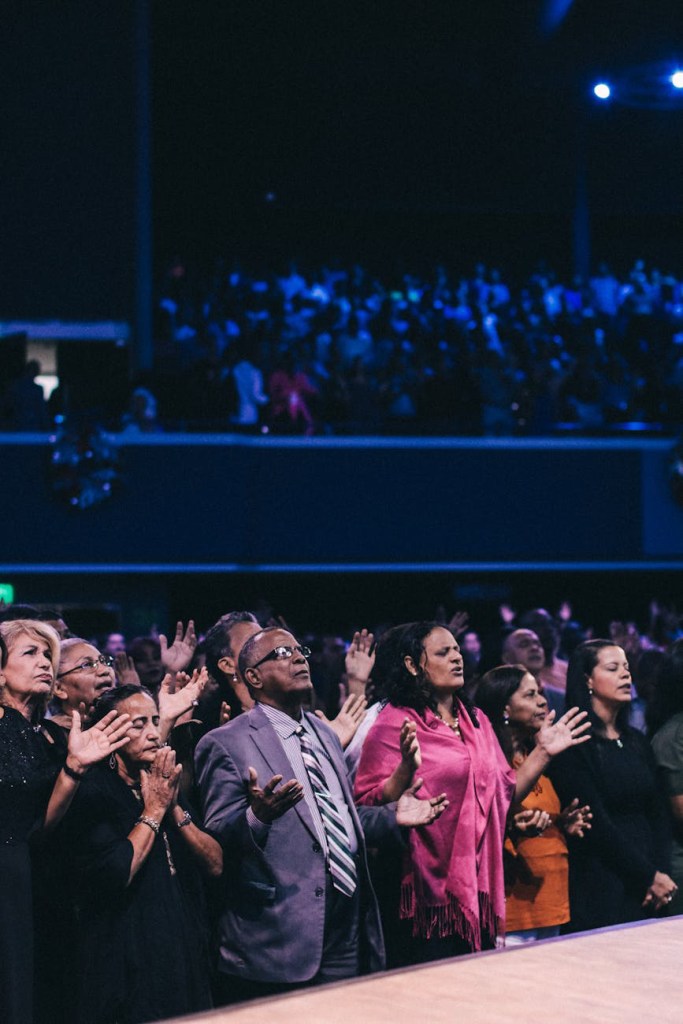
In my opinion, if you are not of Jewish descent, the laws in Deuteronomy do not directly apply to you. If you are a born-again Christian, you are called to live under grace, not the law. The law includes the 10 Commandments given to Moses as well as the expansion of the Law within the first 5 books of the Old Testament, including Exodus, Leviticus and Numbers.
Living under grace doesn’t mean ignoring moral accountability. It means allowing the Holy Spirit to guide and convict you. As Christians, we must exercise wisdom, repentance, and restraint, as Paul emphasizes in 2 Timothy 2:24:
“God’s servants must not be troublemakers. They must be kind to everyone, good teachers, and very patient.”
However, in my experience and observation, modern fundamentalist Christians tend to be the biggest trouble-makers, deeply intolerant of other peoples’ beliefs, quarrelsome, arrogant and domineering. They are unable to exercise the necessary patience to teach and do the mission of preaching the gospel more damage with their attitude.
The Role of Discernment in Spirituality
Many fundamentalists rely on a limited understanding of the occult, often shaped by inadequate teachings. Many Christian’s comment on indigenous spiritual practices which they have never participated in or experienced. Ironically, some preachers who condemn occult practices are known to secretly consult practitioners of the occult.
It’s crucial to approach spirituality with critical thinking, research, and discernment. The Bible itself contains esoteric knowledge, much of which has roots in ancient traditions like the Kemetic mystery schools. This doesn’t mean embracing all occult practices but understanding that the Bible’s teachings often reflect deeper spiritual truths.
A Modern Reflection on Hypocrisy
Throughout history, even after rewriting the law, the Jewish people struggled with idolatry, adultery, and social injustices. Similarly, colonial powers established churches and promoted Christianity while perpetuating oppression, violence, and exploitation.
Today, prosperous nations like India and China often operate outside the constraints of colonial religious control. Meanwhile, Western nations continue to embed ancient occult practices and symbols in their institutions, from planning of government ceremonies to architecture.
The Call to Grace and Truth

Jesus offered a new way. When He spoke to the Samaritan woman at the well, He didn’t condemn her for her past. Instead, He offered her “living water”—a life transformed by the Holy Spirit.
As Christians, we’re called to the same standard of grace and truth. Judging others based on Old Testament laws while claiming salvation by faith is contradictory. Jesus reminded us to judge not, lest we be judged by the same standard.
When the Pharisees brought a woman accused of adultery before Jesus, He responded, “Let the one without sin cast the first stone.” This profound lesson should guide us in how we approach faith, others, and ourselves.
Moving Forward with Discernment
In today’s world, false prophecy and deception are rampant, especially on social media. It’s easy to be swept up in popular narratives about spirituality and religion often based on a limited understanding of the spiritual practices of others. But as followers of Christ, we are called to seek truth through the Holy Spirit.
By embracing grace, practicing discernment, and striving for a deeper understanding of God’s Word through study and practice, we can live authentically in our faith. Let us move forward in the journey of faith with wisdom, humility, and a commitment to truth and compassion.
 PrincessPearlManzini