African Indigenous Healing & Alternative Healing Modalities

By Nomathemba Pearl Dzinotyiwei

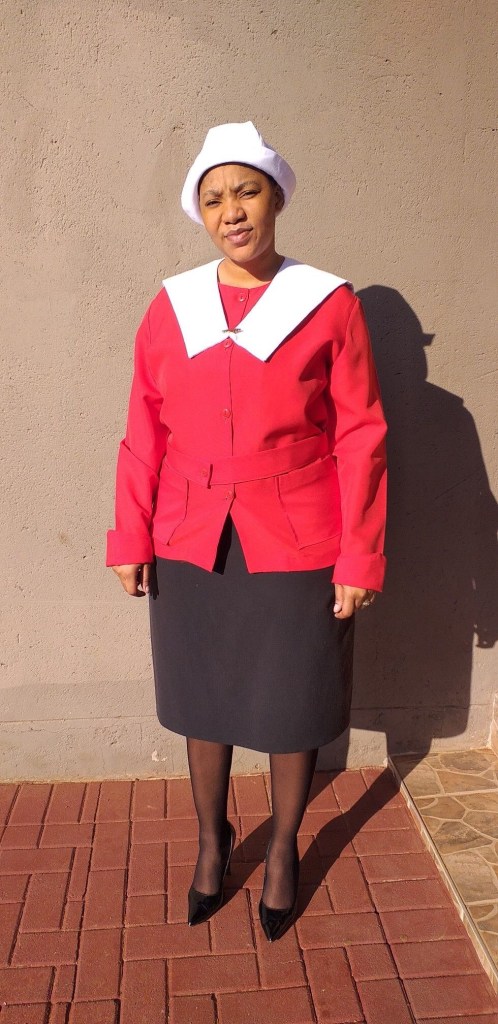
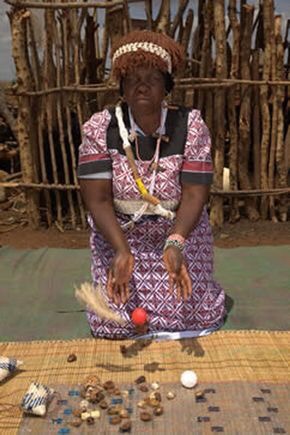
Isangoma African Indigenous Healer. Picture courtesy of Pinterest

African Spirituality is broad and multi-faceted. Much has been made of the common manifestation of spirituality, that of the diviner or uMngoma or iSangoma. The word comes from the Bantu word ingoma meaning drum or song depending on the language and pronunciation. These healers undergo strict training to enable them to channel the ancestral spirits that are invoked through song that enable them to divine and heal. However there are many different types of healers with various specialities that channel spirits of ancestors from all over Africa. Statistics say 4 out of 5 people consult traditional healers across South Africa across racial lines.

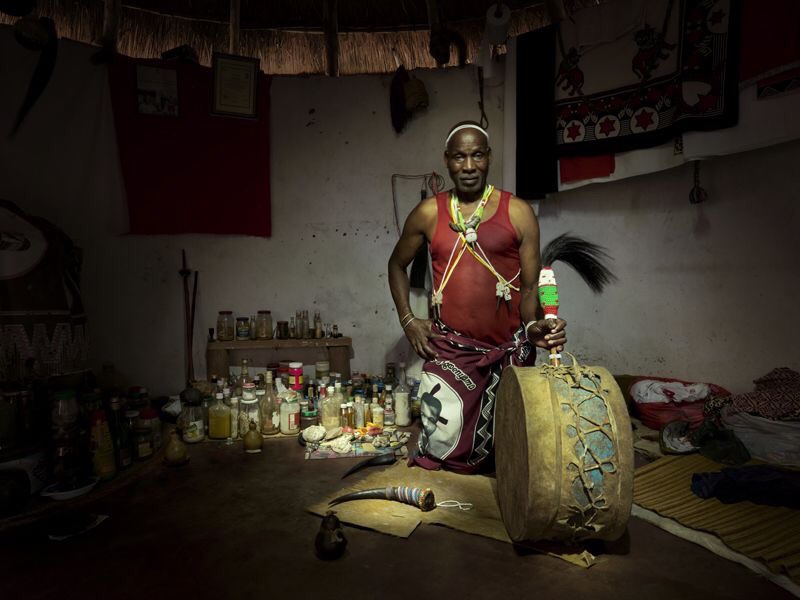
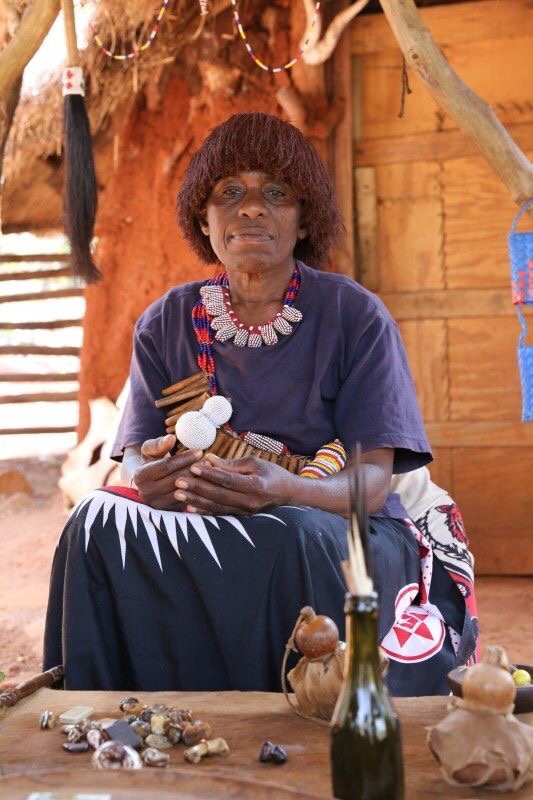
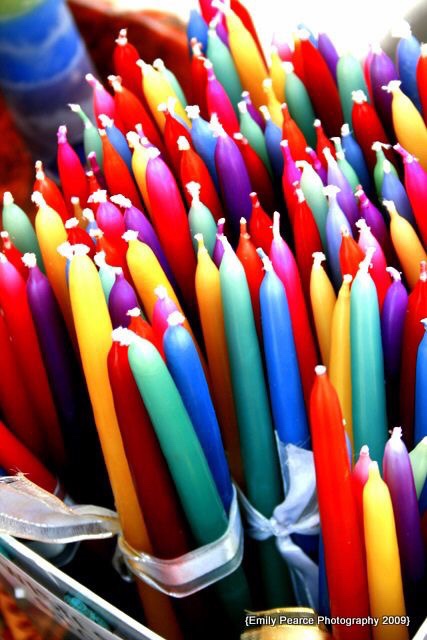
Healers use various technologies to divine, diagnose, prophesy and heal. These includes herbs, roots, plants, seeds, water, sea salt, soil, ash, fire. Divination tools including bones, shells, crystals, carved wooden objects like runes or dominoes etc. Some use mirrors or a bowl of water for divination. Some operate in African independent churches as prophets and prayer warriors (abathandazi) and work mostly with the Bible, Christian songs, candles and water.

Regardless of the nature or origin of the ancestral spirit and how it is initiated, all indigenous healers have psychic gifts like clairvoyance (visions), claircognisance ( knowing), clairaudience (hearing) or clairsentience (feeling)or clairalience (smell) to get information from beyond the physical world in order to effectively carry out their calling to heal.

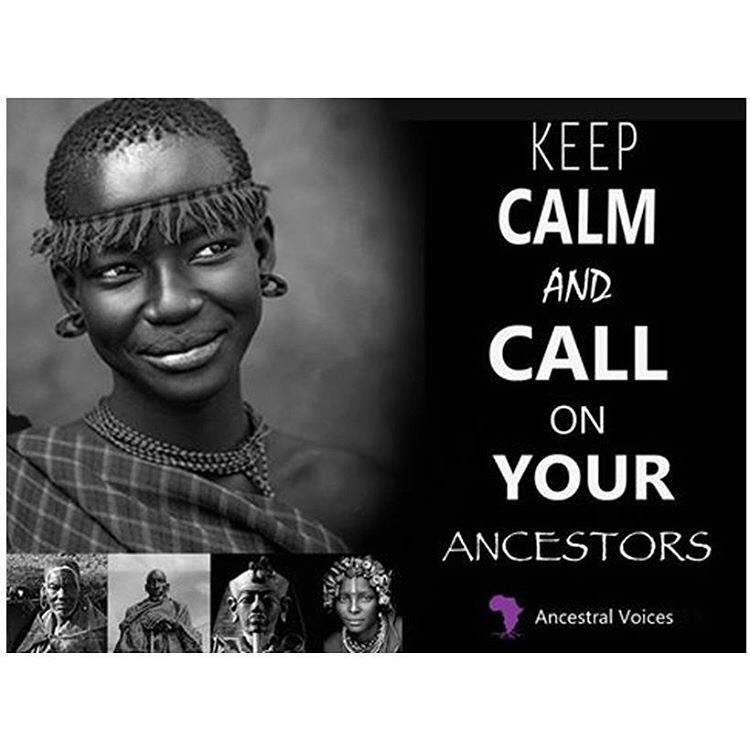
Spirit guide or Instructor or Gobela, indicated by the black print.
Picture courtesy of Pinterest

To maintain their connection with the divine, healers pray and carry out certain rituals in order to heal and centre themselves. It is important for a healer to maintain a sound body, mind & spirit by any means necessary. Diet, exercise, meditation, prayer help with that. The training & initiation by all accounts is tough. It requires a trained spiritual teacher or mentor known as uGobela. All highly spiritual people are aware of the war between darkness & light & stand at the front line of that battle.

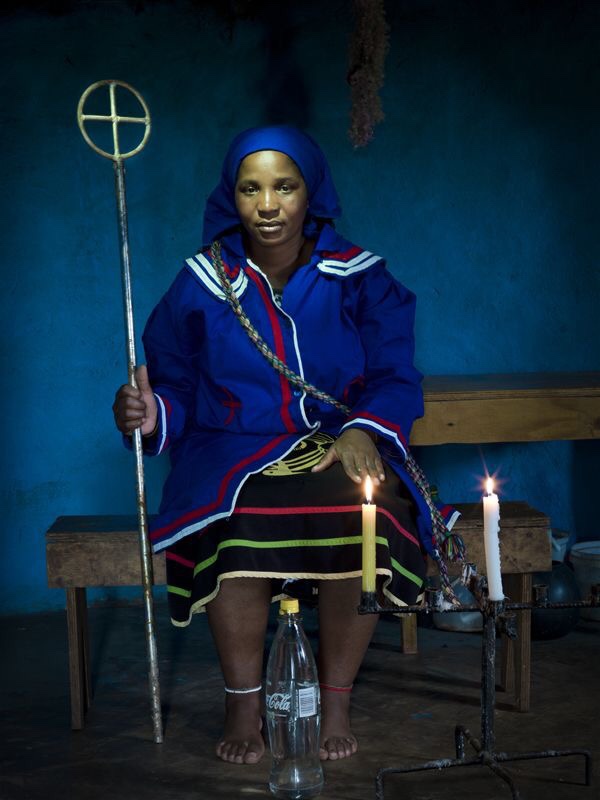
Traditional Healer who carries both Sangoma and Prophetic Gifts.
Picture courtesy of Pinterest

There is a clear distinction between indigenous healers who are light workers and sorcerers that use dark magic. Healers are taught how sorcerers operate in order for them to be able to heal people, in the same way doctors and other medical personnel are trained in what kills people and how, in order to heal them. However all healers must make a choice to work with the light or with darkness. Those that work with the light must be spiritually pure. Unfortunately due to the Witchcraft Suppression Act and religious indoctrination all spiritualists and spiritual practices have been incorrectly labeled as evil.

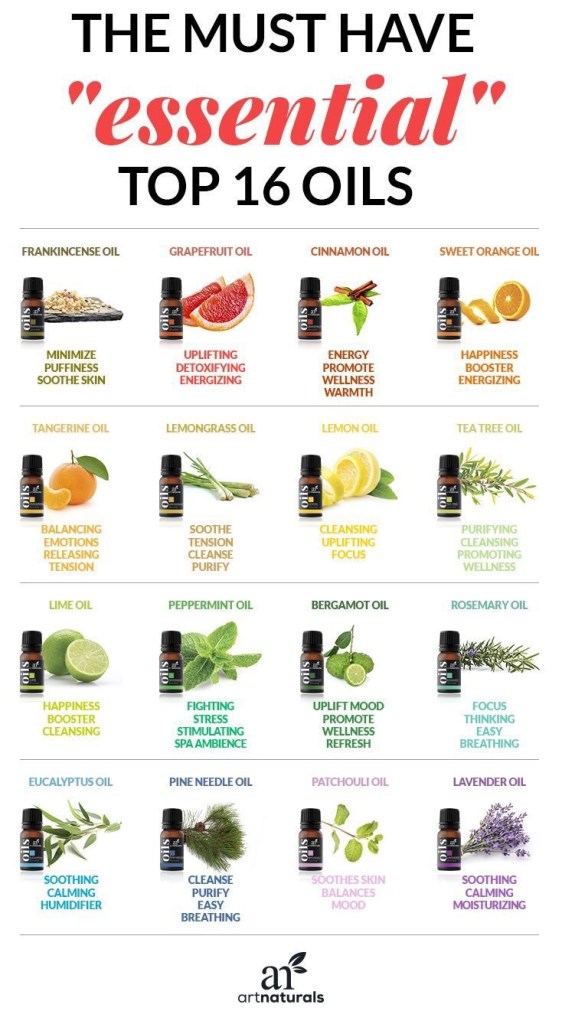
In my research on spirituality, I’m fascinated by the way South African indigenous healers are incorporating different healing modalities such as meditation, yoga, crystals, astrology, numerology, aromatherapy and colour healing. It dawned on me that this is a natural evolution. Spirit is infinitely wise and powerful and will use any sacred object to accomplish what it needs to. However, all these practices associated with European and Asian spiritual traditions originated in the ancient African kingdom of Kemet in modern-day Egypt which birthed most of the spiritual traditions across the world so in a way it is a return to our indigenous knowledge systems in a modern form.

Crystals. Picture courtesy of Pinterest
Aromatherapy Oils. Picture courtesy of Pinterest
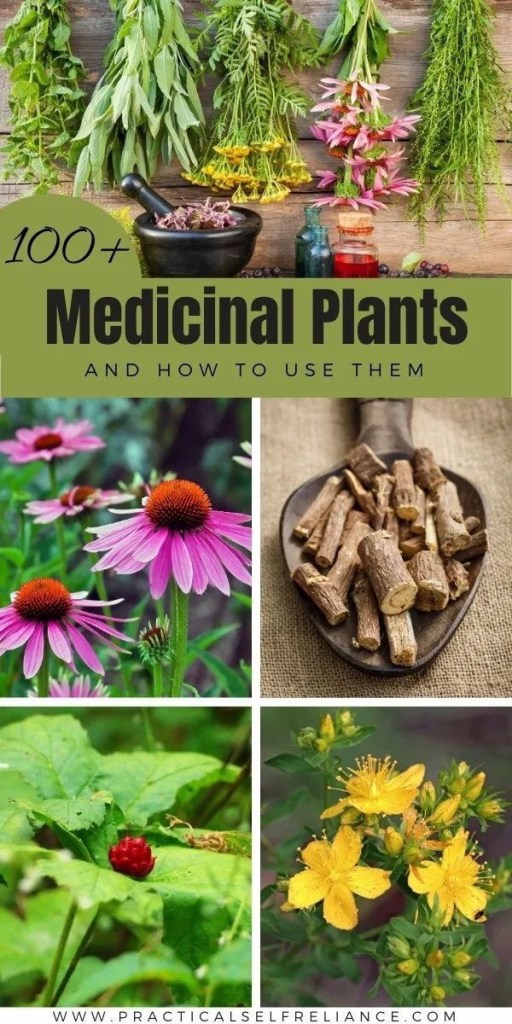
Medicinal Plants. Picture courtesy of Pinterest
Oracle Cards. Picture courtesy of Pinterest

Indigenous African Spirituality is more than just ubungoma or shamanism, beads, snuff & traditional beer. If you live in an urban area, you can’t go to the bush to collect herbs etc. for healing. So it makes sense to use other modalities to balance & heal mind, body & spirit. There is such beauty & diversity in African Spirituality yet what I see is common among genuine indigenous healers is a desire to heal which overshadows any fear or adversity they endure. If what they do is so evil, surely they wouldn’t also be vulnerable to spiritual attacks?

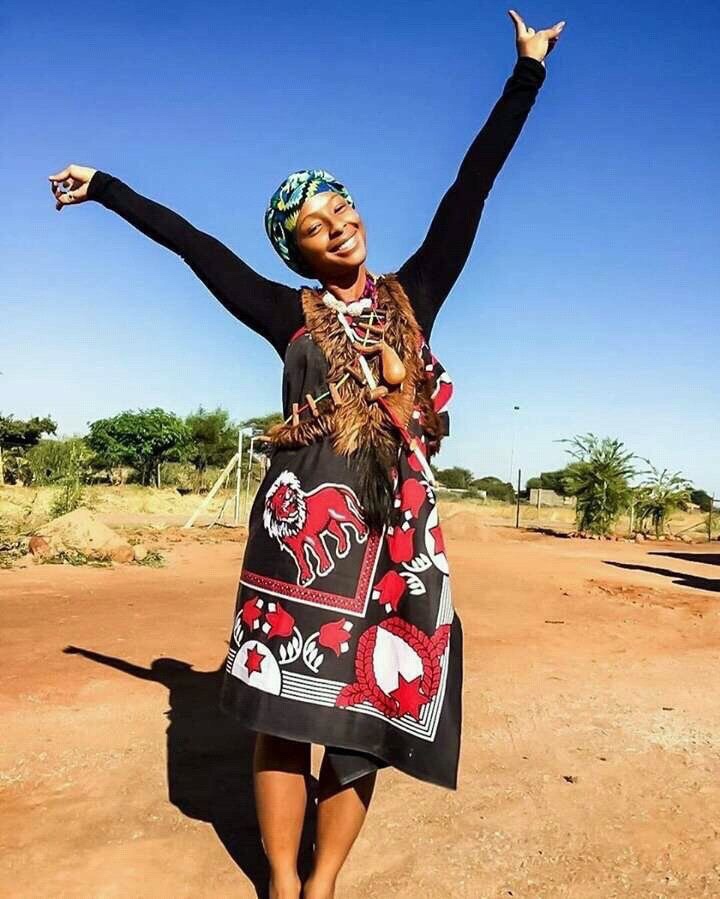
Boity Thulo, South African Celebrity who recently underwent initiation. Picture Courtesy of Pinterest

If you are undergoing a spiritual awakening or have an interest in African Spirituality, there are many healers that offer information and guidance on various social media channels FaceBook, Instagram and YouTube for people needing to consult and aspiring healers. Notable examples include AfroSavvy, Gogo Dineo Ndlanzi and Sangoma Society and Bana Ba Moya on YouTube, Vusi Ngxande’ podcasts on ThokozaDlozi on Instagram. They are also available on Twitter. Research is very important to ensure that you make the most of the healers’ support and avoid unnecessary confusion, drama and trauma on your journey.

Beads, Healing and African Spirituality

By Nomathemba Pearl Dzinotyiwei

Image
Picture courtesy of Pinterest

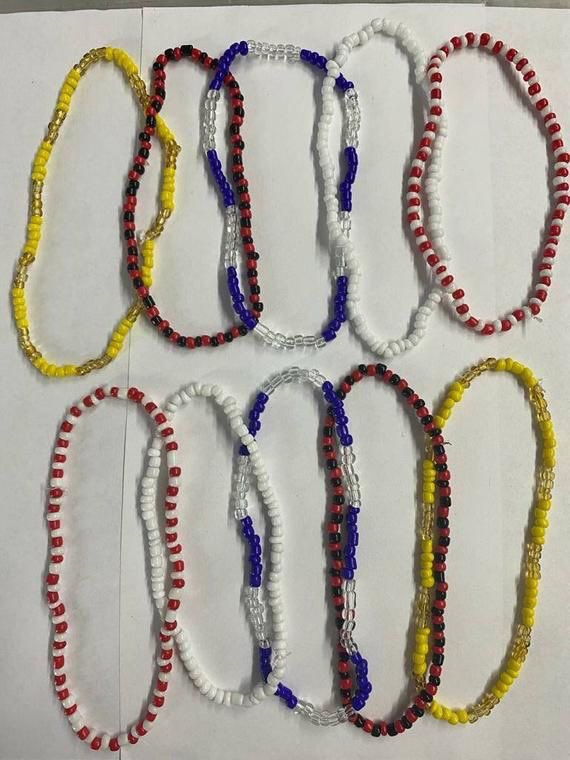
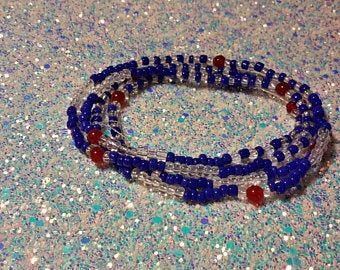
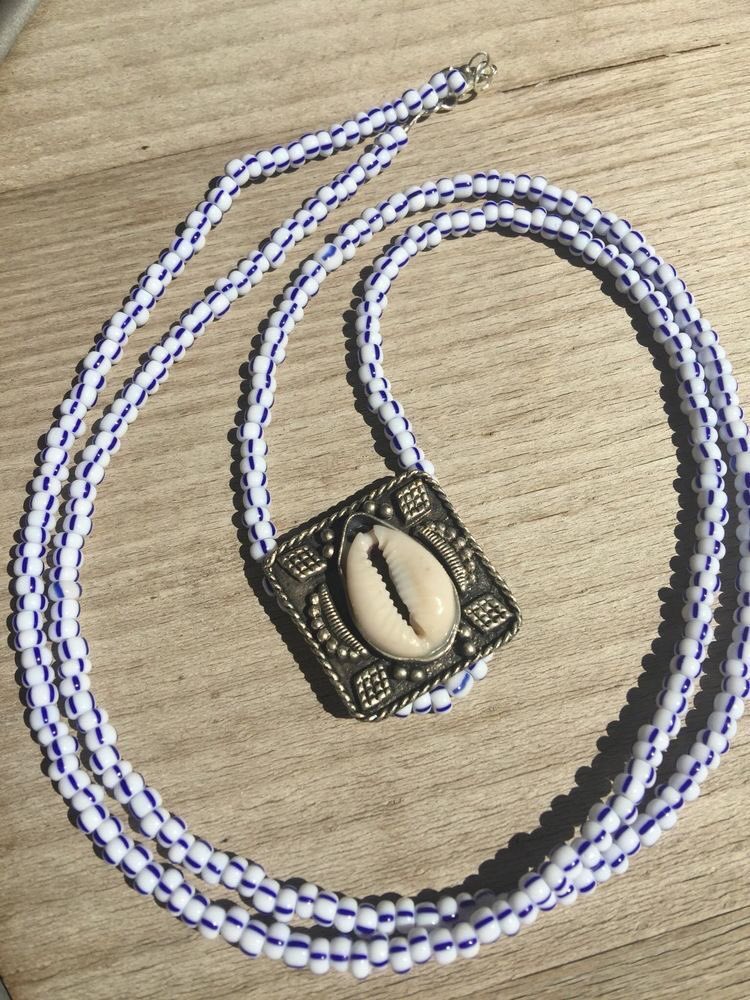
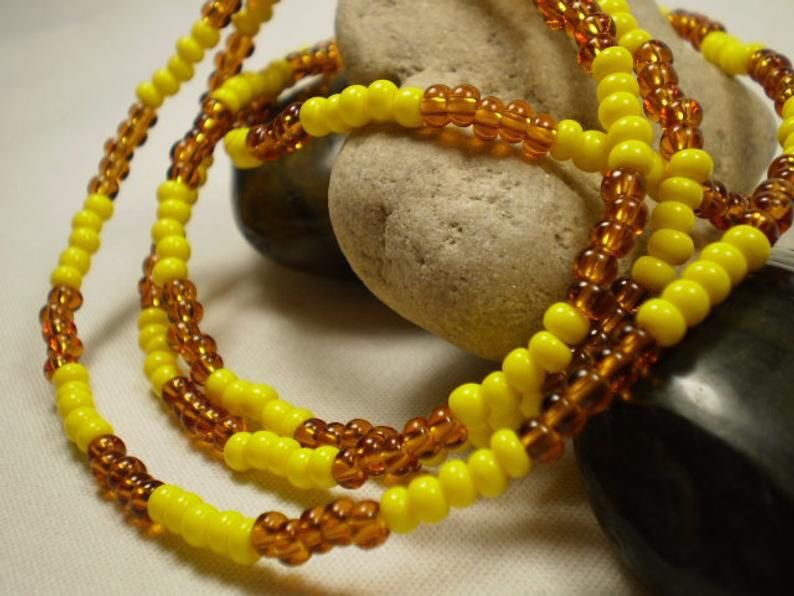
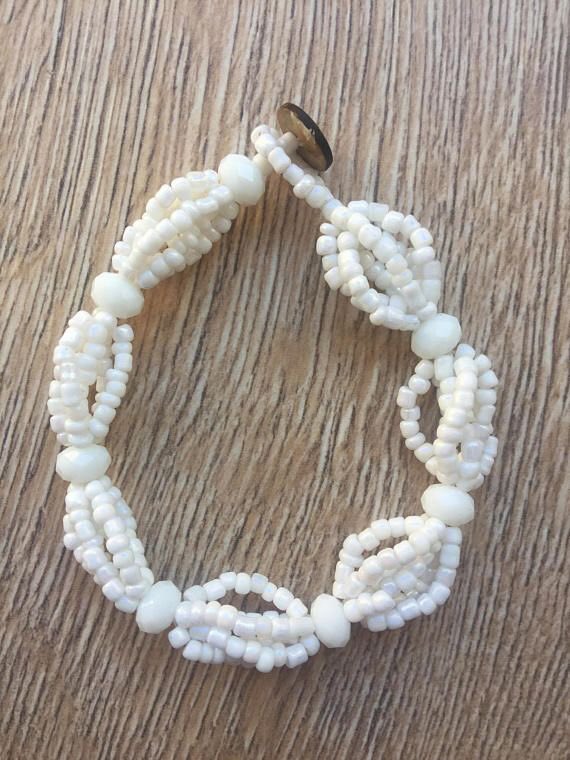
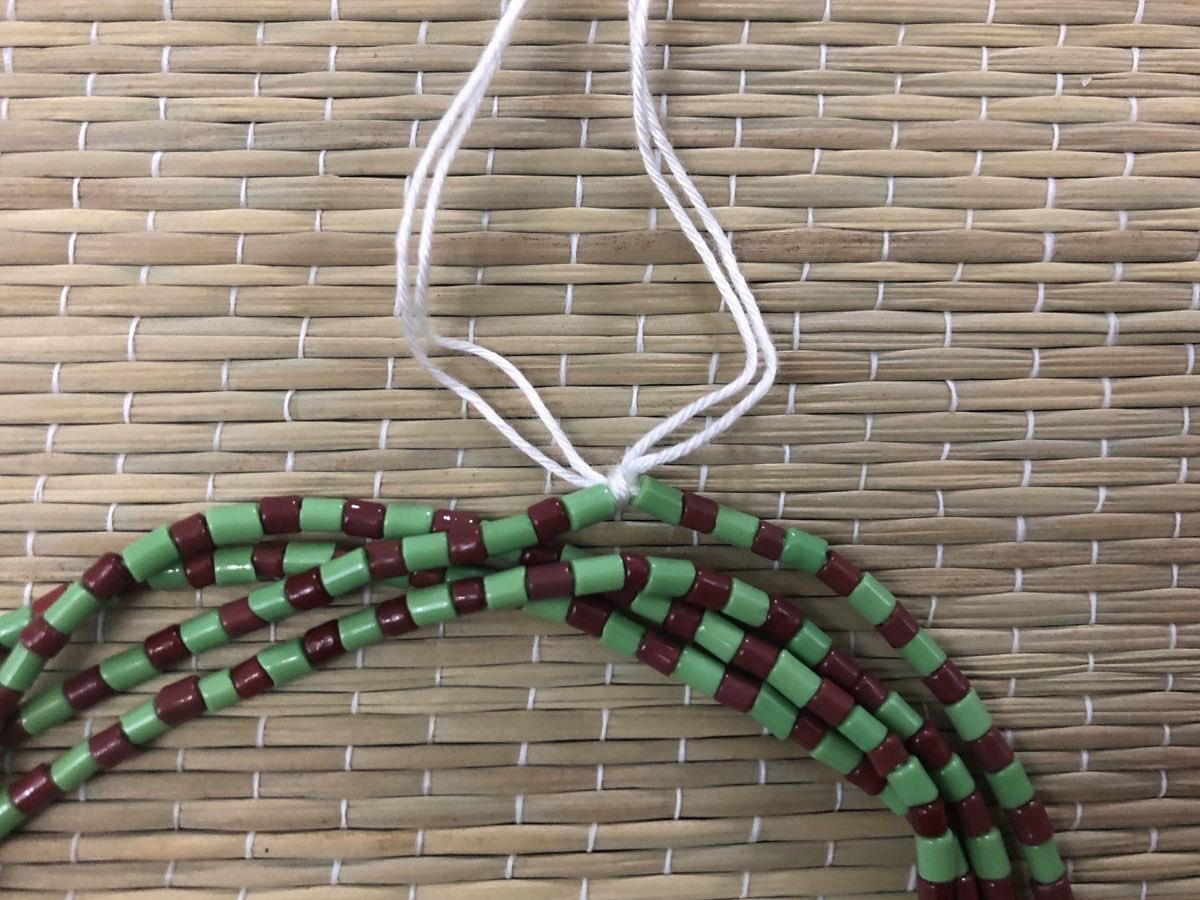
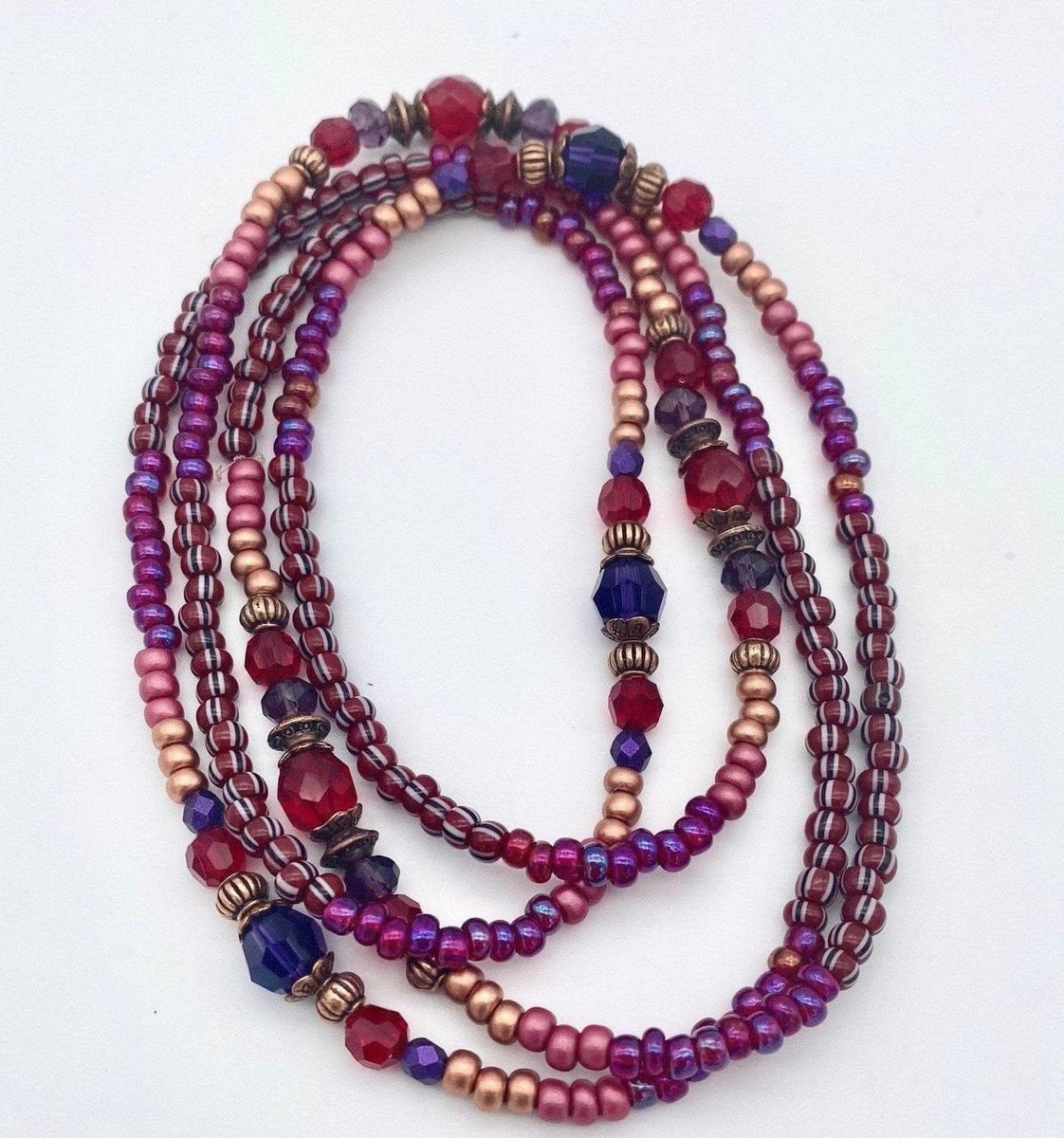
There are some interesting similarities between spiritual practices in Southern Africa & Ifa – Yoruba spiritual tradition. Take the wearing of beads for instance. Beads called ubuhlalu in Nguni languages or dipita in SeSotho or SeTswana are worn by people with a spiritual gift or calling in Southern Africa on instruction by the ancestors often in dreams. In the Ifa tradition the beads or eleke are gifted to initiates by the Ifa priests and priestesses according to the Orishas whose energies are dominant in that person. Common colours are white, blue and white, blue, clear and red beads, red and white, black and white bead, yellow & Amber beads. The designs can be a simple single strand worn on the wrist or around the neck or multiple strands with elaborate designs sometimes including seashells, bones or crystals.

A possible reason for the similarities is the spreading of African Spirituality with the migration of Bantu people in different waves from north, east, central and west Africa to the south. Some of the songs sung by South African healers learnt from being passed on by other healers in a trance state have lyrics that are not in a recognized South Africa language and sound like West and Central African languages that sound like BaMbara, BaMileke known to be older Bantu languages and Luyana and Tshiluba spoken in the Congo.

Image
Picture courtesy of Pinterest

The colours correspond to a cosmic energy which is personified as a god or Orisha. Similar correspondences are found in Kemetic Spirituality. The colours also correspond to the elements – earth, water, air, fire. There are many Orishas but there are the most popular ones. 

Image
Picture courtesy of Pinterest

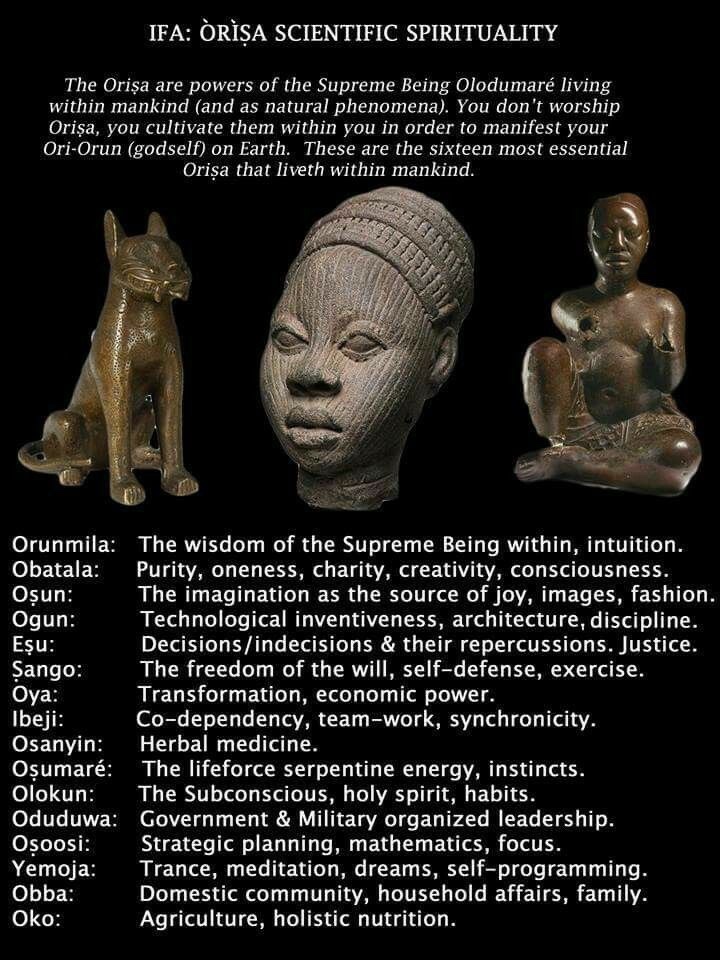
Yoruba tradition recognizes the Source Or Creator, called Olorun or Olodunmare. The Orishas are manifestations of Olorun as cosmic energies present in the universe and in all human beings. An Orisha is a spirit that reflects one of the manifestations of God. There are four hundred and one of them in total, each playing a role within the Yoruba pantheon. Twelve of them however can be equated to the twelve signs of the Zodiac along with their respective houses.

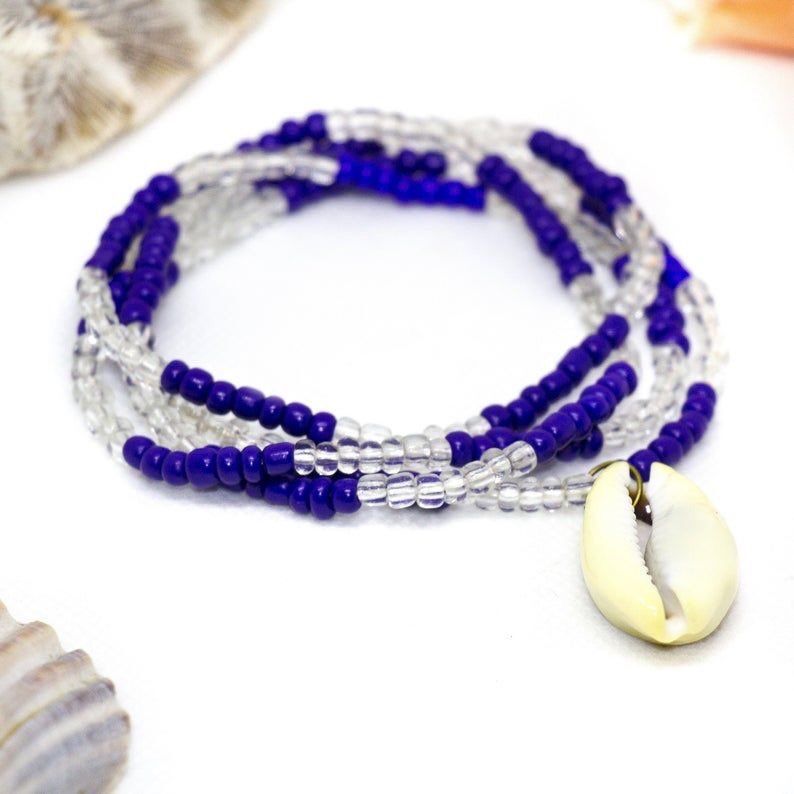
Olokun was the first of the Orishas. He dwells in the depths of the ocean & is associated with wisdom, divination & revered for giving prosperity. He is associated with the astrological sign of Pisces. This sign deals with the unconscious and things beyond the physical plane. Olokun’s aspects are therefore expressed within the astral, the subconscious, and altered states of consciousness that is experienced during meditation, initiation, and spirit possession. The colours of Olokun’s eleke are blue, white and clear beads. His element is water, particularly sea water. His qualities are similar to those of the the Ndau spirits of Southern Africa who are associated with rivers and the ocean. People possessed by Ndau Spirits, particularly those of Ndau ancestry from Zimbabwe, Mozambique and north-eastern South Africa are highly spiritual, skilled healers and some are feared or sought after for their prowess in dark magic.

Image
Picture courtesy of Pinterest
Image
Picture courtesy of Pinterest
Image
Picture courtesy of Pinterest

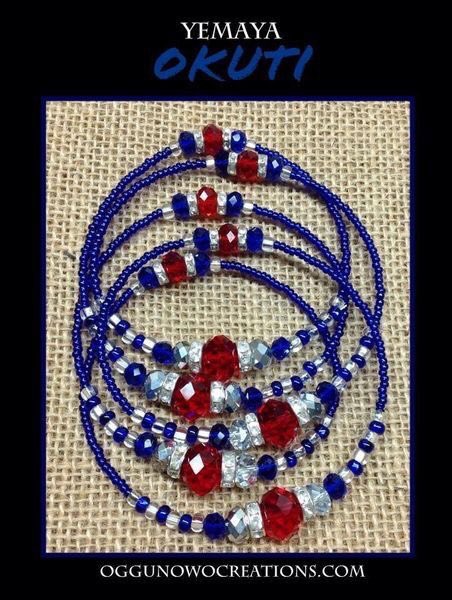
Some believe Olokun to be a male whose wife is Yemaya or Yemoja, the Mother of all Orishas & Goddess of the Ocean. She governs water, motherhood, and protects pregnant women. The colours of her eleke are blue & white & some designs include red similar to Olokun and seashells. She is associated with the sign of Cancer, the crab, a sea creature with a protective shell that does not let go once its claws grab something, also known for being maternal, protective, nurturing, and instinctive and the 4th house associated with the home. Her name is a contraction of the Yoruba words “Yeye omo eja” which means “Mother whose children are like fish”. This represents the vastness of her motherhood. The ebb and flow of the ocean tides are a result of the moon, the fourth house’s ruling “planet”. Her element is water, particularly sea water as all rivers flow to the ocean. Yemaya’s qualities are also similar to Ndau spirits that are associated with the oceans. Female healers are strongly affected by Ndau spirits because they dwell in the sacral chakra, close to the belly and reproductive organs.

Image
Picture courtesy of Pinterest

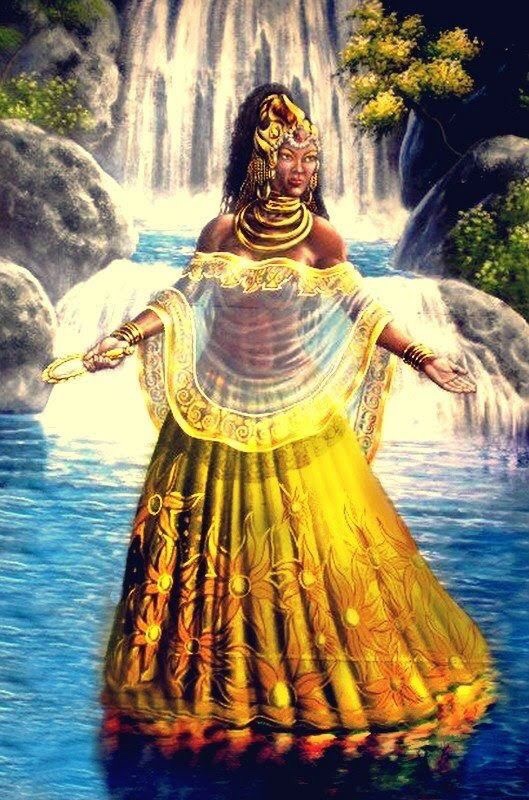
A popular Orisha is Oshun, goddess of divinity, fertility, femininity, beauty & love. She is the daughter of Yemaya & consort of Shango. Taurus is the ruling sign of the second house, which is the house of possessions. This should not only be understood as material possessions but also as traits and characteristics that we value about ourselves. The ruling planet Venus is also the Roman goddess of love, whose Orisha equivalent is Oshun. Oshun is the goddess of fresh water (opposite to the salty, ocean waters of Yemoja), sensuality, prosperity, love, and fertility. The colours of her eleke are yellow and gold. She is associated with fresh water like the Ndau spirits that also reside in the sacral chakra and govern creativity, sexuality and prosperity. Ndau people, women especially are reputed to be very resourceful and enjoy the finer things in life, particularly clothes, jewelry, shoes and perfume. Oshun is often depicted as a beautiful young woman with a mirror. Beyoncé is believed to be a follower of Oshun.

Image
Picture courtesy of Pinterest

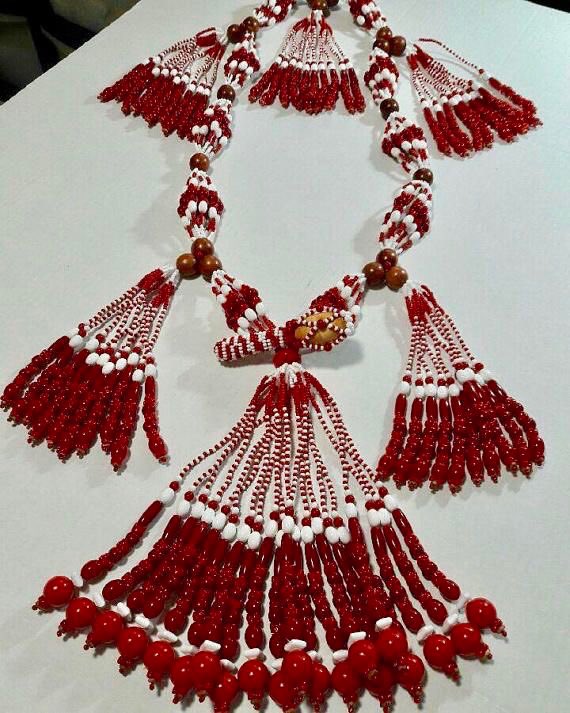
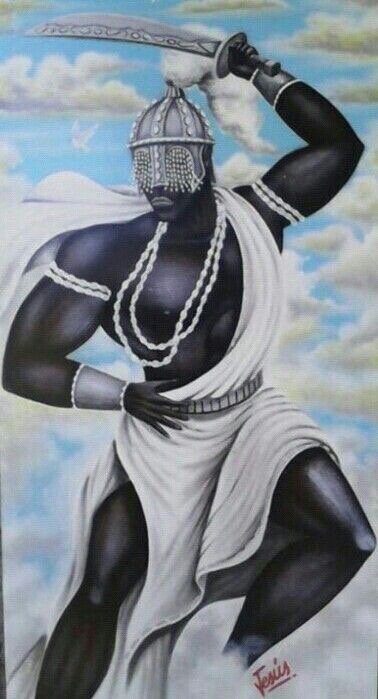
Shango the god of iron and fire is the most feared and powerful of the Orishas and believed to create thunder and lightning. He is the consort of Oshun. He rules the astrological sign of Aquarius which is associated with rapid social change, upheaval, and rebellion. These traits all reflect Shango, the warrior Orisha of thunder, lightning, and fire. Once a living king on Earth, Shango is known for working miracles after his death. This elevated him to the status of Orisha. The colours of his eleke are red and white. His qualities are similar to the Nguni Spirits which are associated with war and are powerful, protective energies. Beads worn by diviners with Nguni Spirits are red and white.

Image
Picture courtesy of Pinterest

Obatala was the Orisha tasked with creating land and human beings. He is believed to be the father of Shango, a warrior, a powerful & magical being, capable of manipulating cosmic energy & capable of reading minds. The colour of his eleke is white. His element is air. The Orisha of purity, Obatala was sent by the Supreme Being at the beginning of time to form the Earth. He also constructed the bodies of humans. Obatala completed his construction of the bodies he created by adding heads to them. He therefore became known as the owner of heads. The head is symbolic of intelligence, higher education, and deeper understanding, all which the ninth house represents. Obatala is associated with the sign of Sagittarius and the ninth house, which is is the house of philosophy and is ruled by the planet Jupiter, His qualities are similar to those of the AbaLozi spirits that communicate in whistles and bestow gifts of clairaudience and claircognisance among other psychic gifts to those they possess. AbaLozi spirits often give gifts related to prophecy and pre-cognizant dreams. They like to work with white candles and beads.

Image
Picture courtesy of Pinterest

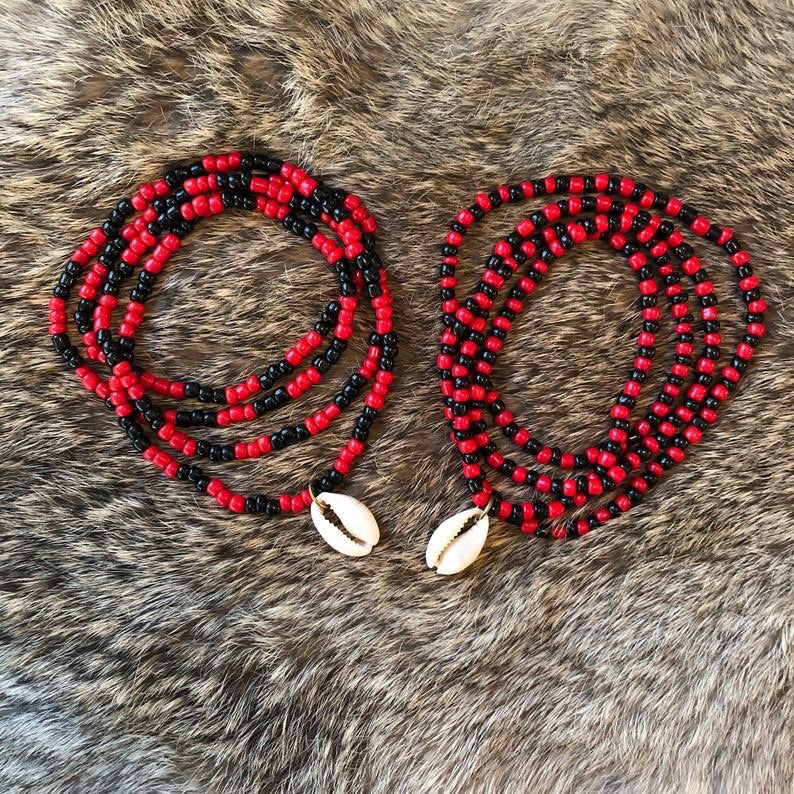
Elegua or Eshu is the messenger & Orisha of the crossroads. He is the ruler of the sixth house, and the sign Virgo. Health, work, and service are central to the sixth house. It is ruled by the planet Mercury, the messenger of the gods within the Roman pantheon. Eshu is the Orisha that stands at the crossroads between the physical world and the spirit world. His duty is to be the intermediary between man and the Orisha. Therefore, when one wishes to call upon the Orisha, he or she first gets permission from Eshu. This is symbolic of clearing and preparing the mind to receive whatever message the Orisha have for you. He is invoked to venerate the ancestors & open the path to Olodumare the supreme deity. The colours of his eleke are red, black and white. His elements are earth and air. African ancestral spirits are believed to carry messages from the Creator. Red beads symbolize the sacrifice that connects the healer to the ancestral spirits, while black beads symbolize death, a metaphor of dying to your old life and accepting your calling as a healer or diviner. Abalozi people in Zambia also dress in red and black for ceremonies. Healers with unMndiki spirits from our oldest blood ancestors among the Mandinka people of Mali and Burkina Faso also wear red and black or red and white beads.
Image
Picture courtesy of Pinterest

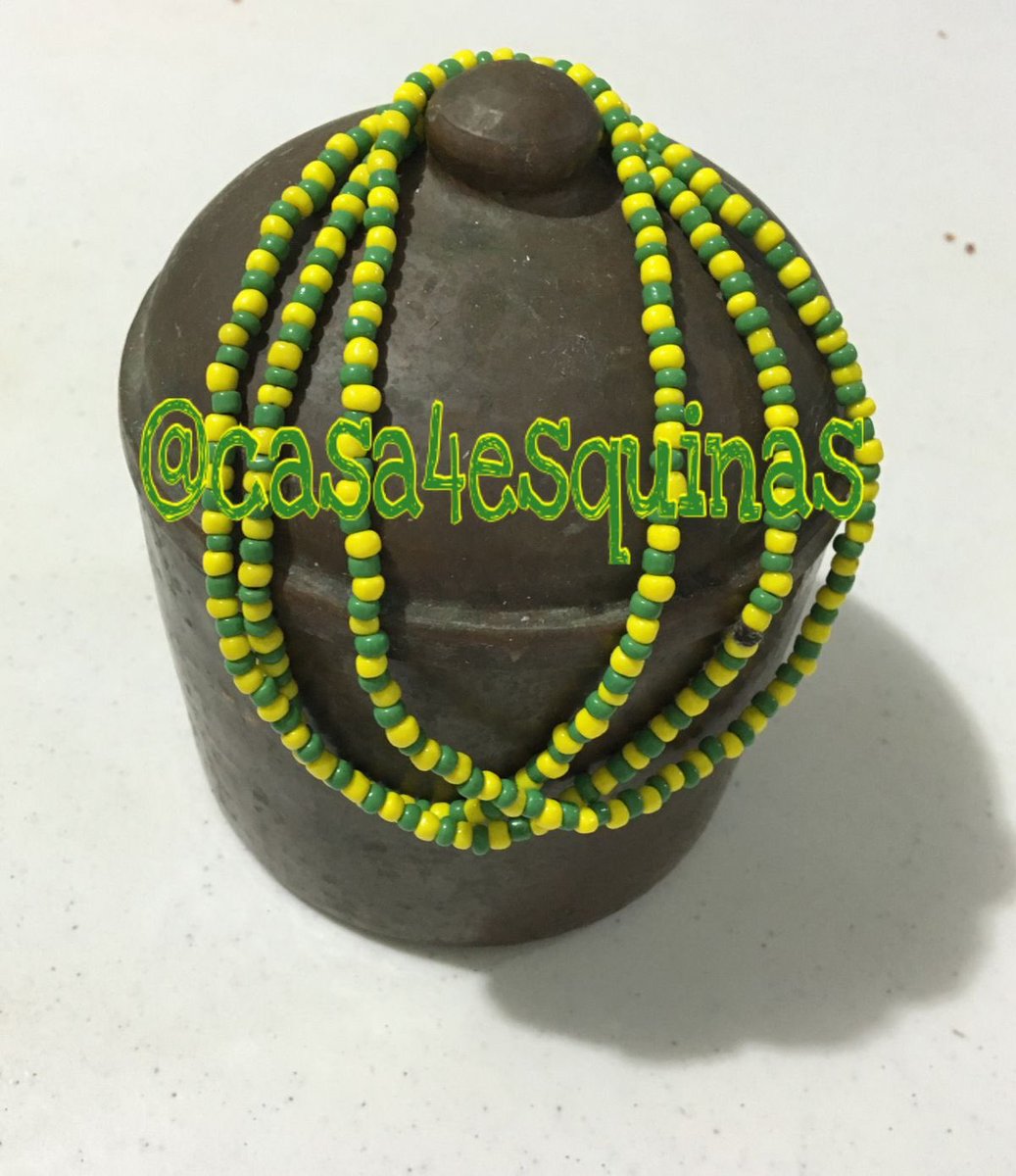
Orunmila is the Orisha of knowledge, destiny & prophecy. He assisted Olodumare in creating the universe, planted the first plant on earth & designed the 16 characters of humanity & a healer of other Orishas. He is associated with the sign of Leo, the fifth house of the Zodiac, of is the house of creativity and pleasure, ruled by the sun. This house deals with gaining pleasure through acts of creation, artistically and even procreation i.e. the creation of offspring. The Sun, the ruling “planet” of the fifth house, is a symbol of creative energy, illumination, and knowledge. These are all aspects the Orisha of wisdom, knowledge, and divination Orunmila reflects. It is Orunmila’s duty to record the destiny of individuals the moment the breath of life is given to them. The colours of his eleke are green, green and yellow or green and brown. His elements are earth and water.

Some African healers wear green, green and yellow or green and brown beads and carry the gift of divination using whatever tools their ancestors use, be it bones, tarot cards, shells, crystals, water etc. They may also carry the gifts of alchemy the ability to transmute negative energy into positive energy and herbalism, the ability to heal using herbs and other natural elements. They are known as inyanga, those who use the phases of the moon to gather herbs or igedla: keepers of knowledge and able to heal the body and spirit using knowledge of plants and other natural elements.

Image
Picture courtesy of Pinterest
Image
Picture courtesy of Pinterest
Image
Picture courtesy of Pinterest

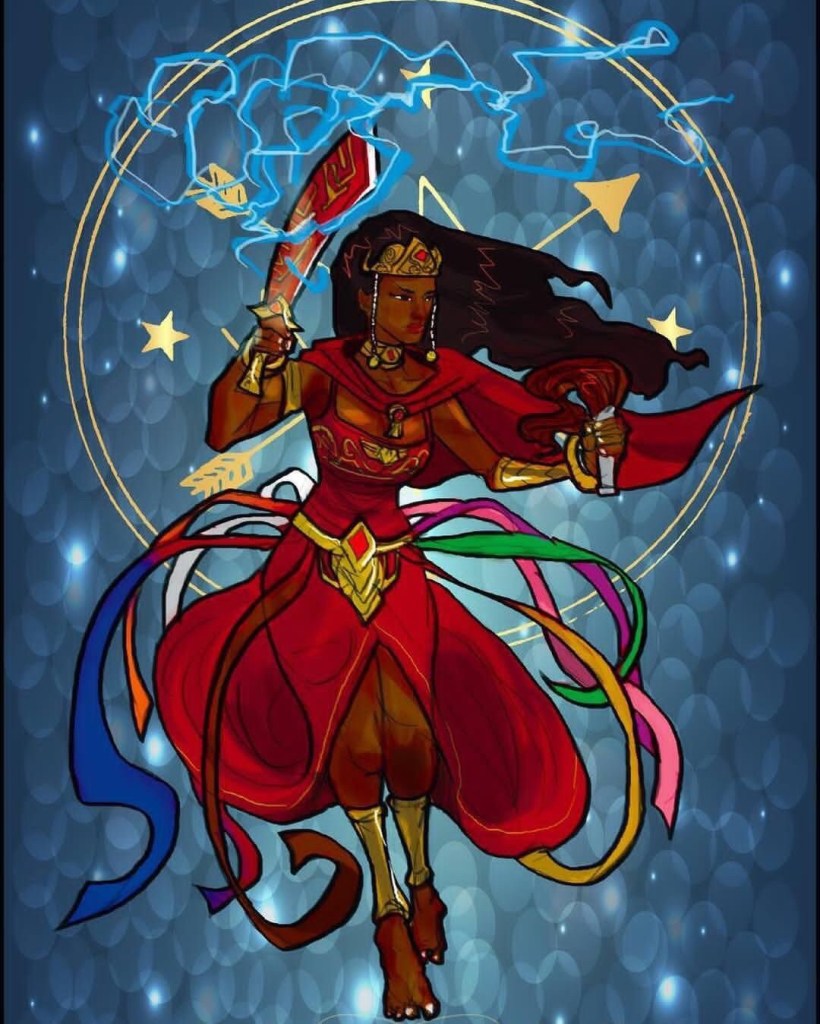
Oya is the goddess of the weather, psychic abilities, rebirth intuition & clairvoyance. She also carried the souls of the dead to the next world. She is loving & fierce. Her symbol is a flywhisk or ishoba carried by sangomas. The colours of her eleke are the rainbow, purple & red. Her elements are air, water and fire. Oya, is associated with the sign of Scorpio and the the eighth house, ruled by Mars. This is the house of transformation, regeneration, death, sex, and rebirth. She is the powerful force in nature that can change the face of the Earth. She embodies the tornadoes and twisters that uproot trees and houses with her destructive winds. This powerful Orisha is also responsible for carrying the spirits of the newly departed to the spirit world.

In the Zulu Cosmology, the goddess Nomkhubulwane is one of the seven messengers of the Creator and rules over weather and rain and her symbol is the rainbow.

Image
Picture courtesy of Pinterest

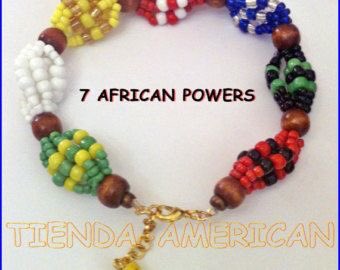
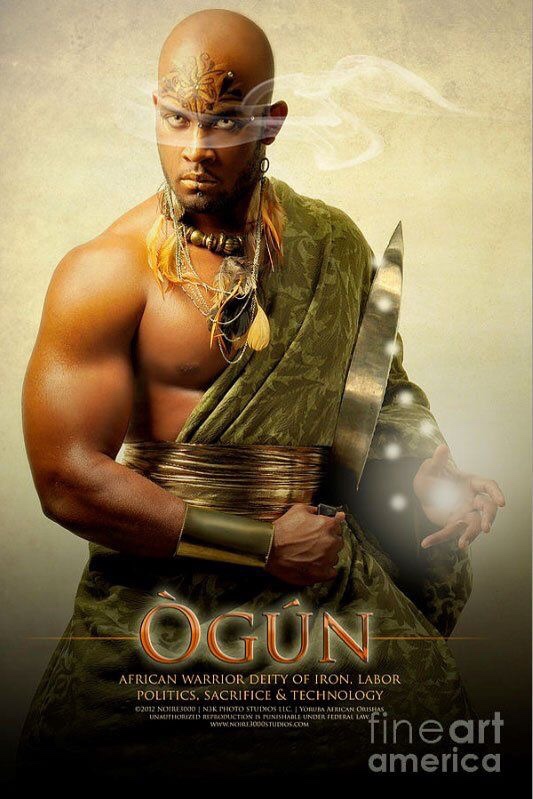
Some priests have associations with multiple Orishas so their eleke or beads with have sections or combinations for the cosmic energies they channel or work with. They have initiates & the eleke are specially strung & given to them. 7 African powers is an example. 

Image
Picture courtesy of Pinterest
Image
Picture courtesy of Pinterest

If you are drawn to unusual bead colours & combinations or see them in your dreams these may be clues to your ancestry or heritage & spiritual path. Beads used intentionally can strengthen spiritual connection & heal you through the vibration of colour. You don’t have to be an initiated healer to wear beads in Southern Africa. These usually indicate the nature of your calling, your dominant energies and the parts of your energy field or chakras that you need to balance and heal to effectively connect to Spirit and to protect you.
Sources: http://www.thegnosticdread.com

Commonality between Zulu & Ifa Cosmology

By Nomathemba Pearl Dzinotyiwei

Zulu traditional dress. Picture courtesy of Pinterest
The Zulu people are the largest ethnic group in South Africa, found mainly in the south-east in KwaZulu Natal. KwaZulu means the place of the Zulus. In Zulu cosmology the Creator (UMdali/uMenzi) has 7 aspects or messengers known by some as gods because they had greater power and consciousness than human beings. The number 7 is a sacred symbol of divine fullness. Each Of these divine messengers had a divinely ordained function.

The Orishas are the deities in the Yoruba spiritual tradition known as Ifa. The Yoruba people are from the south and west of Nigeria. The Orishas are aspects of the Supreme Being or the Creator given charge over different aspects of life. There are many Orishas however there are seven that are most popular and known as the Seven African Powers.

There are interesting parallels between the spiritual beliefs of Zulu and Yoruba people. Primarily these are centred around a single Supreme Being, the Creator. The Creator expresses his character through different cosmic energies that are personified as deities or gods. Human beings are made in the image of the Creator in terms of spirit so they carry the same energies within them. For the ease of human understanding human social constructs such as the family are used to teach complex cosmic concepts and stories are used to convey the wisdom in a way that can be readily understood, memorized and passed on from generation to generation.

Ifa Orishas. Picture courtesy of Pinterest

UMvelinqangi is the chief of the messengers. He connects people to all the other messengers. He is responsible for balance and centrality. He is the one known as Modimo wa Badimo, in SeTswana, the greatest of all the spirits. He has similarities to Obatala in the Yoruba spiritual tradition.

Ifa Orisha Obatala. Picture courtesy of Pinterest

Ma, is the Universal Mother, Credo Mutwa, the famous Zulu Shaman called her Ninavanhu Ma. She gave birth to the first humans. She is a caregiver and nurturer. She gave the original blueprint of motherhood and embodies that powerful cosmic energy. There are similarities to Yemaya in the Yoruba tradition.

Ifa Orisha Yemaya. Picture courtesy of Pinterest

Sodumo is responsible for the destinies of human beings. He connects the living and the dead. From him, each soul is given it’s assignment on earth to grow in consciousness through various experiences chosen by the individual before they are conceived. There are similarities to Orunmila.

Picture courtesy of Pinterest

Nomkhubulwane governs the phenomenon of rain and rainbows. Ancient priestesses prayed to her for rain. The original shapeshifter, she adopts the form of any animal. She sounds similar to Oya, the Orisha of weather & storms whose symbol is the rainbow.

Ifa Orisha Oya. Picture courtesy of Pinterest

Somandla embodies the cosmic energy of vitality and power and gives humans the power to achieve anything. African Christians pray to USomandla for strength and capability as he represents the Omnipotence of God the Creator. His colour is red. He shares similarities with Ogun.

Picture courtesy of Pinterest

Nomhoyi embodies the energies of sensuality & fertility. She is associated with rivers. She brings spiritual cleansing & consciousness which comes with baptism. She brings peace and protection. She shares similarities with Oshun, the Orisha of fertility beauty and love.

Ifa Orisha Oshun. Picture courtesy of Pinterest

Mlenzemunye, (means the one-legged one ) embodies the cosmic energies of courage, protection, & change. He protects people from harm. His Ifa counterpart is Osanyin, also🦵 who is in charge of healing & magic associated with diviners & herbalists.

Ifa Orisha Osanyin. Picture courtesy of Pinterest

The number 7 has significance in numerology, sacred geometry and many other spiritual traditions including Christianity. Isaiah chapter 11 tells of the 7 spirits of the Lord. Revelation tells of the 7 eyes of God which symbolizes the 7 spirits of the Lord. This is why the Jewish menorah or lamp stand has 7 lights or candles.

Christianity found resonance with African people because the Christian God was in many respects similar to the Creator revered by Africans for millennia. Human beings may be divided by religion, language, culture and tradition but are united in the Spirit.

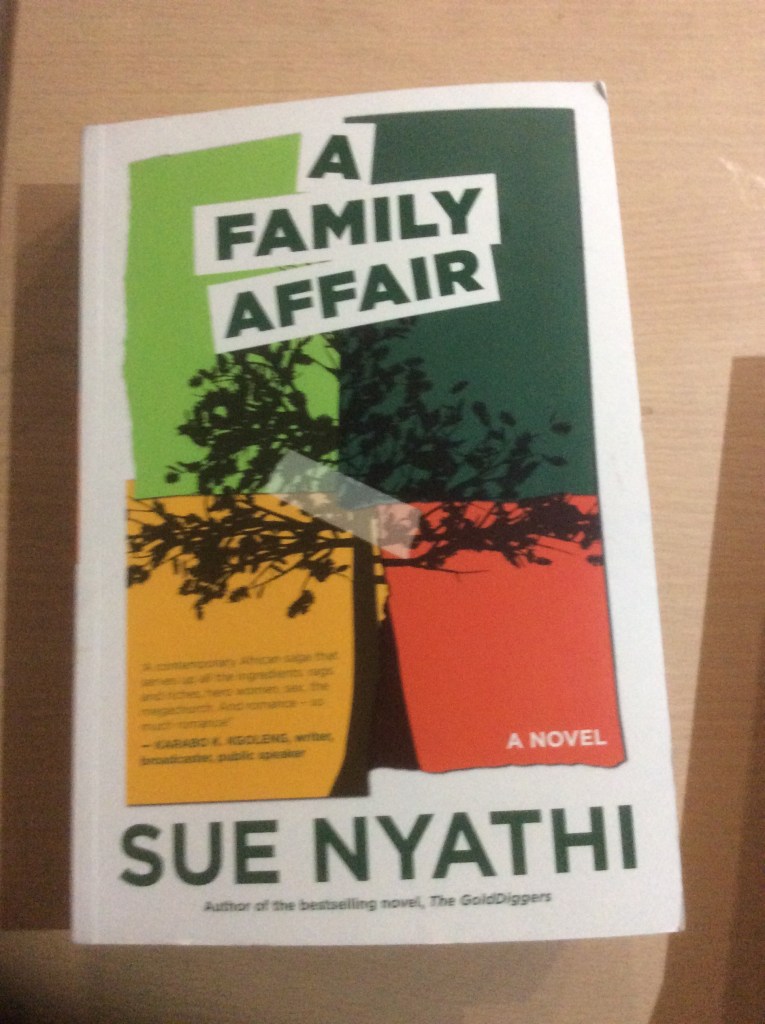
Book Review: A Family Affair By Sue Nyathi

By Nomathemba Pearl Dzinotyiwei

I’ve been saving Sue’s latest novel for a time when I have time to read uninterrupted. The wait was well worth it. There is always a temptation to retell the story when you enjoy it so much. This family saga set in Bulawayo has all the elements of a bestseller. It’s good to finally read a family saga in the tradition of Barbara Taylor Bradford in an African setting. Having lived in Harare and visited Bulawayo it brought back memories of growing in Zimbabwe before the economic collapse.

Sue’s characters and settings are completely relatable. We all have the black sheep sibling, the meddling aunt, the feckless uncle and delinquent teenage and religious fundamentalists to keep everyone in line. Sue manages to convey the pathos and despair of sexual and physical abuse, dire financial straits and the choices people make in desperation to survive and hold onto the people they love while weaving all of it into a great story.

She deftly portrays contemporary social issues such as the modern mega churches where people turn to faith in God to ease the pain and despair and find solutions for issues in their lives. Conservative views about women, their sexuality and relationship choices are also a key theme as the family grapples with the issue of unwed motherhood, separation and divorce in the lives of their three daughters. A man’s sexual sins are not judged with the same severity. Interestingly it’s the women who are more vocal and judgmental about what constitutes appropriate behaviour.

I enjoyed every page. I would recommend you read this and her other books Polygamy and Gold Diggers.

Sis! You Had One Job.

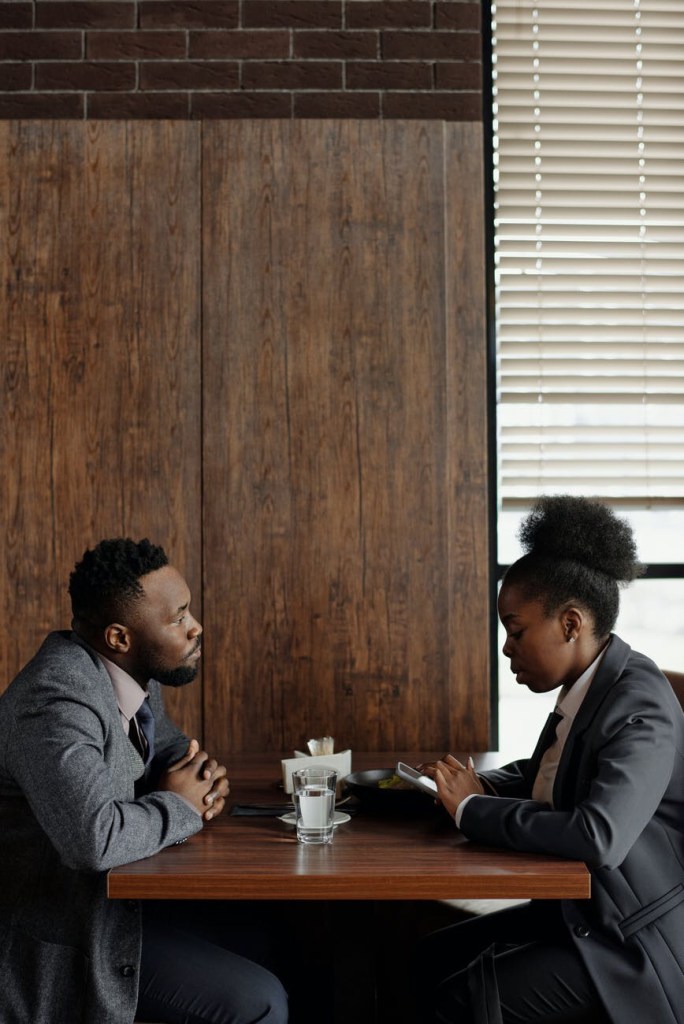
Picture courtesy of Pexels.com

‘Tell me about yourself’, The stranger says
Looking deep into my eyes
Potential lover?
Looks like husband material too,
At 2 metres plus.
‘What do you want to know?
The truth is the wrong answer will end the conversation
Just like that.

‘Tell me something. Anything! I want to get to know you.’
What he really wants to know is…
Am I just a pretty face?
Am I smarter than him?
Am I fun to be with?
What’s my body count?
If he turns on the charm, will I have sex with him?
On the first date?

‘Think carefully.
Watch your words,
Don’t give away too much,
But keep it interesting.’
That’s my social self talking.
Relentless cynic, inner critic
The ego that must always shine.

‘The way to a man’s heart is through his stomach. Say:’
‘I love to cook. What’s your favourite food?’
‘I exercise everyday. Keeping fit & healthy is important to me.’
Well it’s true. No more lockdown love handles.
My jeans fit perfectly, no muffin top.
If he’s a gym freak that should do it.
A quick Google search for Lewis Hamilton’s stats
Or the World Golf Rankings. He looks like the classy expensive type. I could just say. ‘I enjoy watching action movies.’
Netflix and chill is my vibe.
What man can resist that?

Instead, my essential self says
‘I am a spark of the Divine
My eyes shine with the light of a thousand moons
In my DNA hides the wisdom of the ages
I am creatively inspired
My love is infinite
Dive into the deep waters of my soul
If you dare.
An oyster carrying a rare and precious pearl
Is what you will find there.’

‘Uh! Oh. That’s really great.’ He checks his phone. ‘It’s been great chatting. I’m really sorry….’ I hear the ‘but’, seconds before it comes. ‘I’ll call you.’ ‘Ok. cool.’ I sip my coffee and wave. Nonchalantly. Goodbye husband material.

My social self *sighs and facepalms* ‘Really!’ She’s furious. It’s our first date in months. ‘You had to go there. You had one job.’ ‘All you had to do was make him like you.’

© Nomathemba Pearl Dzinotyiwei

Tell Us About Yourself: Job Interview Edition

Noma Dzinotyiwei

They say “Tell us about yourself.”
Then ask “Who is Noma?”
At first I think, ‘I hate that question.”
Instead I smile and take a deep breath
I pause. Then I ask myself,
‘Who are these people?’
‘What do they want to know?’
Then most importantly ‘Why?’

It’s a job interview
A standard question
They want to know what makes me unique
Why the job suits me
Why I think I’m suited to the job
It’s a trick question
Too much information will put them off
Too little won’t tell them what they really need to know

‘Is she the right candidate?’
‘Does she have what it takes’
‘What makes her different?’
‘What makes her special?’
‘Can she do this job better than the others?’
‘How can we be sure hiring HER isn’t a mistake?’
A million versions of the same question
‘Could she the one?’

Maybe I am
Maybe I’m not
I could make this work
Or die trying.
I carefully think the question through
Making sure I properly package my answer?

The safe is to start by saying what to my role is In the lives of the people closest to me.
A wife, a mother, the eldest daughter.
I tell them what I like, what I’m great at
How I’m conscientious and disciplined,
Yet creative and wildly original.
But what I’m really trying to say is
I am the one you need,
The one you’ve been waiting for.

© Noma Dzinotyiwei 2020

Thread by @NomaDzino: So I jumped onto the ‘learning new skills’ bandwagon and signed up for MasterClass. It’s not cheap – R250/ month, R3000.00 per year. I picke…

Thread by @NomaDzino: So I jumped onto the ‘learning new skills’ bandwagon and signed up for MasterClass. It’s not cheap – R250/ month, R3000year. I picked Ru Paul & I was blown away. So what can a drag queen teach us about self-love, authenticity an…
— Read on threadreaderapp.com/thread/1264879576318201857.html

Book Review: Nomaswazi by Busisekile Khumalo

The story begins with a recollection of a wedding. You would think they live the happily ever after. Instead find yourself on a high speed train ride that is the relationship between Nomaswazi and the man that left her at the altar. An innocent girl, she is crushed by the rejection and flees to Johannesburg.

One day she is minding her own business when he saunters casually back into her life and decides that he has no intention of leaving. She loves him, yet she hates him. He loves her, yet he feels undeserving of her after ditching her at the altar and trying to keep a lid on the demons of his past. He pulls out all the stops in his effort to get her back. The story will have you hooked, wondering what other curveballs the writer will throw and she has plenty. Busisekile’s imagination is unparalleled and her research is on point making the story so real.

With recollections of war, weapons smuggling, intrigue, hot erotic encounters as well as a fatal sibling rivalry, this story set mainly in rural eSwatini will keep you up late as you try to find out whether Nomaswazi and her man eventually make it down the aisle and get their happily ever after.

Thread by @NomaDzino: We recently celebrated our 20th Wedding Anniversary. Thank you for all the lovely messages and good wishes. For those asking How did we mana…

Thread by @NomaDzino: We recently celebrated our 20th Wedding Anniversary. Thank you for all the lovely messages and good wishes. For those wondering how did we manage to stay married? TBH, I don’t have all the answers. Looking back here’s what I learnt. A Thread W…
— Read on threadreaderapp.com/thread/1249348666797830146.html

Book Review: The Memo:What Women of Colour Need To Know To Secure A Seat At The Table by Minda Harts

By Nomathemba Pearl Dzinotyiwei

This book was clearly written out of frustration with the career advice offered to women in books such as Lean In by Sheryl Sandberg and Nice Girls Don’t Get the Corner Office by Lois Frankel. It’s great advice but the majority of the standard-issue career tips they offer don’t always address the experience of a woman of colour in a white male-dominated corporate environment. Women of colour face unique challenges in the workplace because of gender and racial discrimination as well as structural inequality. The answer is no, we don’t have the same 24 hours as men or white women and we start the race further back than they do.

Minda shakes the table and evens the scales for us by pointing out what the real problems are and how they should be addressed. As an African woman in a corporate job, it was a relief to finally read a book with career advice that speaks to my experience of working in a largely hostile environment. I have personally experienced many of the things she writes about and witnessed the others being experienced by women I know. The validation is heartfelt and appreciated.

We are not crazy. The micro-aggressions, passive-aggressive behaviour, gaslighting and the resulting anxiety, depression and post-traumatic stress that we suffer are real. However she offers actionable insights that will put you in the driver’s seat of your career and well on your way to that seat at the table and the C-Suite. She talks about negotiating pay and benefits, being intentional in your career choices, self-awareness, emotional intelligence, setting boundaries and leveling up in terms of skills. She delivers her advice in a straight-talking manner. Call it tough love, but after reading this book you’ll put your big girl panties on, wipe those tears and come out of that corner swinging harder and faster than Muhammad Ali.

She also addresses white people, stating how their behaviour in the workplace is problematic. The truth is most white people suffer from unconscious bias and just don’t know how damaging their words and actions are. In this book she does not give them any free passes and tells it like it is in #DearWhitePeople style. When they get the message, they too will know better, do better and get on the team by becoming success partners for black women. In Minda’s own words, success is not a solo sport and to quote Jesus Christ, ‘he who is not for us is really against us and he who is not helping us gather is really scattering.’

My favourite quote says: “There are future generations of women of color counting on us to finish this race and make it better when they arrive! Please don’t bite the apple and leave the garden before your time.” Oh Amen! Was there ever any more encouragement than that?

Reading this book is like having lunch with a girlfriend, having the best time with laughter, a few tears, dessert and wine and coffee. I would definitely recommend it for any woman who’s tired of bumping her head against the glass ceiling. This is the sledgehammer you’ve been waiting for. Get your goggles because baby, that glass gon’ break in every direction.