Igniting the Inner Flame: How Sexual Energy Fuels Creativity and Wealth

Picture Courtesy of Pinterest

In the ancient wisdom traditions, the concepts of creation, pleasure, and life force are inextricably linked. This life force, often referred to as sexual energy, is far more than just a physical drive. It’s a powerful, primal current that flows through us all, and nowhere is this energy more potent than in the sacral chakra. Located just below the navel, the sacral chakra, or Svadhisthana, is the energetic center of creativity, passion, and emotion. It is the seat of our innermost desires and the wellspring from which our creative “juices” flow. When this energy center is vibrant and balanced, we experience life with a sense of joy, fluidity, and creative spontaneity. We feel inspired, motivated, and ready to bring our ideas to life.


But what happens when this energy is blocked or stagnant? We might feel a lack of inspiration, a sense of creative block, or even a deep-seated feeling of emotional flatness. Healing and balancing the sacral chakra is not about suppressing this energy, but about learning to harness and direct it consciously. It’s about releasing old emotional wounds, embracing our sensuality, and allowing this powerful creative current to flow freely once again.


The Napoleon Hill Connection: Semen Retention and the Path to Wealth


One of the most fascinating perspectives on this topic comes from the legendary success philosopher, Napoleon Hill. In his seminal work, Think and Grow Rich, Hill dedicates an entire chapter to the concept of “The Mystery of Sex Transmutation.” He argues that the energy associated with the sexual impulse is the most powerful creative force in human beings.


Hill believed that the “transmutation” of this energy—the process of channeling it away from purely physical expression and into other endeavors—was a key factor in the success of many great men. He specifically highlighted the practice of semen retention in men as a way to conserve this potent life force. Rather than expending it, men could redirect this immense creative power towards their goals, whether that be building a business, creating a masterpiece, or generating wealth.


Hill’s teachings suggest that this redirected sexual energy provides a unique kind of drive and persistence. It’s an inner fire that fuels ambition and creativity, helping individuals to overcome obstacles and maintain an unwavering focus on their purpose. It’s a powerful reminder that our creative and reproductive forces are fundamentally linked to our ability to “create” success in all aspects of our lives.


How to Enhance and Channel Your Creative Energy


So, how can we consciously work with this powerful sexual energy to facilitate creativity and abundance?

  • Mindful Movement: Practices like yoga, dance, and Qigong are excellent ways to get the energy flowing in the sacral region. Hip-opening poses in yoga, for example, can help release stored emotions and create a sense of spaciousness.
  • Creative Expression: Engaging in any form of creative activity—be it painting, writing, playing music, or even cooking—is a direct way to channel this energy. Don’t worry about the outcome; the process itself is the point.
  • Visualization and Intention: Spend time visualizing your creative projects coming to life. As you feel the passion and excitement, imagine that powerful sacral energy flowing directly into your vision, giving it life and momentum.
  • Conscious Breathing: Deep, intentional breathing can help you connect with your body and circulate energy throughout your system. Try sacral breathing, where you imagine a warm, orange light filling your sacral chakra as you inhale and spreading out through your body as you exhale
  • For Men: The Power of Transmutation: For those interested in Napoleon Hill’s teachings, exploring the practice of semen retention with a clear intention can be a transformative experience. The key is to consciously redirect this conserved energy towards a specific goal, be it a creative project, a business venture, or personal growth.

Channelling Sexual Energy: The Unique Feminine Perspective

Picture Courtesy of Pinterest

The connection manifests uniquely in women due to their specific biological and energetic cycles. Just as in men, this energy is deeply rooted in the sacral chakra, the center of creativity, pleasure, and emotional flow. However, for women, this connection is often experienced in concert with the ebbs and flows of their menstrual cycle and the feminine principle of creation.
Here’s a look at how sexual activity and energy fuel creativity in women:

  1. The Hormonal Link: Ovulation and Creativity
    Research has shown a fascinating link between a woman’s menstrual cycle and her creative output. During ovulation, when a woman is most fertile, there’s a surge in hormones like estrogen. This hormonal boost is associated with increased energy, enhanced mood, and heightened cognitive functions—all of which are excellent for creative work. Studies have even found that women tend to have their most original and novel ideas during this phase. This suggests an evolutionary connection, where creativity may have been a sexually selected trait, serving as a signal of a woman’s reproductive fitness.
  2. The Power of the Sacral Chakra
    From a spiritual and energetic perspective, the sacral chakra’s association with the “divine feminine” is key. The sacral chakra governs the womb, the ultimate creative center where life is conceived. This principle of creation extends beyond procreation to encompass all forms of creativity. When a woman’s sacral chakra is balanced and unblocked, she can tap into her “feminine code superpowers”—her intuition, emotional depth, and ability to manifest her desires. This is about embracing the feminine principle of “receiving” and “nurturing” ideas, allowing for an incubation period before a creative project is brought to life.
  3. The Neurochemical Connection: Dopamine and Flow States
    Both sexual arousal and creative flow states trigger the release of dopamine in the brain. This “pleasure and reward” neurotransmitter creates the motivation and excitement that drive both experiences. The brain doesn’t necessarily distinguish between the two, rewarding the pursuit of both sexual and creative expression with similar feelings of satisfaction. This shared neurochemical pathway explains why a woman who is sexually fulfilled and connected to her sensuality may also feel more motivated and inspired in her creative endeavors.
  4. Transmutation and Conscious Channeling
    Similar to men, women can also practice sexual transmutation to channel their sexual energy into creative projects. This doesn’t necessarily mean abstinence, but rather consciously redirecting the potent energy of desire and pleasure. It involves acknowledging and harnessing this powerful life force and directing it with intention toward a specific goal. This can be done through practices like visualization, where a woman imagines her creative goal coming to life during moments of sexual energy buildup or even during climax.
  5. Vulnerability and Emotional Openness
    Both great sex and great creativity require a profound sense of vulnerability. Sexual intimacy demands a dropping of defenses and a willingness to be present and authentic. This same emotional openness is essential for creative work, as it allows for genuine self-expression and the creation of something truly meaningful. By embracing her sensuality and emotional landscape, a woman can cultivate the very same vulnerability needed to access her deepest creative wellspring.
    In essence, for women, sexual energy is not just a physical drive; it is a cyclical, powerful, and deeply emotional creative force that, when honored and consciously channeled, can be a profound source of inspiration, abundance, and authentic self-expression.

Our sexual energy is a sacred and powerful gift. It is the very essence of life and creation. By understanding its connection to our sacral chakra and our creative potential, we can learn to heal, balance, and consciously channel this incredible force. Whether you’re an artist, an entrepreneur, or simply a human being seeking to live a more vibrant and purposeful life, embracing this inner fire is the key to unlocking your true creative power and building the life you’ve always envisioned.
The Humble Heart: A Cornerstone of Spiritual Awakening and a Deepening Faith

AI – Generated Image


In our spiritual journeys, we often seek grand revelations and dramatic transformations. Yet, the path to true spiritual awakening and a vibrant walk of faith often begins with a quiet, yet profound, shift: embracing humility. As the principles outlined in our study highlight, humility isn’t about self-abasement, but rather an honest recognition of our place before the divine and an openness to guidance. Let’s explore how humility lays the groundwork for a deeper connection with God, drawing insights from scriptural wisdom and its application in personal messages.


Humility: Approaching God with a Contrite Heart


The very definition of humility in a spiritual context speaks volumes: it’s “approaching God with a contrite heart, recognizing one’s limitations and dependence on divine guidance.” This isn’t a weakness; it’s a profound strength. When we acknowledge our limitations, we open ourselves to an infinitely greater power.
Scripture repeatedly emphasizes this truth:

“Humble yourselves, therefore, under God’s mighty hand, so that in due time He may exalt you.” (1 Peter 5:6) This verse isn’t just a suggestion; it’s a promise. When we humble ourselves, we create the space for God to work in our lives in ways we cannot orchestrate on our own.

“Walk humbly with your God.” (Micah 6:8) This isn’t a one-time act, but a continuous posture. It’s a daily commitment to recognizing our reliance on God’s wisdom and guidance in every step of our lives.

Jesus’ prayer in Gethsemane: “Yet not as I will, but as You will.” (Matthew 26:39) This is perhaps the most powerful example of humility. Even in immense personal anguish, Jesus surrendered His will to the Father’s, demonstrating the ultimate trust and submission that humility fosters.


The Application in Our Spiritual Walk


The practical application of humility in our spiritual lives is transformative:

It encourages followers to pray with humility, accepting that divine intervention may come in forms different from personal desires. This is crucial. Often, we come to God with a fixed idea of what we want. Humility allows us to release those preconceived notions and trust that God’s plan, even if it deviates from ours, is ultimately for our good.

It stresses that true spiritual empowerment starts with a humble posture, opening oneself to guidance and transformation. It’s a paradox: by acknowledging our “smallness,” we become receptive to immense spiritual power. When we are humble, we are teachable, moldable, and ready to be transformed by God’s grace.


Beyond Humility: The Interconnected Principles


While humility is foundational, it’s intrinsically linked to other vital principles that contribute to a flourishing faith:

Thanksgiving (Gratitude): Offering thanks in all circumstances, for both blessings and challenges, is a natural outgrowth of a humble heart. When we recognize God’s sovereignty, we can find gratitude even in difficult seasons, trusting in His divine wisdom.

Faith and Expectation: Praying with confidence that God hears and answers, even if the outcome differs from personal expectations, flows from humility. A humble heart trusts God’s timing and His answers, even when they are “no” or “wait.”

Submission and Openness to Divine Will: Surrendering personal desires in prayer and accepting that divine wisdom may redirect or reshape one’s path is the ultimate expression of humility. It reinforces that both petition and surrender are necessary for authentic spiritual connection.


A Humble Invitation


True spiritual awakening isn’t about striving for perfection, but rather a continuous journey of growth marked by an ever-deepening humility. When we humble ourselves before God, we invite His presence, His guidance, and His transformative power into every aspect of our lives. It is in this humble posture that we truly begin to walk in faith, trusting in the divine process and embracing all divine responses as acts of profound wisdom.


So, let us cultivate humble hearts, for in doing so, we unlock the door to genuine spiritual awakening and a walk of faith that is rich, resilient, and deeply rooted in the divine.

Living in Ma’at: The 42 Negative Confessions as a Path to Integrity, Balance & Harmony. How Ancient African Wisdom Continues to Guide Our Lives Today

AI – Generated Image

In a world that often feels fractured—morally, spiritually, and socially—many of us are yearning for a path that brings us back into alignment. Not just with ourselves, but with nature, with truth, and with one another. Long before modern laws and religious doctrines, the Ancient Kemetic (Egyptian) civilization laid down a sacred spiritual framework for living a just and harmonious life. At the heart of this framework was Ma’at—the divine principle of truth, justice, balance, reciprocity, and cosmic order.

Central to this path are The 42 Negative Confessions of Ma’at—a profound ethical code that predates the Ten Commandments by thousands of years. They are not rules meant to control, but rather sacred reflections to guide our inner compass toward living in alignment with divine law.

🌾 Who Was Ma’at?

AI -Generated Image

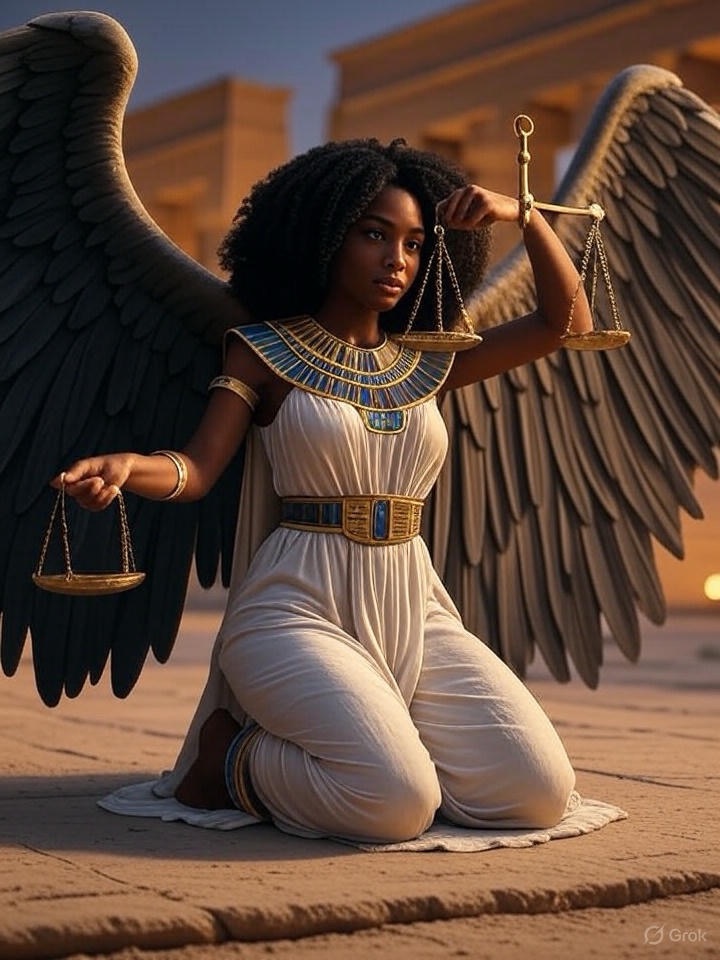
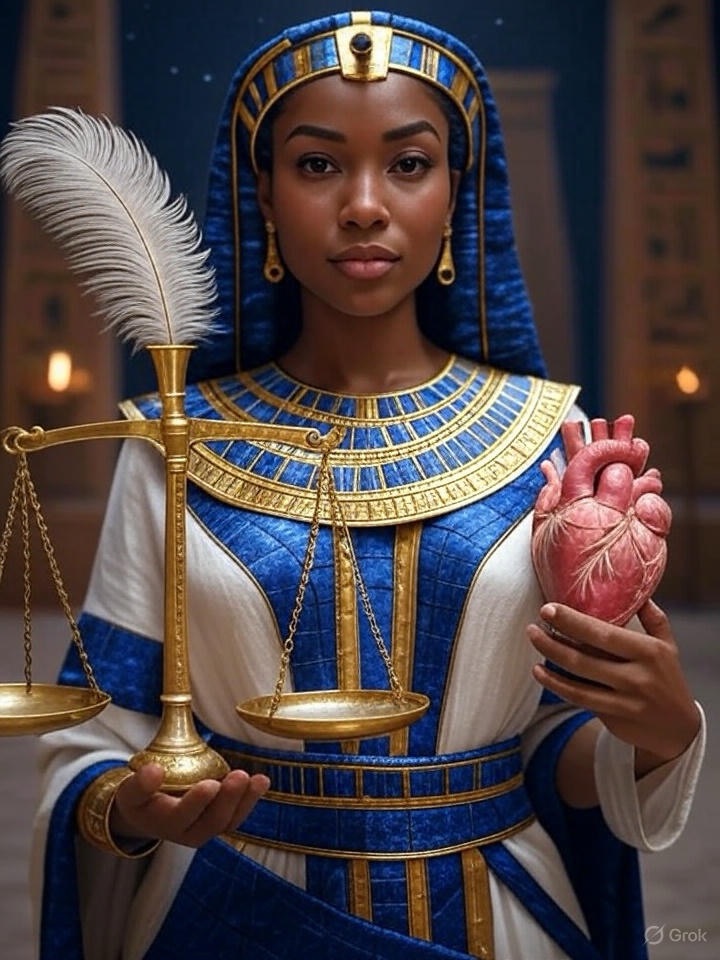
In the Kemetic tradition, Ma’at is both a goddess and a universal principle. She represents the divine order that governs the universe—the balance between chaos and peace, ego and humility, action and consequence. She is the heartbeat of morality, symbolized by the ostrich feather, against which every soul’s heart is weighed in the afterlife.

To live in Ma’at is to live in harmony—with nature, with our communities, and with our own souls.

📜 The 42 Negative Confessions: A Sacred Mirror

The “Negative Confessions” (also known as the Declarations of Innocence) are not so much prohibitions as they are affirmations of ethical integrity. Each begins with “I have not…” and is a declaration that one has lived in truth, without violating spiritual or moral laws.

Here are a few examples:

I have not committed sin. I have not stolen. I have not slain men or women. I have not uttered lies. I have not polluted the earth. I have not closed my ears to the truth. I have not acted with arrogance. I have not caused pain. I have not neglected my responsibilities.

In total, there are 42 declarations, addressing how we treat others, how we honor the environment, how we handle power, and how we care for ourselves.

🛕 A Blueprint for Living with Integrity

These confessions offer more than religious dogma—they are a daily spiritual practice. A mirror we can hold up to ourselves to check whether our thoughts, words, and actions are in alignment with what is just, kind, and true.

To live by the 42 Confessions is to:

Cultivate Self-Awareness – Regularly examine your intentions and behavior. Practice Personal Accountability – Take ownership of your choices without blame or denial. Respect Others Deeply – Honor the dignity of every person you encounter. Care for the Earth – Treat nature as sacred, not as a resource to exploit. Balance the Inner and Outer – Align your inner world with how you show up in the outer world.

This ancient code reminds us that spiritual evolution requires ethical grounding. There can be no enlightenment without integrity. No peace without justice. No balance without accountability.

Harmony with the Divine, Nature & Each Other

When we live in Ma’at, we don’t just become better individuals—we contribute to a more just and peaceful world. Our relationships improve. Our communities heal. Our connection to nature deepens. We begin to operate not from fear or selfish gain, but from reverence for the sacred interconnectedness of all life.

Imagine a world where leaders, institutions, and everyday people reflected on these confessions daily. How many injustices could be avoided? How much collective healing could take place?

🕎 From Kemet to Sinai: The Roots of the Ten Commandments

It’s no coincidence that the Ten Commandments of Moses bear a striking resemblance to the 42 Confessions of Ma’at. In fact, many scholars agree that Hebrew spiritual traditions—including elements of the Torah—were deeply influenced by the Kemetic mystery schools and moral philosophy.

When Moses fled Egypt and later received the commandments on Mount Sinai, he carried with him the memory of a society shaped by Ma’at. Concepts such as “Thou shalt not steal,” “Thou shalt not kill,” “Thou shalt not bear false witness” all echo earlier Kemetic teachings.

This cross-pollination of sacred ethics is a powerful reminder: Africa is the cradle of spiritual law. Many of the world’s great moral systems—including Judaism, Christianity, and Islam—are rooted in principles that first flowered along the banks of the Nile.

🌿 How to Integrate Ma’at into Your Daily Life

1. Morning Reflection

Choose 3–5 confessions each morning and use them as affirmations or points of self-inquiry.

2. Evening Review

Before bed, reflect: Where did I walk in Ma’at today? Where did I falter? What can I restore tomorrow?

3. Community Accountability

Share the confessions with friends, family, or a spiritual group. Use them to foster deeper conversation and collective growth.

4. Environmental Reverence

Honor Ma’at by caring for the earth. Recycle. Conserve water. Plant something. Bless the natural world.

5. Practice Truthfulness

Commit to speaking truth—especially to yourself. Let honesty become a spiritual discipline.

🧭 In Closing: The Feather and the Heart

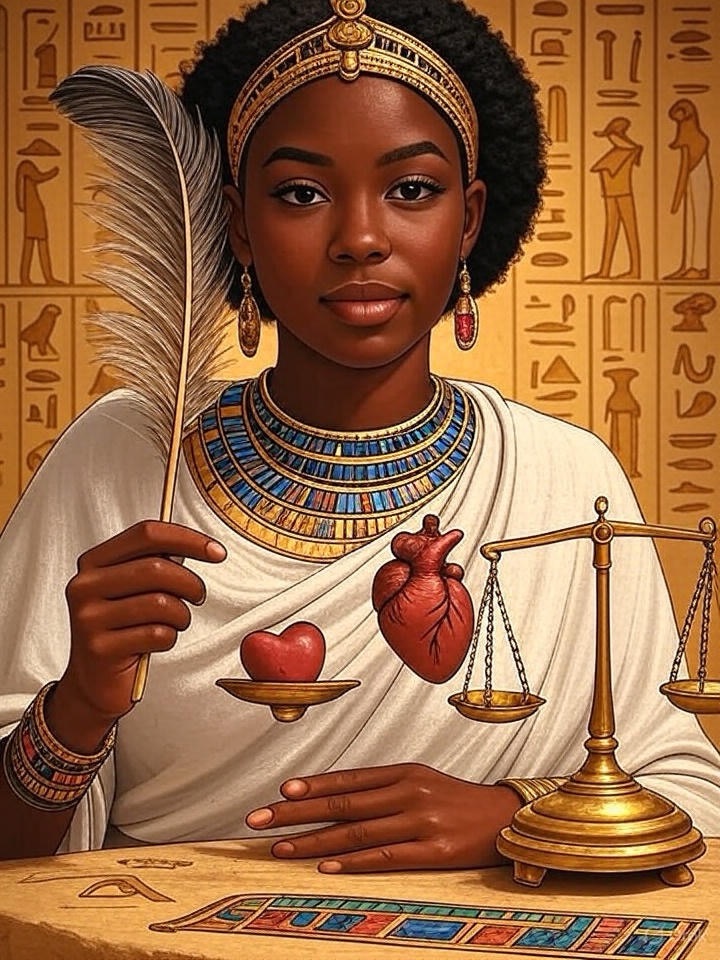
In the Hall of Ma’at, each soul’s heart is weighed against her feather. A heavy heart—full of lies, cruelty, or injustice—cannot pass into peace. A light heart—free from harm and aligned with truth—journeys into eternal harmony.

What would it take for your heart to be light as a feather?

What must you release? What must you restore?

The 42 Negative Confessions are not relics of the past. They are a living, breathing invitation—to walk in truth, to build a life of integrity, and to remember who we truly are:

Beings of divine order, born to live in balance with all that is sacred.

The Season of Ma’at: Returning to Divine Order July 23 – August 22

AI -Generated Image

As the blazing sun steadies and the winds of inner chaos settle, we enter the sacred Season of Ma’at—a time of harmony, balance, truth, and divine justice. In the Kemetic (Ancient Egyptian) spiritual calendar, this period marks the return to order after the wild, stormy energies of Set, the god of chaos, disruption, and upheaval.

Where the Season of Set invited us to confront our shadows, dismantle illusions, and release what no longer serves, the Season of Ma’at is the great rebalancing—an energetic and spiritual recalibration. It is the moment when the scales are brought out, and we are invited to weigh our lives, our choices, and our hearts.

🌟 Who Is Ma’at? The Divine Principle of Balance

In Kemet (Ancient Egypt), Ma’at is not only a goddess but a cosmic law—a principle etched into the very fabric of existence. She governs:

Truth, Justice, Divine Order, Harmony, Reciprocity, Balance.

Often depicted with an ostrich feather on her head, Ma’at’s feather became the ultimate symbol of spiritual integrity. Upon death, one’s heart was weighed against this feather. A heavy heart—burdened with wrongdoing, lies, or selfishness—would not pass into the afterlife. A light heart, aligned with Ma’at, could journey forward in peace.

🕊 The 42 Negative Confessions of Ma’at

Before the Ten Commandments, before the Golden Rule, there were The 42 Negative Confessions—a sacred set of moral declarations recited by the soul before the Divine Tribunal in the Hall of Ma’at. Each begins with the phrase:

“I have not…”

(…done harm, …stolen, …lied, …caused grief, …polluted the waters, etc.)

These were not mere prohibitions. They were spiritual affirmations of a life lived in alignment with divine law.

Here are a few examples:

I have not committed sin.

I have not made people weep.

I have not polluted myself.

I have not stolen from the poor.

I have not caused terror.

I have not acted with arrogance.

I have not disrespected sacred spaces.

These confessions emphasized ethical conduct, social responsibility, humility, and environmental stewardship. In later history, these principles would echo through Moses’ Ten Commandments, drawing clear inspiration from the ancient African wisdom that preceded it.

🌀 From Chaos to Calm: The Spiritual Energy of the Season

AI-Generated Image

In the Season of Set, life feels like a whirlwind. Old beliefs are shattered. Relationships shift. Egos clash. Truths are exposed. It is necessary—but exhausting.

Now, Ma’at invites us to breathe again. To recalibrate. To choose peace, not just in theory, but in practice.

This is a season for integrity, for restoring what was lost or broken during the storm. It’s a time to align our inner world with cosmic law—as above, so below. Just as the River Nile settles after flooding, so too must we settle our minds, hearts, and spirits.

🛕 How to Align with the Energy of Ma’at

Here are sacred practices and reflections to help you walk in Ma’at this season:

1. Self-Reflection & Ethical Inventory

Review the 42 Negative Confessions. Ask yourself: Where am I living in integrity? Where am I out of alignment? This is not about shame—it’s about refinement.

2. Balance the Scales

Where have you overextended yourself? Where have you held back from giving? Restore balance in your relationships, your finances, your time, and your self-care.

3. Speak the Truth with Compassion

Ma’at governs truth. But truth without grace becomes a weapon. Be honest—but also kind.

4. Declutter Your Life

Order is sacred. Clean your home. Organize your schedule. Simplify your commitments. Create space for divine order to flow.

5. Restore Justice

If you’ve wronged someone, make amends. If you’ve witnessed injustice, speak up. If you’ve neglected your own needs, restore justice to yourself.

6. Feather Ritual

Write down what is weighing on your heart—regret, guilt, fear. Then burn or bury the paper with a feather, declaring: “I release this burden and walk in Ma’at.”

🌕 Closing Reflection: A Heart as Light as a Feather

This is the season to become light-hearted in the truest sense—not through distraction or denial, but through spiritual discipline, ethical living, and sacred alignment.

May your heart be as light as Ma’at’s feather.

May your spirit rest in divine balance.

May you walk in truth.

May justice be your compass.

And may harmony bless everything you touch.

🌿 Journal Prompts for the Season of Ma’at

Where in my life am I being called to restore order?

What truths have I been avoiding or suppressing?

What does living in integrity mean for me today?

Which of the 42 confessions speaks most to my current season?

How can I create balance between my inner world and outer commitments?

Healing the Wounds We Cannot See: Energy, Ancestral Trauma, and Karma

AI -Generated Image

There are things we carry that we cannot name.

This week, I learned something profound about the invisible weight many of us bear: energy, trauma, ancestors, and karma. These forces shape our lives in ways we are only beginning to understand.

🌿 Energy is the force of life.

It is what animates us, fuels our emotions, drives our thoughts, and shapes our responses to the world. But when something painful happens and we don’t have the space, time, or tools to process it, that energy gets trapped. It becomes trauma.

💔 Trauma is not just the event—it’s the residue.

It lives in the body long after the moment has passed. Left unhealed, it can manifest as anxiety, depression, chronic illness, or inexplicable emotional turmoil. Some define emotions as “energy in motion.” If not released, they stagnate—creating emotional and physical blockages.

👣 Ancestral trauma runs deep.

The unhealed wounds of our forebears do not simply disappear with their passing. We carry up to 14 generations of memory in our DNA. That suicide that haunts your family line? That pattern of abandonment, illness, or addiction? It might not be yours alone.

🔁 Karma is memory in motion.

Karma is not only what we create—it’s what we inherit. It’s the echo of unresolved choices playing out through us until someone breaks the cycle. When you are spiritually gifted, the responsibility to heal your lineage often falls on you.

When this manifests as physical or mental illness, this is known among the Nguni people as “ingulo yamadlozi”—the illness of the ancestors. You are the one they chose. The one with the power to heal them and set them free.

🌕 Healing begins with truth.

You must speak what was silenced. Mourn what was denied. With the right rituals, therapy, and intention, you can break the chain. When you heal, you raise your vibration. You free the ancestors. You restore harmony.

🧬 Your healing is not selfish.

It is revolutionary. It is generational. It is spiritual. You are becoming the ancestor your descendants will thank.

📝 Journal Prompts for Ancestral Healing

What pain or pattern has repeated in my family across generations?

Which of my current struggles might not begin with me?

What emotions or memories feel “inherited” rather than personal?

What ancestral stories or silences do I carry?

What would it feel like to be free from this cycle?

What do I need to release to begin the healing?

Who in my lineage do I feel called to honour, forgive, or speak to?

🧘🏾‍♀️ Guided Meditation: Healing Your Bloodline

Find a quiet space. Light a candle if you wish. Sit or lie down comfortably. Close your eyes.

Breathe in slowly through your nose… and exhale gently through your mouth.

Again… in… and out.

Feel your body softening with each breath.

Now visualize a long red thread flowing from your heart down into the earth… and through the soil into the hearts of those who came before you.

See your mother… her mother… and her mother before her.

See your father… his father… and his father before him.

You don’t need to know their names. Just feel the connection.

Say silently or aloud:

“I honour the pain you carried.

I acknowledge the burdens you bore.

I release the parts of it I no longer need to carry.

I am ready to heal, and in healing, I free us all.”

Pause. Breathe. Let the energy shift.

Visualize that red thread pulsing with light… as the pain dissolves and is replaced by love, gratitude, and freedom.

When you are ready, bring your awareness back to your body. Wiggle your fingers and toes. Open your eyes.

Do the meditation as for as long and for as often as you need to.

Let the healing begin.

The Forgotten Prophets: Reclaiming the Wisdom of the Sibyls

AI – Generated Image

What if the stories you’ve been told about God, power, prophecy, and the origins of spirituality were deliberately altered—erasing the truth of Africa’s sacred feminine legacy?

In The Sibyls, Mama Zogbé uncovers a truth buried beneath centuries of conquest, colonization, and religious rebranding: that the original prophets, miracle-workers, and spiritual guides of the ancient world were African women.

These women—queens, priestesses, healers—were known as Sibyls.

The Rise and Erasure of the Sibyls

The Sibyls were not myth. They were real, powerful women who spoke prophecies, healed bodies and nations, and built spiritual cities and temples in Africa, Europe, and Asia Minor long before the birth of Christ.

But history, as it is told by the victors, changed everything.

Their temples were destroyed. Their writings were plagiarized. They were rebranded as witches. Their divine feminine power was replaced with patriarchal control.

Even African men, under pressure or ambition, betrayed them—looting their sanctuaries and forcing them into exile. And when they fled to Europe and Asia, they were hunted there too.

Stolen Stories, Whitewashed Myths

The theft didn’t stop at physical destruction. The spiritual knowledge of the Sibyls was appropriated and repackaged by empires like Greece and Rome:

The gods of Olympus were originally African deities. Homer’s Odyssey was a plagiarism of the Ethiopian Sibyl Eriphyle’s prophecies. Helen of Troy, famed for her beauty, was a Black woman. Even the name Europa belonged to one of the Sibyls.

Art, poetry, and theology were all employed to elevate male, white divinity and erase the divine feminine of African origin.

The Roman Church and the Goddess in Disguise

When Christianity rose under Constantine, the persecution intensified. Temples were torched. Priestesses were killed or sold into slavery. Yet the divine feminine survived—hidden in plain sight.

The Vatican, built on the ruins of a Sibyl temple, still whispers the old truths. The Black Madonna, venerated in secret even today, is none other than the African goddess Isis—uNomkhubulwane.

Even the Catholic prayer “Hail Mary” reflects this hidden reverence for the mother of God—a divine title first held by the Sibyls.

A Lineage of Power and Prophecy

AI -Generated Image

Many African women today—especially indigenous healers and abangoma—carry the same spiritual gifts. They divine with bones, shells, and dice. They dream of snakes, water, suns, and animals. They heal through trance, dance, and ancestral connection.

These are the markers of a Sibyl’s bloodline.

King Saul sought a Sibyl, Herophile, when God’s voice grew silent. Roman emperors, including Augustus, honored them. And the 7 churches in Revelation? Not Christian institutions—but temples of the Great Mother.

Reclaiming Our Truth

The erasure of the Sibyls is not just a historical injustice. It is a spiritual theft that disempowered generations of women, rewrote sacred texts, and weaponized religion.

But the truth is awakening.

To read ‘The Sibyls’ is to remember. To remember is to reclaim. And to reclaim is to heal.

As Jesus said:

“You shall know the truth, and the truth shall set you free.”

For reflection:

What gifts or dreams have you inherited through your maternal line?

Have you ever felt a spiritual calling that defied traditional religious narratives?

How would your spirituality transform if you truly believed the sacred feminine dwelled within you?

The legacy of the Sibyls has not gone forever. It lives in the DNA of every spiritually gifted child, male or female who is descended from these ancient priestesses of the divine. As we rise in consciousness and elevate spiritually, we align with the same divinity. Allow that heritage to ground and transform you.

Unboxing Spirituality—A Return to Sound, Purpose, and Universal Connection

AI – generated image

Lately, I’ve found myself revisiting what spirituality means—beyond titles, traditions, and timelines. We’re living in an era of spiritual awakening, but also one of immense confusion. Everyone is searching, naming, defining, and categorizing. But in all the noise, perhaps we’ve forgotten something simple and profound: spirituality is universal.

We Are All Divine Beings

Picture Courtesy of Pinterest

Every one of us comes into this world with a unique combination of gifts, a mission, and a life purpose. These are not the same things, though they are often confused.

Your mission is what your soul came here to accomplish—perhaps to teach, to heal, to uplift. Your life purpose is broader—it includes your roles as a daughter, a parent, a partner, a professional. These roles help shape and stretch your soul toward its highest evolution.

This is why not everyone has to quit their job and become a spiritual healer. You might be fulfilling your mission right now—just by listening to someone at work, helping them feel seen and supported. In that moment, you are healing. Mission accomplished.

Purpose Doesn’t Always Look Grand

There’s so much pressure these days to “find your purpose.” It’s a buzzword that has become burdensome. But what if you’re already living your purpose, right here, right now?

Your unique mission is expressed through your gifts and the context of your life. For some, that looks like full-time spiritual work. For others, it’s parenting with compassion, creating art, or leading with integrity in boardrooms. It is not one-size-fits-all.

Culture Is a Vehicle, Not a Cage

Original Photograph by Nomathemba Pearl Dzinotywei

Culture is man-made—it creates belonging, language, rituals. But we must be careful not to mistake cultural expressions for spiritual absolutes.

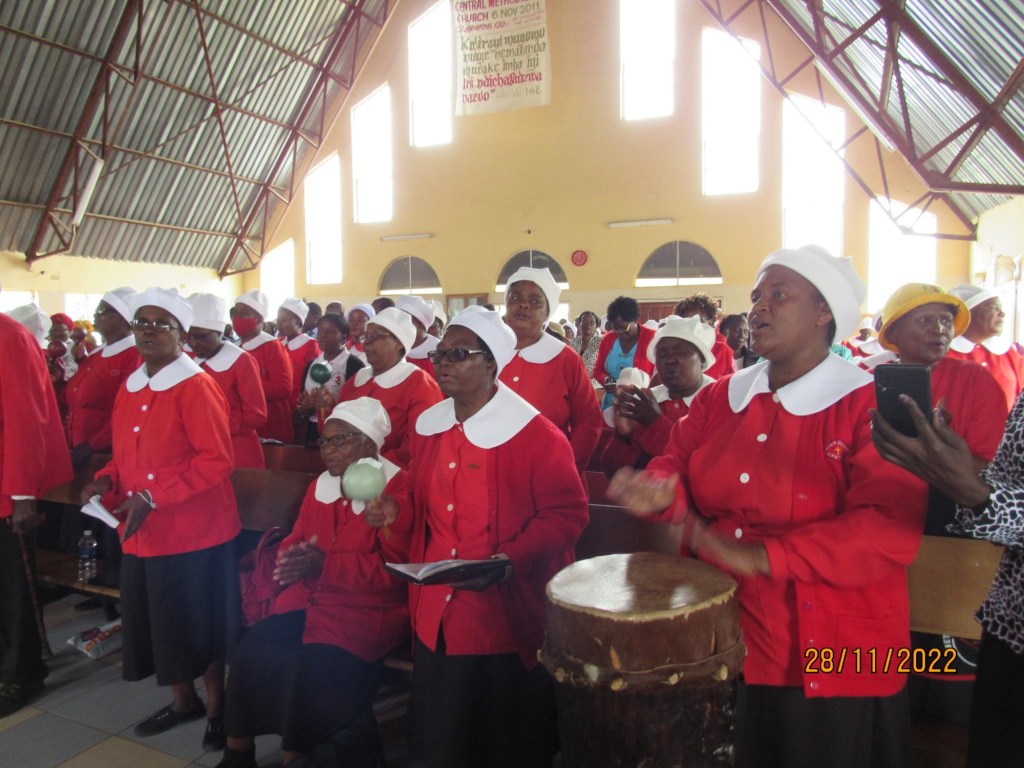
Across the world, one thing is consistent: music. Every spiritual tradition incorporates sound—clapping, drumming, singing, chanting. Why? Because sound is the language of the universe. Whether you’re calling on your ancestors, meditating with a mantra, or praising through gospel, you are tuning into the same divine frequency.

We are all what the Nguni people call abantwana abengoma—children of song.

Spirituality Is Bigger Than Labels

The moment we begin to label and box spirituality, we limit its expression and stunt our evolution. Your ancestors may have walked a different path than the one you now walk—but that does not make your path any less valid. Elevation comes when we release judgment and allow ourselves to learn from different traditions.

Spirituality is not meant to be a battleground of who is “more African,” “more woke,” or “more correct.” It’s a journey of remembering who you are—without fear, without shame, and without borders.

Reflection Questions:

What is your soul’s mission?

Where are you already fulfilling your purpose in quiet, uncelebrated ways?

What spiritual sounds or music speak to your soul?

Affirmation:

I am a divine being, walking in purpose, guided by love, and connected through song.

Let’s keep the conversation going. What does spirituality mean to you beyond religion or tradition? Share your truth with #ChildrenOfSong or tag me on X on @NomaDzino.

Wolves in Robes: Discernment in the Age of Spiritual Deception

By Nomathemba Pearl Dzinotyiwei

AI-Generated Image

Good morning, beloved. Today, we touch a tender, often buried wound—the betrayal many have experienced at the hands of those who claimed to represent God. Some of us trusted them with our hearts, our pain, and our purpose, only to be left spiritually bruised and disillusioned. It is time we speak honestly.

Not All That Glitters Is Godly

The idea that Satan plants agents in churches—men and women dressed in robes and uniforms, holding titles like bishop, prophet, and minister—is deeply unsettling, but it explains the evil we sometimes witness cloaked in holy garb. The trauma inflicted by these imposters cuts deep, especially because the harm is done in the name of God.

Let us be clear: a title does not make one holy. A robe does not sanctify. We are all called to pursue holiness and to work out our salvation with reverence and discernment.

Test the Spirits: A Divine Command

As written in 1 John 4, we must test every spirit to determine whether a servant is led by the Holy Spirit or by something else entirely. The tools are simple but sacred—daily study of the Bible, intentional prayer, and the guidance of the Holy Spirit.

After each sermon, revisit the scripture preached. Use cross-references, study notes, and prayer to seek deeper understanding. Don’t be swayed by emotional manipulation or out-of-context verses. Even Satan used scripture to tempt Jesus in the wilderness. That same tactic is used today in pulpits around the world.

Faith for Sale?

Beware the wide gate of spiritual entertainment and empty motivation. If the Word never convicts you of sin or leads you toward repentance, be cautious. Some churches shy away from preaching against pride and greed because they rely on the wealthy for offerings. Others demand “seed sowing” in exchange for miracles—yet Jesus never charged the poor or the rich for healing.

Let us remember: the Holy Spirit is not for sale.

Misplaced Worship

There will come a day when some will cry, “But I gave money to the church,” only to find themselves outside the gates of heaven. Why? Because they worshipped pastors and buildings—not God. Let us not be deceived into idolatry disguised as devotion.

As 1 Timothy 5:8 reminds us: “Anyone who does not provide for their relatives, and especially for their own household, has denied the faith and is worse than an unbeliever.” Many churches would rather you ignore this truth while you give your last cent.

African Spirituality and the War on Identity

A more insidious deception lies in the demonisation of African spirituality. Many Christians have been taught that their culture is evil, leading to emotional, spiritual, and even financial oppression. But few who denounce ancestral practices have ever brewed traditional beer, performed libations, or participated in rituals with understanding. They speak from ignorance.

Yes, some have been harmed by dark practices and must walk the Christian path for their safety and sanity. But others receive instruction from ancestors—through dreams, visions, or seers—to walk with God while honouring their heritage. It’s not one-size-fits-all.

Even Deuteronomy 18:10, often quoted against traditional practices, must be understood in context: it was a specific instruction to exiled Jews in Babylon. Much of African spirituality, with its rituals and sacrifices, aligns more closely with the Mosaic law than we are led to believe.

Grace, Culture, and Spiritual Warfare

Jesus did not abolish the law; He fulfilled it. The Holy Spirit came to intercede, comfort, and empower us. Living under grace doesn’t mean we must abandon our culture. What matters is this: Do our practices honour universal spiritual law? Do they harm others?

Those chosen as seers and indigenous healers must still pray, fast, and wage war in the spirit. Rituals alone are not enough—we must align with both our ancestral calling and the power of the Holy Spirit.

Final Word

This is a call to discernment. A call to deepen your study, guard your spirit, and walk boldly in both faith and truth. There is no room for spiritual laziness in a world where deception dresses itself in holiness.

Let the Spirit lead you. Let the Word ground you. And let your heritage be a bridge to your destiny, not a barrier.

Manifesting a New Reality: Aligned, Purposeful, and Yours

By Nomathemba Pearl Dzinotyiwei

Manifestation is not magic. It’s alignment.

It’s not about repeating affirmations until something miraculously appears. It’s about bringing forth what is already within you — the gifts you’ve been given, the purpose you were born for, and the energy you’re meant to radiate.

In a world obsessed with imitation and performance, true manifestation begins with authenticity.

Step One: Know You Deserve It

Before anything else, you must believe you deserve the life you dream of. That belief sets the frequency. If you don’t believe it, you won’t align with it. And if you don’t align with it, you’ll constantly sabotage your own progress.

Step Two: Visualise with All Your Senses

Don’t just think about what you want — see it, feel it, smell it, taste it. Engage your entire body in the imagining. What does your ideal reality look like when you wake up in it? What does it feel like to walk through your life, fully aligned with your purpose? Train your subconscious by painting that picture over and over again. Your energy follows your focus.

Step Three: Take Purposeful Action

We are divine beings — made in the image of the Creator — with creative power. That means we have the capacity to design our circumstances by directing our energy intentionally. What many of us lack is sacred process mastery. Without discipline and consistent action, your vision remains a wish.

So:

Get clear on what you’re good at. That natural talent is your clue. Pay attention to what others respond to positively when you do it. Start doing more of that — and explore how to get paid for it.

Step Four: Manifest What Is Yours

Trying to manifest someone else’s life or timeline will only lead to frustration. You are not Oprah. You are not Steve Jobs. You are you, and your path is divine in its own right.

If your dream doesn’t include a YouTube channel or a million followers — that’s okay. Manifest what you have the energy, ability, and discipline to sustain. Build at your own pace. If you have to work a job while building your dream, do it without shame. Your dream can evolve. That’s allowed.

Step Five: Create a Daily Practice

Spend at least 20 minutes a day feeding your dream — read, research, connect with others on the same path. Don’t isolate. Like-minded people open doors you can’t find alone. Practice gratitude — every single day. Gratitude sets the vibration. It opens the floodgates. The Universe, your ancestors, your angels — they respond to the energy of thankfulness.

And When You Feel Tired, Rest.

Not everything happens on your schedule. As Ecclesiastes reminds us:

“The race is not to the swift, nor the battle to the strong, neither yet bread to the wise, nor yet riches to men of understanding, nor yet favour to men of skill; but time and chance happen to them all.”

Divine timing is real. Trust the process.

Journal Prompt

What gifts come naturally to me that I’ve been overlooking? How can I make space for them this week?

Affirmation

“I manifest a life aligned with my true purpose. I honour my gifts, trust the process, and walk boldly in my own divine timing.”

Sex, Spirit, and Soul Ties: A Conversation We Must Have

By Nomathemba Pearl Dzinotyiwei

AI-Generated Image

Reading through the #My1stSexualExperienceWas hashtag reveals just how much pain and confusion still surround sex, particularly for women. It is a haunting reminder that our society has failed to teach the full story of what sex is—not just biology and “don’t get pregnant” warnings, but the emotional, spiritual, and psychological dimensions that linger long after the act is over.

Centuries ago, African cultures had initiation schools to prepare young people for adulthood. These were sacred spaces that taught not only about physical maturity but also about emotional intelligence, responsibility, boundaries, and the sacredness of intimacy. It’s time we return to a holistic model of sex education—one that honours the full humanity of both boys and girls.

Sex Is More Than a Physical Act

AI-Generated Image

Sex is sacred. It’s powerful, someone once wrote: ‘sex can create a memory, make a baby or generate a disaster.’ It connects two people not only physically but emotionally and spiritually. It creates ties—some healing, some harmful. In the right context—between two people who love and respect each other—sex can be affirming and deeply pleasurable. But when used as a tool of manipulation or taken without mutual consent, it becomes a source of spiritual damage.

This is not just poetic metaphor. It’s spiritual reality. During sex, we exchange DNA and spiritual energy. If your partner is emotionally broken or spiritually dark, that energy can pass into you. If they are entangled with other partners, you can be exposed to those energies too—without even knowing it.

Soul Ties and Spiritual Attachments

AI-Generated Image

Have you ever felt an inexplicable longing for someone who hurt you? Or found yourself unable to move on, even though your mind knows better? That’s the power of a soul tie—a spiritual connection that keeps you bound to someone, often through trauma bonding. It’s one of the reasons why narcissists love-bomb, rush intimacy, and then abandon you. They know that once a sexual bond is created, it becomes harder for you to leave.

Breaking up, divorcing, or even mourning a partner who has died doesn’t automatically sever the spiritual tie. Rituals, prayers, and conscious detachment are often needed to truly be free.

The Energetics of Sex

Sex releases energy—life force energy. That’s why you feel physically drained afterwards. Workers of darkness know this and use sex in rituals to harness that energy. Some even go as far as collecting bodily fluids to be used in harmful spiritual practices. Women have traditionally been taught to wash or cleanse after sex, not just for hygiene, but for spiritual protection.

If your partner is involved with others, spiritual harm can come to you from people you’ve never met—through the ties your partner maintains. This is not superstition. It’s spiritual science.

Reclaiming Sacred Sexuality

We must reclaim sex as something sacred. This means:

Teaching young people about consent, respect, and pleasure. Helping women know their bodies and communicate their needs. Ensuring boys understand emotional responsibility and that intimacy is not conquest. Encouraging discernment over casual encounters—not from shame, but from awareness.

Men need to understand that female arousal is not instant. It requires emotional connection, trust, and safety. And women need to stop being policed by outdated patriarchal norms that protect male predatory behaviour, while shaming female agency.

In Conclusion

Sex is not something to fear—but it is something to respect. It can build or destroy, heal or harm, elevate or enslave. We owe ourselves—and our children—a deeper conversation.

Let’s talk. Let’s teach. Let’s heal.

Reflection Questions

Have I ever felt spiritually tied to someone after intimacy? What rituals or practices help me cleanse and reclaim my energy? How can I teach or model holistic sexuality in my community?

Affirmation

I honour my body, my spirit, and my sacred energy. I choose love, truth, and protection.

Conclusion: A Call for Holistic Education

Holistic sex education must address the physical, emotional, and spiritual dimensions of intimacy. It should teach children about the joys and responsibilities of sex, emphasizing love, respect, and mutual pleasure. Conversations about consent, boundaries, and self-respect are crucial, as are discussions about the risks of harmful relationships and spiritual entanglements.

By fostering open, honest conversations, we can empower future generations to make informed choices about their bodies and relationships. The goal is not just to prevent harm but to celebrate the transformative power of intimacy when shared with love and respect.