Soul Tie Rituals for Breaking Emotional Bonds: Cleanse, Cut & Reclaim Your Power

By Nomathemba Pearl Dzinotyiwei

AI – Generated Image

Introduction

Some connections go beyond logic and linger in the shadows of our spirit. You think you’ve moved on, yet their energy still clings. You feel them in your thoughts, your dreams, your emotions—even when they’re no longer physically present. This is not just memory. This is a soul tie.

Soul ties are powerful spiritual and energetic bonds formed through deep emotional, sexual, or spiritual connections. While some are sacred and life-giving, others become toxic, draining, and invasive. In this post, we’ll explore what soul ties are, how they affect your spiritual essence, and offer rituals, tools, and affirmations to break free, cleanse, and reclaim your power.

🔮 What Are Soul Ties?

A soul tie is a deep energetic link that connects you to another person. These bonds are often formed through:

Sexual intimacy Emotional trauma bonding Spiritual connections (like shared rituals or oaths) Prolonged toxic relationships (romantic, familial, or even professional)

While soul ties can be beautiful in healthy relationships, they become spiritually dangerous when they form with narcissists, manipulators, or energy vampires.

🩸The Dark Side of Soul Ties: Spells, Hexes & Energy Drain

Unhealed or malicious soul ties can be exploited for spiritual manipulation. In the hands of the wrong person, soul ties become tools for:

Energy vampirism: Constant emotional pulling or manipulation, even from a distance;

Hexes or binding spells: Using the soul tie as a conduit to curse, trap, or limit your spiritual growth;

Psychic attacks: Nightmares, depression, mental confusion, or sudden fatigue that have no logical explanation;

Emotional sabotage: Recurring feelings of guilt, unworthiness, or obsession tied to a specific person or event(

If you’ve felt inexplicably stuck in a toxic emotional pattern with someone long gone, you may be under the grip of an unhealthy soul tie.

🔥 Rituals to Break Soul Ties and Reclaim Your Energy

Step 1: Awareness + Intention

You must first recognize that the tie exists. Ask yourself:

“Do I still feel emotionally or spiritually tethered to this person?” “Do I feel drained or haunted after thinking about them?” “Am I struggling to move on despite my efforts?”

Set a clear, strong intention: I am ready to release this tie and reclaim my energy.

✂️ Cord-Cutting Ritual
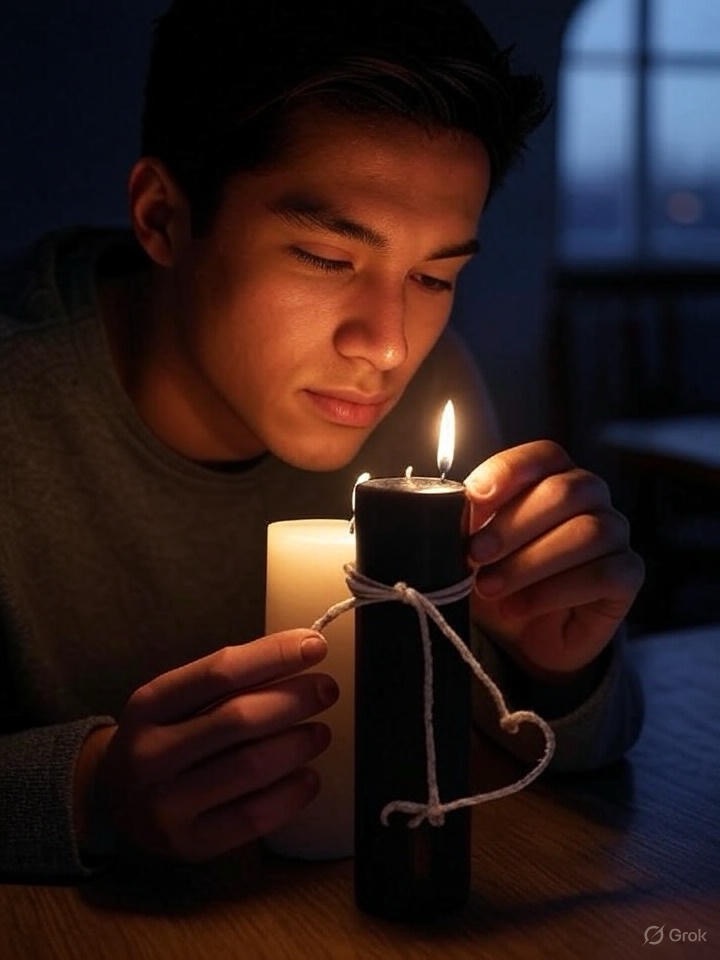
AI – Generated Image

You’ll need:

White candle (for purity) Black candle (for protection) Bowl of water, Pair of scissors or a ritual knife, String or yarn (to symbolize the tie) Paper & pen

Instructions:

Cast your circle or create a quiet, sacred space. Write the person’s name or situation on a piece of paper. Feel the emotion. Let it rise. Tie a string between two objects to symbolize your connection. Light the candles on either side. Say: “By fire, by water, by spirit and breath— I now sever the cords that bind me to death. No more will you drain me, no more control— I reclaim my power, I restore my soul.” Cut the string while envisioning the tie being severed. Burn the paper in the flame and drop the ashes into the bowl of water. Pour the water into the earth or down a drain, saying: “This tie is broken. So it is. So it shall be.”

🛁 Spiritual Bath for Cleansing Residual Energy

Ingredients:

2 cups Epsom salt, or coarse salt and

A handful of fresh rosemary or basil (protection); or 1–2 drops of lemon, lavender, myrrh or frankincense oil;

White rose petals (optional); A black obsidian or clear quartz crystal

Instructions:

Run a warm bath and add the ingredients. Sit in the bath, close your eyes, and imagine a golden light cleansing your aura. Say: “I release all that no longer serves me. Every part of me that was entangled is now free.” Let yourself air-dry, allowing the energy to be released.

🕊️ Closing the Portal: Energetic Release & Emotional Closure

After cutting the tie, you must close the portal that allowed the person access. Otherwise, the connection may reattach.

Block and delete them on all platforms. Remove or cleanse any objects or gifts they gave you. Journal a final letter (don’t send it)—burn it to release your voice. Work with a healer or therapist to process deep trauma or psychic wounds

💬 Affirmations to Reclaim Your Power

Repeat these daily, especially after cord-cutting or cleansing:

“I am whole, I am sovereign, I am free.” “I now call all parts of my energy back to me.” “I release you with love, but I choose myself.” “Every tie not formed in divine love is now severed.” “I walk in clarity, grounded in my own light.”

✨ Final Words: Freedom Is a Spiritual Act

Breaking a soul tie isn’t just emotional closure—it’s a spiritual act of freedom and reclamation. When you cut cords, cleanse your field, and close energetic access, you signal to the Universe: I choose myself. I honor my light. I welcome only that which uplifts and aligns with my highest good.

Your soul is your own. Your energy is sacred. It’s time to return to wholeness.

📌 Save This Post | 💌 Share With a Sister | 🔔 Subscribe for More Energy Work Tools

If you’ve experienced deep soul ties or breakups that linger long after the person has gone, share your story or questions below. Let’s reclaim our energy for lasting peace, joy and abundance.

Is It Love or a Trauma Bond? When Loving a Bad Boy Isn’t Love at All

AI – Generated Image

There’s something intoxicating about the bad boy. The aloofness. The danger. The emotional rollercoaster. The sweet highs followed by gut-wrenching lows. For many, the pull feels undeniable—inescapable, even. But here’s the truth: what we often mistake for love may actually be trauma.

So how do you know the difference between a genuine soul connection and a trauma bond dressed up in romance?

Let’s go deeper.

🧠 When Love Mirrors Old Wounds

A trauma bond forms when we become emotionally attached to someone who repeatedly hurts us. It’s the emotional equivalent of an addiction: a cycle of pain followed by intermittent reward that keeps us hooked. You may feel unable to leave, despite knowing the relationship is harming you.

This cycle is especially common in relationships where one partner is emotionally unavailable, abusive, or dismissive—and the other is stuck trying to earn love that should be freely given.

It’s not love—it’s survival.

And survival patterns are often rooted in our earliest relationships—especially with our parents.

👨‍👧 Daddy Issues, Mother Wounds & Repeating the Past

Many women who chase unavailable or abusive men are replaying unresolved pain from childhood:

A father who left, abandoned, or emotionally neglected them—instilling the belief that love must be chased, earned, or proven. A mother who was critical, absent, or hurt herself—leaving emotional scars and shaping one’s view of worthiness in love. A home environment where love was conditional, chaotic, or abusive—making dysfunction feel familiar, even safe.

We’re not consciously choosing to relive our trauma. But our nervous systems crave what they know—even if it hurts.

🌌 The Spiritual Truth: You Attract What You Are

It’s often said: We don’t attract what we want. We attract what we are. Your vibration—your beliefs, your wounds, your energy—draws in relationships that match your inner state. If your inner world is filled with abandonment wounds, low self-worth, or chaos, you may subconsciously attract partners who reflect those wounds back to you.

That doesn’t mean you’re to blame. It means your energy is calling in mirrors—not because you deserve pain, but because your soul is seeking healing.

Spiritually, toxic relationships can serve as teachers—illuminating what still needs to be healed.

🚨 6 Signs It’s a Trauma Bond, Not Love

1. You feel addicted to the relationship, even when it hurts.

2. You justify or downplay abuse or disrespect.

3. You feel anxious, not safe, around your partner.

4. You’ve lost yourself trying to please or “fix” them.

5. They give you crumbs, and you treat them like a feast.

6. You’ve mistaken chaos for passion—because calm feels boring or “off.”

🛤️ Healing the Pattern: How to Break Free & Attract Healthy Love

Acknowledge the Pattern. Recognize that what you’re experiencing isn’t healthy love. Naming the cycle is the first step to breaking it.

Do the Inner Work Therapy, inner child healing, shadow work, and journaling help uncover the core wounds driving your attraction to pain.

Cut Energetic Cords. Practice spiritual cord-cutting rituals to release unhealthy attachments. Cleanse your energy regularly to reset your vibration. Read my upcoming blog posts thus week on cutting energetic cords and protecting your energy. I also have a YouTube video on that.

Reparent Yourself. Give yourself the safety, love, and validation your parents didn’t provide. You become your own source.

Raise Your Vibration. Do this through cultivating self-love, gratitude, meditation, and joy. Mirror work is a great way to do this. Stand in front of the mirror and speak good things about yourself to your reflection. Do this for a few minutes daily to reprogram your subconscious mind. You begin to attract from a place of worth, not woundedness.

Redefine Love. Love is not supposed to hurt, confuse, or deplete you. Real love is safe, consistent, reciprocal, and kind. Believe you deserve a love that you do not have to work hard or diminish yourself to earn.

💗 Final Words: You Deserve the Love You Give

The truth is, love doesn’t look like begging, suffering, or waiting for someone to change.

If you were taught that love means sacrifice, pain, or chasing someone who keeps slipping away, it’s time to rewrite the story.

You are worthy of love that feels like peace, not pain.

Healing your patterns means you no longer accept less than you deserve. You stop dancing with emotionally unavailable partners and start making room for those who meet you in your fullness.

Because when you love yourself deeply, you raise your standards—and your vibration will only attract what honors that.

When Love Is Control — The Tragedy of a Man Who Destroys What He Can’t Be

By Nomathemba Pearl Dzinotyiwei

AI – Generated Image

He doesn’t hit her—not with his fists. His violence is quieter, more insidious.

He accuses. He interrogates. He isolates.

She no longer recognizes herself.

She used to be full of laughter, of dreams. Now, she tiptoes through each day, fearful of breathing the wrong way, posting the wrong thing, smiling too long at a waiter. Her husband watches everything—her journal, her social media, her phone. In his mind, she’s always on the verge of betrayal.

In reality, she is the betrayed.

He weaponizes sex—refuses her touch for weeks, then takes her body without regard for consent, claiming her like property, not a partner. It is rape, even if he wears a ring. And still, he insists he loves her.

But love doesn’t stalk.

Love doesn’t violate.

Love doesn’t destroy.

The Hidden Truth Behind His Cruelty

He has a secret: he is bisexual.

He cruises nightclubs under cover of night. Finds men who give him something he cannot admit he needs. And yet, he clings to his wife with desperate obsession—not because he loves her wholly, but because she represents the mask he refuses to remove.

To the world, she makes him look “normal.” Safe. Straight. In control.

In private, he punishes her for everything he cannot face within himself.

He is a man torn in two—ashamed of who he is, angry at what he feels, and terrified of losing the one person who validates his performance of masculinity. So he clutches tighter. Lies louder. Hurts deeper.

And she bleeds emotionally, spiritually, and physically under the weight of his fear.

Does He Deserve to Lose Her?

Yes.

Not because of his sexuality.

Not because he’s struggling with identity.

But because he refuses to do the work to heal himself and stop hurting her.

Being bisexual is not a crime. But being abusive is.

This isn’t about orientation—it’s about accountability. It’s about a man who uses manipulation, gaslighting, surveillance, emotional and sexual abuse to keep a woman in a prison of fear and dependency, while he secretly seeks the freedom he denies her.

He doesn’t want to lose her—not because he treasures her joy, but because he can’t control what he doesn’t possess.

But she is not his to possess.

The Tragic Irony

What he fears most—losing her to another man—has already begun. Not because she’s cheating, but because his neglect, cruelty, and betrayal have killed the intimacy she once gave freely.

If she finds tenderness elsewhere, it won’t be out of revenge—it will be an act of survival.

And that is the heartbreak of it all: he could have had her. Her laughter. Her loyalty. Her love. If only he had chosen honesty, healing, and respect over dominance and denial.

The Real Question Isn’t ‘Does He Deserve Her?’

It’s: ‘Does she deserve to keep suffering just to protect his secrets?’

The answer is no.

She deserves freedom. She deserves peace. She deserves love that doesn’t make her feel small, paranoid, or unsafe.

If another man sees her—truly sees her—and offers her the gentleness she’s been starved of, then perhaps that is not betrayal.

Perhaps that is justice.

Final Thought:

Some people want to be loved without having to become lovable.

But love is not owed.

It is earned—through truth, care, and the courage to stop hurting those we claim to love.

When a man would rather destroy his wife than face his reflection, he’s already lost her.

And maybe, in losing her, he will finally be forced to find himself.

But by then, she may be long gone—and that, too, is something he deserves.

Want to explore further? Read Forbidden Games, the latest novel by Pearl Deyi, now available on Amazon.

https://www.amazon.com/Forbidden-Games-Pearl-Deyi-ebook/dp/B0FFQNMKNW

Wolves in Robes: Discernment in the Age of Spiritual Deception

By Nomathemba Pearl Dzinotyiwei

AI-Generated Image

Good morning, beloved. Today, we touch a tender, often buried wound—the betrayal many have experienced at the hands of those who claimed to represent God. Some of us trusted them with our hearts, our pain, and our purpose, only to be left spiritually bruised and disillusioned. It is time we speak honestly.

Not All That Glitters Is Godly

The idea that Satan plants agents in churches—men and women dressed in robes and uniforms, holding titles like bishop, prophet, and minister—is deeply unsettling, but it explains the evil we sometimes witness cloaked in holy garb. The trauma inflicted by these imposters cuts deep, especially because the harm is done in the name of God.

Let us be clear: a title does not make one holy. A robe does not sanctify. We are all called to pursue holiness and to work out our salvation with reverence and discernment.

Test the Spirits: A Divine Command

As written in 1 John 4, we must test every spirit to determine whether a servant is led by the Holy Spirit or by something else entirely. The tools are simple but sacred—daily study of the Bible, intentional prayer, and the guidance of the Holy Spirit.

After each sermon, revisit the scripture preached. Use cross-references, study notes, and prayer to seek deeper understanding. Don’t be swayed by emotional manipulation or out-of-context verses. Even Satan used scripture to tempt Jesus in the wilderness. That same tactic is used today in pulpits around the world.

Faith for Sale?

Beware the wide gate of spiritual entertainment and empty motivation. If the Word never convicts you of sin or leads you toward repentance, be cautious. Some churches shy away from preaching against pride and greed because they rely on the wealthy for offerings. Others demand “seed sowing” in exchange for miracles—yet Jesus never charged the poor or the rich for healing.

Let us remember: the Holy Spirit is not for sale.

Misplaced Worship

There will come a day when some will cry, “But I gave money to the church,” only to find themselves outside the gates of heaven. Why? Because they worshipped pastors and buildings—not God. Let us not be deceived into idolatry disguised as devotion.

As 1 Timothy 5:8 reminds us: “Anyone who does not provide for their relatives, and especially for their own household, has denied the faith and is worse than an unbeliever.” Many churches would rather you ignore this truth while you give your last cent.

African Spirituality and the War on Identity

A more insidious deception lies in the demonisation of African spirituality. Many Christians have been taught that their culture is evil, leading to emotional, spiritual, and even financial oppression. But few who denounce ancestral practices have ever brewed traditional beer, performed libations, or participated in rituals with understanding. They speak from ignorance.

Yes, some have been harmed by dark practices and must walk the Christian path for their safety and sanity. But others receive instruction from ancestors—through dreams, visions, or seers—to walk with God while honouring their heritage. It’s not one-size-fits-all.

Even Deuteronomy 18:10, often quoted against traditional practices, must be understood in context: it was a specific instruction to exiled Jews in Babylon. Much of African spirituality, with its rituals and sacrifices, aligns more closely with the Mosaic law than we are led to believe.

Grace, Culture, and Spiritual Warfare

Jesus did not abolish the law; He fulfilled it. The Holy Spirit came to intercede, comfort, and empower us. Living under grace doesn’t mean we must abandon our culture. What matters is this: Do our practices honour universal spiritual law? Do they harm others?

Those chosen as seers and indigenous healers must still pray, fast, and wage war in the spirit. Rituals alone are not enough—we must align with both our ancestral calling and the power of the Holy Spirit.

Final Word

This is a call to discernment. A call to deepen your study, guard your spirit, and walk boldly in both faith and truth. There is no room for spiritual laziness in a world where deception dresses itself in holiness.

Let the Spirit lead you. Let the Word ground you. And let your heritage be a bridge to your destiny, not a barrier.

When Desire Meets Dissonance: A Woman’s Journey Through Emotional Clarity

By Nomathemba Pearl Dzinotyiwei

AI – Generated Image

She stands at the edge of a precipice, her heart caught between two men: one she vowed to love forever, and one who—without touching her—has awakened a part of her she thought had died.

Her husband is not cruel in the traditional sense. He does not strike her. He provides, yes—but not in the ways that matter most. His affection is rationed. His words, sharp when spoken at all. Her presence in the home feels more like a convenience than a connection. He controls through silence, withholds love as punishment, and has long stopped seeing her as someone to cherish.

Then, unexpectedly, she meets someone else.

He listens. He sees her. With him, she laughs freely again. Her body leans toward his without permission from her mind. It’s not an affair—not yet—but the emotional charge is unmistakable. She feels beautiful, wanted… alive.

And yet, she is tormented by guilt.

How can she be drawn to another man while still married? What does that say about her? Is she betraying her vows, or simply responding to a neglected truth within herself?

This is where the Theory of Emotions can be transformative.

Understanding Emotion: Not the Enemy, But a Messenger

The Theory of Emotions, especially as understood through psychology and cognitive science, posits that emotions are not random disruptions but informative signals. They reflect our unmet needs, internal conflicts, and the alignment—or misalignment—between our environment and our values.

In her case, the emotional pull she feels toward this other man may not just be about lust or escape. It could be a signal—an internal alarm—ringing out about the emotional starvation she has endured for too long.

Emotional Dissonance and Internal Conflict

The woman’s attraction is not inherently immoral; it’s a symptom of a deeper dissonance. She is emotionally disconnected in her marriage, yet bound by duty, loyalty, and perhaps religious or cultural expectations. This internal clash between what she feels and what she “should” feel creates psychological tension known as cognitive dissonance.

The Theory of Emotions invites her to explore this dissonance not with judgment, but with curiosity:

What need is this emotion pointing to? What truth am I avoiding by denying this attraction? What am I afraid will happen if I follow or suppress this feeling?

The Body Knows Before the Mind Accepts

Neuroscience supports that emotional processing often happens faster than cognitive reasoning. This means the butterflies she feels when she sees this man, the way her body warms at his voice—these reactions may be happening before she’s fully conscious of why. Her body is responding to emotional safety, resonance, and vitality—things she no longer associates with her husband.

Reading about emotional theory helps her recognize that feelings are not betrayals—they are data. They don’t dictate what she must do. But they beg to be understood.

What She Might Learn

She is not broken. Feeling attraction outside of a failing relationship is not unusual; it doesn’t make her immoral, it makes her human. Her needs are valid. Emotional neglect is a form of harm. Craving affection, attention, and connection is not weakness—it’s survival. Emotions need space. Suppressing feelings doesn’t make them disappear. Understanding them can lead to healthier choices—whether that’s healing the marriage, seeking therapy, or choosing a new path. Choice begins with clarity. Emotional literacy gives her the language to understand her experience and make informed, compassionate decisions—not reactive ones.

The Next Step

This woman may not be ready to leave her husband. She may never act on her attraction to the other man. But reading the Theory of Emotions gives her a new lens through which to view her inner world. It offers her the possibility of forgiving herself, of moving beyond guilt, and of reclaiming her right to joy and emotional truth.

Because in the end, emotions are not meant to control us—they’re meant to guide us.

And maybe, just maybe, this journey inward is the most faithful act she can make: not to a man, but to herself.

Recommended Reads:

“Emotional Agility” by Susan David “The Body Keeps the Score” by Bessel van der Kolk “Women Who Run with the Wolves” by Clarissa Pinkola Estés

If you’ve ever felt emotionally torn or trapped in your own life, know this: you are not alone. Your emotions are not a problem to fix—they are a voice longing to be heard.

Want to know what happens next? Read the novel Forbidden Games, available on Amazon.

https://a.co/d/cfaDeKZ

Forbidden Games

From the moment billionaire Alexander Martin spotted her across the quiet bookstore, he had to have her. Professional, calm, composed in her tailored suit and button-down blouse, Lindelwe Rantao was the last woman he would have pursued, married, loyal, off-limits. But he hadn’t built an empire by obeying limits.

What began as a game of pursuit, a challenge to shake her world, quickly unraveled into something far more dangerous. Lindi wasn’t just trapped in a loveless marriage; she was surviving a life that threatened to swallow her whole. And Alex’s desire to possess her shifted into a relentless need to protect her.

But love comes at a price. For her freedom. For his soul. And for secrets that could destroy them both.

Because falling for a married woman is reckless.
Falling for one with a jealous, abusive husband?
That’s war.

Read a sample and get your copy now on Amazon here.

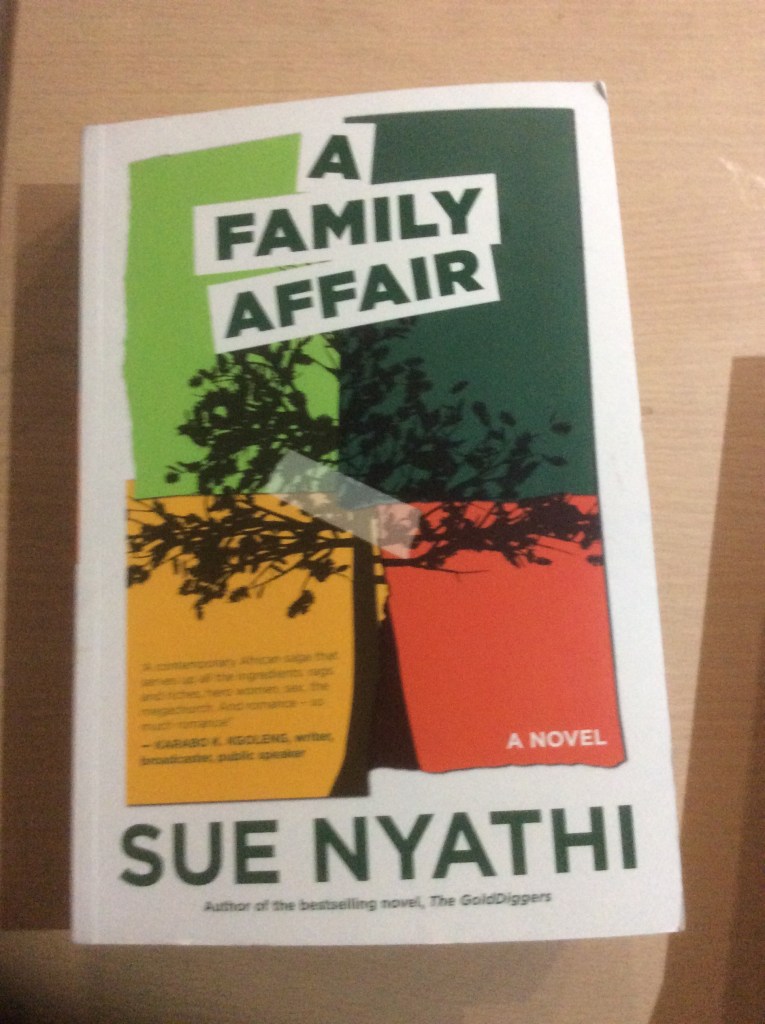
Book Review: A Family Affair By Sue Nyathi

By Nomathemba Pearl Dzinotyiwei

I’ve been saving Sue’s latest novel for a time when I have time to read uninterrupted. The wait was well worth it. There is always a temptation to retell the story when you enjoy it so much. This family saga set in Bulawayo has all the elements of a bestseller. It’s good to finally read a family saga in the tradition of Barbara Taylor Bradford in an African setting. Having lived in Harare and visited Bulawayo it brought back memories of growing in Zimbabwe before the economic collapse.

Sue’s characters and settings are completely relatable. We all have the black sheep sibling, the meddling aunt, the feckless uncle and delinquent teenage and religious fundamentalists to keep everyone in line. Sue manages to convey the pathos and despair of sexual and physical abuse, dire financial straits and the choices people make in desperation to survive and hold onto the people they love while weaving all of it into a great story.

She deftly portrays contemporary social issues such as the modern mega churches where people turn to faith in God to ease the pain and despair and find solutions for issues in their lives. Conservative views about women, their sexuality and relationship choices are also a key theme as the family grapples with the issue of unwed motherhood, separation and divorce in the lives of their three daughters. A man’s sexual sins are not judged with the same severity. Interestingly it’s the women who are more vocal and judgmental about what constitutes appropriate behaviour.

I enjoyed every page. I would recommend you read this and her other books Polygamy and Gold Diggers.

Thread by @NomaDzino: So I jumped onto the ‘learning new skills’ bandwagon and signed up for MasterClass. It’s not cheap – R250/ month, R3000.00 per year. I picke…

Thread by @NomaDzino: So I jumped onto the ‘learning new skills’ bandwagon and signed up for MasterClass. It’s not cheap – R250/ month, R3000year. I picked Ru Paul & I was blown away. So what can a drag queen teach us about self-love, authenticity an…
— Read on threadreaderapp.com/thread/1264879576318201857.html

Book Review: Nomaswazi by Busisekile Khumalo

The story begins with a recollection of a wedding. You would think they live the happily ever after. Instead find yourself on a high speed train ride that is the relationship between Nomaswazi and the man that left her at the altar. An innocent girl, she is crushed by the rejection and flees to Johannesburg.

One day she is minding her own business when he saunters casually back into her life and decides that he has no intention of leaving. She loves him, yet she hates him. He loves her, yet he feels undeserving of her after ditching her at the altar and trying to keep a lid on the demons of his past. He pulls out all the stops in his effort to get her back. The story will have you hooked, wondering what other curveballs the writer will throw and she has plenty. Busisekile’s imagination is unparalleled and her research is on point making the story so real.

With recollections of war, weapons smuggling, intrigue, hot erotic encounters as well as a fatal sibling rivalry, this story set mainly in rural eSwatini will keep you up late as you try to find out whether Nomaswazi and her man eventually make it down the aisle and get their happily ever after.

Book Review: The Memo:What Women of Colour Need To Know To Secure A Seat At The Table by Minda Harts

By Nomathemba Pearl Dzinotyiwei

This book was clearly written out of frustration with the career advice offered to women in books such as Lean In by Sheryl Sandberg and Nice Girls Don’t Get the Corner Office by Lois Frankel. It’s great advice but the majority of the standard-issue career tips they offer don’t always address the experience of a woman of colour in a white male-dominated corporate environment. Women of colour face unique challenges in the workplace because of gender and racial discrimination as well as structural inequality. The answer is no, we don’t have the same 24 hours as men or white women and we start the race further back than they do.

Minda shakes the table and evens the scales for us by pointing out what the real problems are and how they should be addressed. As an African woman in a corporate job, it was a relief to finally read a book with career advice that speaks to my experience of working in a largely hostile environment. I have personally experienced many of the things she writes about and witnessed the others being experienced by women I know. The validation is heartfelt and appreciated.

We are not crazy. The micro-aggressions, passive-aggressive behaviour, gaslighting and the resulting anxiety, depression and post-traumatic stress that we suffer are real. However she offers actionable insights that will put you in the driver’s seat of your career and well on your way to that seat at the table and the C-Suite. She talks about negotiating pay and benefits, being intentional in your career choices, self-awareness, emotional intelligence, setting boundaries and leveling up in terms of skills. She delivers her advice in a straight-talking manner. Call it tough love, but after reading this book you’ll put your big girl panties on, wipe those tears and come out of that corner swinging harder and faster than Muhammad Ali.

She also addresses white people, stating how their behaviour in the workplace is problematic. The truth is most white people suffer from unconscious bias and just don’t know how damaging their words and actions are. In this book she does not give them any free passes and tells it like it is in #DearWhitePeople style. When they get the message, they too will know better, do better and get on the team by becoming success partners for black women. In Minda’s own words, success is not a solo sport and to quote Jesus Christ, ‘he who is not for us is really against us and he who is not helping us gather is really scattering.’

My favourite quote says: “There are future generations of women of color counting on us to finish this race and make it better when they arrive! Please don’t bite the apple and leave the garden before your time.” Oh Amen! Was there ever any more encouragement than that?

Reading this book is like having lunch with a girlfriend, having the best time with laughter, a few tears, dessert and wine and coffee. I would definitely recommend it for any woman who’s tired of bumping her head against the glass ceiling. This is the sledgehammer you’ve been waiting for. Get your goggles because baby, that glass gon’ break in every direction.