By Nomathemba Pearl Dzinotyiwei

This is a question that bothers many Christians who aspire to learn about and practice their indigenous beliefs to connect to their African and family identity. Centuries of religious indoctrination and criminalization of indigenous spiritual practices under the Witchcraft Suppression Act led to many people being alienated from their identity, and struggling with their spirituality because they cannot always fully connect with Christianity. Others struggle with intense spiritual problems that manifest as mental or physical illness, financial difficulties, unemployment or lack of purpose which remain unresolved by conventional medicine and Christian prayers. As a result, they go to church on Sunday but consult indigenous healers to resolve their problems. Missionary churches do not accept indigenous healers unless they renounce their beliefs and practices to convert to Christianity because these are seen as the works of the devil.
Now that I know what I know about God & African Spirituality. My answer is ‘Yes’. You can be proud of your culture and traditional beliefs and be a devout Christian. This is an answer that I arrived at after years of wrestling with this issue in prayer, reading and research. As a Christian with a spiritual gift and calling that goes back many generations, it is essential that I resolve this for myself and hopefully assist others on their journey.
Spiritual Gift or Calling

Spiritually gifted people in African indigenous spirituality have specific signs. At birth, these include the baby being born with a caul, a membrane on the head or unbroken amniotic sac (ukuzalwa wembethe in IsiZulu) or with the umbilical cord wrapped around the baby’s neck (ukuzalwa unqambile in IsiZulu). In early childhood, signs include persistent illness with no medical explanation or abnormal physical or mental signs such as not speaking as a result of some kind of trauma. These normally require intervention from indigenous healers or prayers in charismatic churches.
People with a spiritual gift or calling have certain types of dreams and exhibit psychic abilities from an early age. There are many indigenous healers providing information on the Internet on dreams and signs with interpretations of varying accuracy. When they meet other spiritualists, they will tell them about their spiritual gift based on what they see. This is a universal fact across all cultures. There are people in every community who are chosen to heal people and carry messages from the Spirit for the benefit of the community.
One Universal Supreme Being
When you research different cultures and spiritual traditions, you will realise that the Creator is One. I am yet to come across a spiritual tradition that does not recognize a universal Supreme Being who created the universe and sets the laws for it to operate. Every religion and spiritual tradition uses prayer scripture, song, dance, ceremonies and sacred objects in various ways to communicate with the Creator directly or through an intermediary. God or the Creator is infinitely bigger, wiser and more powerful than we can imagine. He discerns the heart, knows our motives and when we we genuinely are worshipping Him regardless of the methods we use. He responds accordingly with billions of testimonies of answered prayers not only those of Christians.
People connect to God in various ways, song and dance is one, ceremony and ritual is another. There are many other ways to connect to the Spirit or divinity. African Independent Churches & Black American churches are ways of responding to the need to reconcile African culture with Christianity. Many Africans respond to the beat of the drum, dance & soulful spirituals during worship to feel the Spirit in order to connect to God. All spiritual traditions do this in one way or the other.

A core element of every spiritual tradition is the understanding of the universal principle of polarity, light & darkness, good & evil etc. This is expressed in the rituals & practices. Without that, it’s easy to be deluded into evil practices that cause destruction & mayhem. People who have found themselves on the dark side report fear, anxiety & depression as a result of dodgy spiritual practices because negative forces were invoked in their lives by their human guides. This has also caused people to label all other spiritual practices as evil.
Christianity and African Spirituality
Religion sets the rules of how people connect to Spirit. Religion is intended to guide people to connect to the divine. Institutional religion requires sticking to the rules and teaching acceptable doctrine. However when it is over-emphasized, religion inhibits spirituality. In the book of Matthew, Jesus criticizes the Jewish religious leaders repeatedly for their hypocrisy in keeping and teaching the letter of the law of Moses without justice, mercy or compassion and obedience to God, which are the spirit of the law.
There are many examples in the Christian Bible where God chooses to respond to someone who hasn’t followed the rules, such as the case of Hezekiah celebrating the Passover with people who were not ceremonially pure in 2 Chronicles. God speaks through Isaiah on how the people worship Him with their lips yet their hearts are far from him. He condemns the fact that they carry out the ceremonial activities but do not do so out of genuine obedience and keep on sinning against him on the side. God loves and will connect to a genuine worshipper no matter what they do or don’t do.
African tradition & Christianity can easily become religious. We are familiar with the way in which the Christian church is religious in terms of observances. Once you emphasize the physical and procedural aspects over the spiritual significance of the activity you become religious. For example, some indigenous healers insist that you must always light a certain colour candle and sprinkle snuff on the ground when communicating with ancestral spirits. Others say you shouldn’t light a candle at all because there were no candles in pre-colonial Africa. Either way, once you begin to prescribe how people conduct themselves to connect with the Spirit, you become religious.
To help resolve the conflict, you need to understand the origins of Christianity and the Bible and how Christian doctrine, i.e. what is taught in church evolved to what we know today. I will deal with this in another post. This will help in understanding how and why indigenous spirituality was demonized and discouraged. The Church has always been associated with power. The authorities needed, established and used institutional religion to ensure that law and order were maintained for the stability of the state. Christianity as a religion does not always assist in developing spirituality. In some denominations it has become ritualized and they do not teach the esoteric meaning and spiritual significance of what the rituals and ceremonies represent. In other denominations, they emphasize the feel good factor and have no ceremony or rituals. Both types emphasize blind unquestioning faith, however this leaves the spiritual seeker with more questions than answers.
The Calling Never Stops Calling
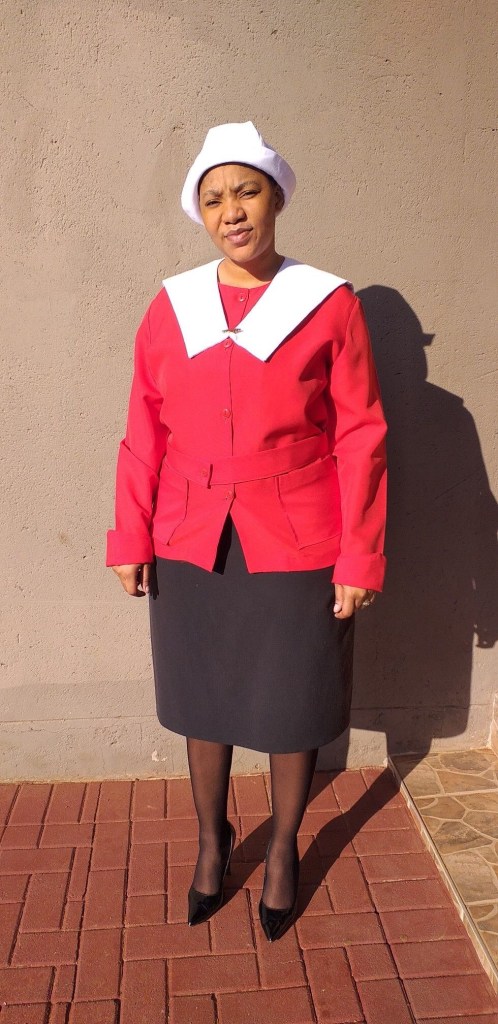
What has happened with Africans is that even when they convert to Christianity, the gift does not disappear nor does the calling. As a survival mechanism, many spiritually gifted people found a home in the African Independent Churches such as Ibandla lamaNazaretha known as the Shembe Church, which blends Christian and indigenous beliefs and practices. In these churches people found ways to exercise their gifts of healing using water, pebbles, salt and ash instead of herbs and animal products. Instead of divination using bones and shells, they use the Bible and verbal prophecy to provide information on the unseen. Instead of ancestral prints (amabhayi or amahiya) they adopted robes of different colours. This became known as isiprofeto or isithunywa and enabled them to evade arrest under the Witchcraft Suppression Act. Today young people are receiving this calling and there is a misconception that it is not an ancestral gift. It is an ancestral gift passed on by a blood relative who exercised their gift under the auspices of the church. If you feel or are told that you have a spiritual gift or a calling, it is important to investigate your family tree and identity which of your ancestors practiced as an indigenous healer or had a prophetic gift and operated in the church.
I listened to a podcast by Vusi Ngxande on thokozadlozi on Instagram talking to a traditional healer who went for initiation. She says the first ancestor to emerge was her great grandmother who was a member of the Methodist Church Women’s Fellowship, (umama woManyano or umama womthandazo). The reason is that the great grandmother had an ancestral calling that she did not fulfill. So she had a karmic debt which needed to be paid by someone in her bloodline. This is the reason why so many people are now receiving the ancestral calling as healers because the calling has not been answered for a number of generations because of the Witchcraft Suppression Act.

There are those that will argue that the belief that a spiritual gift is not scriptural. We should consider a number of examples. Jesus Christ was descended from Judah through King David and the prophecy by Israel his father was that the ruler’s staff would not depart from between his feet until its real owner comes and that was Jesus Christ. Christ therefore inherited the spiritual gift of leadership and ministry to God on behalf of the Jews and the Israelites from Judah through his mother Mary, who was descended from King David. This was the reason for the attempt on his life by Herod when he massacred all the baby boys in Bethlehem in 4 BC. Herod had been installed by the Romans, a descendant of Esau, Israel’s brother who had given up his birthright to lead the descendants of Abraham. He therefore was not the legitimate King of the Jews. By that time Israel had ceased to exist as a nation and the remnant had been absorbed into the Jewish kingdom. At his crucifixion Jesus was asked whether he was the King of the Jews. He did not deny it. A kingdom could only be obtained by inheritance or conquest in those days. Jesus has no army. Images of the crucifix today bear the inscription INRI which stands for Iessous Nazarenes Rex Judaeorum which is Jesus of Nazareth, King of the Jews in Latin.
It is important to realise that in Africa and the Middle and Far East, the king had to be initiated in the mysteries in order to be a person of spiritual power, able to communicate with God, the deities and spirits and to manifest miracles which included praying for rain and marshaling supernatural forces to defeat the enemy in war. You were not chosen as king simply because of your birth order. The nation’s healers’ and priests consulted various oracles and looked for omens and signs to choose the next king.
There is the interesting case of Elijah and Elisha in 2 Kings 2 where Elisha inherits a double portion of Elijah’s spirit after Elijah is taken up to heaven in a whirlwind. He puts on Elijah’s robe and takes his staff, divides the waters of the River Jordan and crosses it on dry ground. Those witnesses present testified that indeed the spirit of Elijah rested on Elisha. This presents an interesting parallel to healers who inherit ancestral gifts from people who are not blood relatives but are close to the person’s family.
Reconciling the Conflict

In my spiritual journey, having realised from my research that for Africans there is one Creator who made heaven and earth just like the Christian God, it set my mind at ease. This is because missionary Christianity misunderstood and misrepresented indigenous beliefs. They labeled ancestor veneration as worship and conflated it with the worship of demons. This was completely incorrect. Africans revere and respect their ancestors and call upon them for guidance and to intercede on their behalf with the Creator, in the same way as Catholics pray to the Saints to intercede on their behalf with God. Africans believe that their ancestors are intercessors because God is an unknowable mystery but uses them as messengers to guide and provide solutions for people.
Ancestral communication is not the same as worshipping idols. We generally do not have a physical image representing our ancestors because we understand them to be invisible in this dimension. An idol is a physical representation of a spirit, often one that is not of God. Demon or idol worship normally results in deviant behaviors, illness, mental instability and criminal behaviour, death and destruction. Guidance from the ancestors results in healing, prosperity and peace because they came from societies that adhered to a strict moral code. Africans do not call on spirits of ancestors that died a violent or untimely death or lived morally reprehensible lives. If a person was evil in life then they do not become good just because they are dead. If you invite those spirits into your life they will wreak havoc.
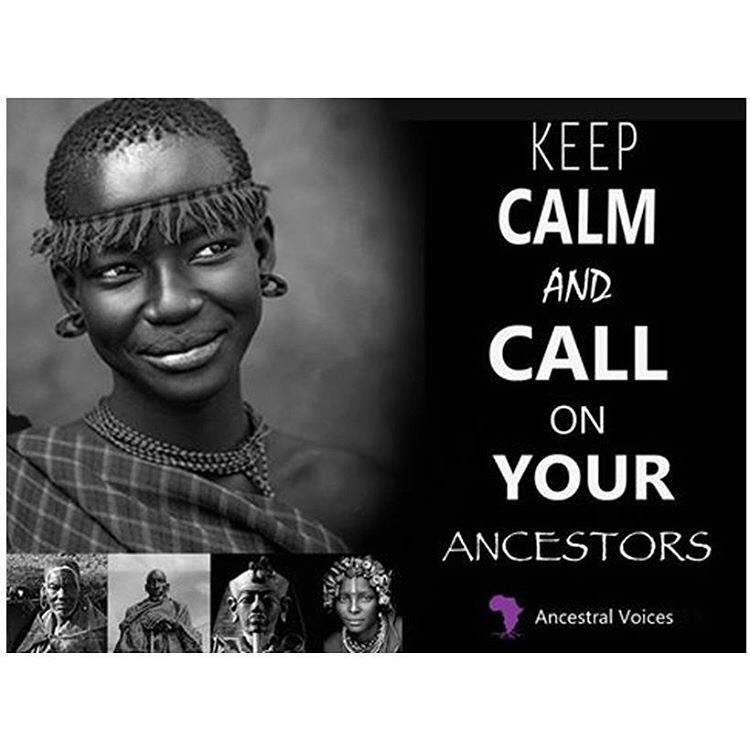
You can pray to God, ask for guidance and protection when doing spiritual work, speak to your ancestors and meditate to receive answers. They too were human, created by God & for many people were Christians too. God can send them just as he sends angels as messengers. If you understand what you are doing, then you need not fear acknowledging or hearing from your ancestors when they speak to you in dreams or intuition etc.
To ensure that you are equipped for a spiritual journey, be it an awakening or calling it is important is to study, interrogate and understand the essence and origins of religious practices and doctrine in order to discern what is useful in your own spiritual practice. To know whether the message is genuine, seek clarity from God and your ancestors and test the spirit using the scriptures you read and believe in your intuition. Spirituality cannot be studied, you have to practice it and find what resonates with you.
 PrincessPearlManzini
So very helpful, thank you for this article.
LikeLiked by 1 person
Thokoza Gogo, haibo this article is beautifully written siyabonga 🙏.
I’m at ease, may God continue blessing you and your family. Keep making your ancestors proud, thank you.
LikeLiked by 1 person
Thank you 🙏🏾🙏🏾🙏🏾
LikeLike