Igniting the Inner Flame: How Sexual Energy Fuels Creativity and Wealth

Picture Courtesy of Pinterest

In the ancient wisdom traditions, the concepts of creation, pleasure, and life force are inextricably linked. This life force, often referred to as sexual energy, is far more than just a physical drive. It’s a powerful, primal current that flows through us all, and nowhere is this energy more potent than in the sacral chakra. Located just below the navel, the sacral chakra, or Svadhisthana, is the energetic center of creativity, passion, and emotion. It is the seat of our innermost desires and the wellspring from which our creative “juices” flow. When this energy center is vibrant and balanced, we experience life with a sense of joy, fluidity, and creative spontaneity. We feel inspired, motivated, and ready to bring our ideas to life.


But what happens when this energy is blocked or stagnant? We might feel a lack of inspiration, a sense of creative block, or even a deep-seated feeling of emotional flatness. Healing and balancing the sacral chakra is not about suppressing this energy, but about learning to harness and direct it consciously. It’s about releasing old emotional wounds, embracing our sensuality, and allowing this powerful creative current to flow freely once again.


The Napoleon Hill Connection: Semen Retention and the Path to Wealth


One of the most fascinating perspectives on this topic comes from the legendary success philosopher, Napoleon Hill. In his seminal work, Think and Grow Rich, Hill dedicates an entire chapter to the concept of “The Mystery of Sex Transmutation.” He argues that the energy associated with the sexual impulse is the most powerful creative force in human beings.


Hill believed that the “transmutation” of this energy—the process of channeling it away from purely physical expression and into other endeavors—was a key factor in the success of many great men. He specifically highlighted the practice of semen retention in men as a way to conserve this potent life force. Rather than expending it, men could redirect this immense creative power towards their goals, whether that be building a business, creating a masterpiece, or generating wealth.


Hill’s teachings suggest that this redirected sexual energy provides a unique kind of drive and persistence. It’s an inner fire that fuels ambition and creativity, helping individuals to overcome obstacles and maintain an unwavering focus on their purpose. It’s a powerful reminder that our creative and reproductive forces are fundamentally linked to our ability to “create” success in all aspects of our lives.


How to Enhance and Channel Your Creative Energy


So, how can we consciously work with this powerful sexual energy to facilitate creativity and abundance?

  • Mindful Movement: Practices like yoga, dance, and Qigong are excellent ways to get the energy flowing in the sacral region. Hip-opening poses in yoga, for example, can help release stored emotions and create a sense of spaciousness.
  • Creative Expression: Engaging in any form of creative activity—be it painting, writing, playing music, or even cooking—is a direct way to channel this energy. Don’t worry about the outcome; the process itself is the point.
  • Visualization and Intention: Spend time visualizing your creative projects coming to life. As you feel the passion and excitement, imagine that powerful sacral energy flowing directly into your vision, giving it life and momentum.
  • Conscious Breathing: Deep, intentional breathing can help you connect with your body and circulate energy throughout your system. Try sacral breathing, where you imagine a warm, orange light filling your sacral chakra as you inhale and spreading out through your body as you exhale
  • For Men: The Power of Transmutation: For those interested in Napoleon Hill’s teachings, exploring the practice of semen retention with a clear intention can be a transformative experience. The key is to consciously redirect this conserved energy towards a specific goal, be it a creative project, a business venture, or personal growth.

Channelling Sexual Energy: The Unique Feminine Perspective

Picture Courtesy of Pinterest

The connection manifests uniquely in women due to their specific biological and energetic cycles. Just as in men, this energy is deeply rooted in the sacral chakra, the center of creativity, pleasure, and emotional flow. However, for women, this connection is often experienced in concert with the ebbs and flows of their menstrual cycle and the feminine principle of creation.
Here’s a look at how sexual activity and energy fuel creativity in women:

  1. The Hormonal Link: Ovulation and Creativity
    Research has shown a fascinating link between a woman’s menstrual cycle and her creative output. During ovulation, when a woman is most fertile, there’s a surge in hormones like estrogen. This hormonal boost is associated with increased energy, enhanced mood, and heightened cognitive functions—all of which are excellent for creative work. Studies have even found that women tend to have their most original and novel ideas during this phase. This suggests an evolutionary connection, where creativity may have been a sexually selected trait, serving as a signal of a woman’s reproductive fitness.
  2. The Power of the Sacral Chakra
    From a spiritual and energetic perspective, the sacral chakra’s association with the “divine feminine” is key. The sacral chakra governs the womb, the ultimate creative center where life is conceived. This principle of creation extends beyond procreation to encompass all forms of creativity. When a woman’s sacral chakra is balanced and unblocked, she can tap into her “feminine code superpowers”—her intuition, emotional depth, and ability to manifest her desires. This is about embracing the feminine principle of “receiving” and “nurturing” ideas, allowing for an incubation period before a creative project is brought to life.
  3. The Neurochemical Connection: Dopamine and Flow States
    Both sexual arousal and creative flow states trigger the release of dopamine in the brain. This “pleasure and reward” neurotransmitter creates the motivation and excitement that drive both experiences. The brain doesn’t necessarily distinguish between the two, rewarding the pursuit of both sexual and creative expression with similar feelings of satisfaction. This shared neurochemical pathway explains why a woman who is sexually fulfilled and connected to her sensuality may also feel more motivated and inspired in her creative endeavors.
  4. Transmutation and Conscious Channeling
    Similar to men, women can also practice sexual transmutation to channel their sexual energy into creative projects. This doesn’t necessarily mean abstinence, but rather consciously redirecting the potent energy of desire and pleasure. It involves acknowledging and harnessing this powerful life force and directing it with intention toward a specific goal. This can be done through practices like visualization, where a woman imagines her creative goal coming to life during moments of sexual energy buildup or even during climax.
  5. Vulnerability and Emotional Openness
    Both great sex and great creativity require a profound sense of vulnerability. Sexual intimacy demands a dropping of defenses and a willingness to be present and authentic. This same emotional openness is essential for creative work, as it allows for genuine self-expression and the creation of something truly meaningful. By embracing her sensuality and emotional landscape, a woman can cultivate the very same vulnerability needed to access her deepest creative wellspring.
    In essence, for women, sexual energy is not just a physical drive; it is a cyclical, powerful, and deeply emotional creative force that, when honored and consciously channeled, can be a profound source of inspiration, abundance, and authentic self-expression.

Our sexual energy is a sacred and powerful gift. It is the very essence of life and creation. By understanding its connection to our sacral chakra and our creative potential, we can learn to heal, balance, and consciously channel this incredible force. Whether you’re an artist, an entrepreneur, or simply a human being seeking to live a more vibrant and purposeful life, embracing this inner fire is the key to unlocking your true creative power and building the life you’ve always envisioned.

The Learned People Shall Govern

My favourite poem Nikki Giovanni called Hot Chocolate starts with the words: ‘This is not a Poem…’ So to speak of the Abantu Book Festival one would say:

This is not a Book Fair
It’s an experience.
Not just a meeting place
For writers and buyers
But an intersection
Of ideas, values and perspectives
Of what it means
To be a man, a woman,
Or in-between

Every second and every inch of space
Ours to express ourselves
Unapologetically African
No fucks given
No offence taken
Consciously intellectual
No ‘woke woke’rhetoric here
Only honest conversations
Agree or disagree
We sit at the feet of experience
Yet learn from youth

A happy place
Where colleagues and contemporaries
Become friends
And friends reconnect with the joy
Of long-lost siblings
A safe space
where everyone acknowledges,
understands and accepts
Your particular brand of madness.
And realises its genius.

A place of reflection
Of introspection
A place of power
A place of resistance
The legendary township of Soweto,
Where Apartheid received
Its most deadly wounds
In this place
Babylon’s whiteness
Must Fall.

A stone’s throw from
That sacred place called Kliptown
In this place
We declare that:
The People Shall Write
The People Shall Read
The People Shall Learn and
The Learned People Shall Govern

Long Live the People’s Book Festival
Long Live!
Long Live the Spirit of Ubuntu!
Long Live!
Amandla!
Awethu!
Imfundo!
Eyethu!
Inkululeko yaBantu!
Mayibuye!

©️ Nomathemba Pearl Dzinotyiwei

A Black Girl’s Song

By Nomathemba Pearl Dzinotyiwei

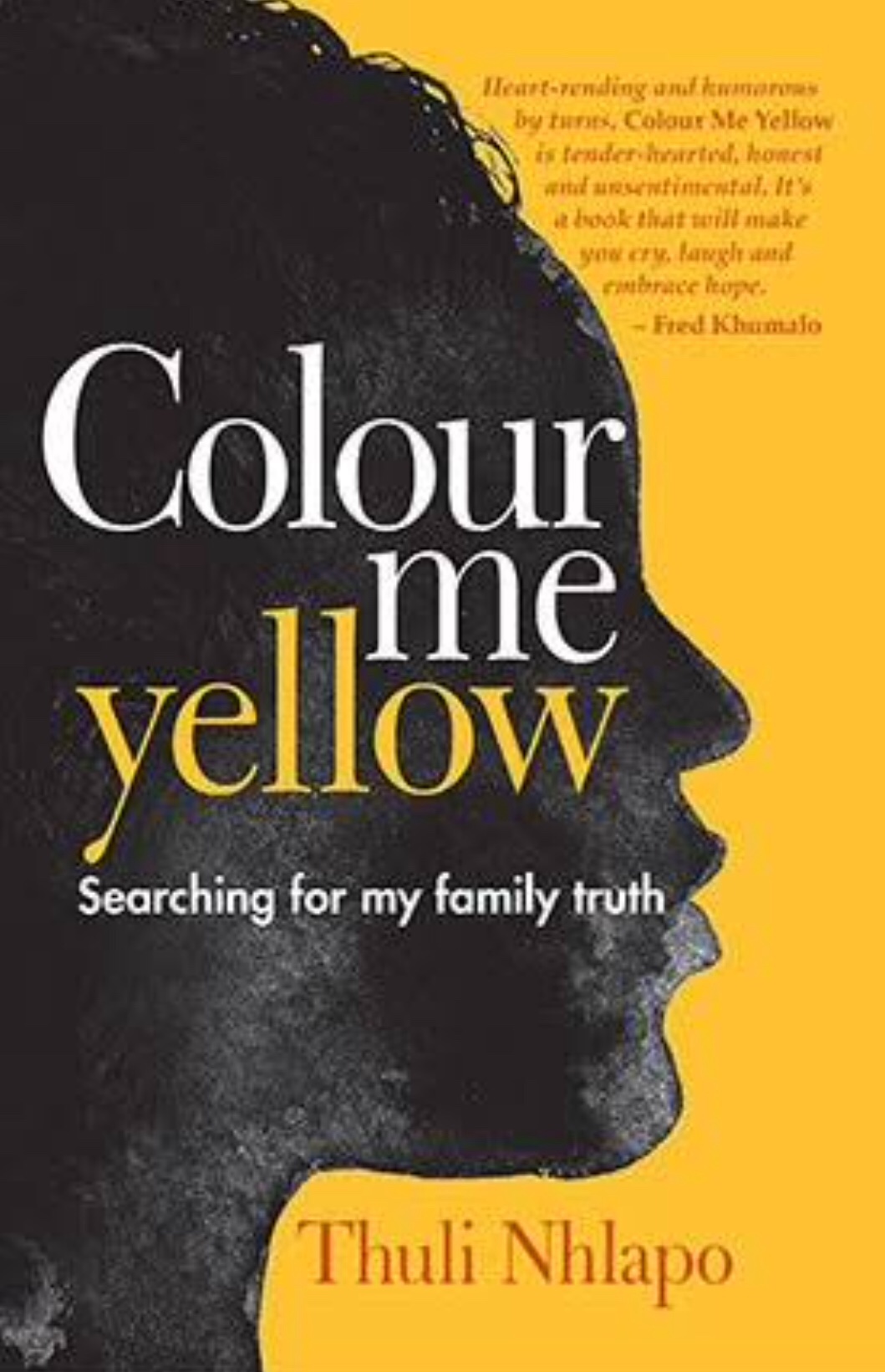
Colour Me Yellow: Searching For My Family Truth, the autobiography by Thuli Nhlapo is a compelling read. For me, an autobiography is someone else’s story. Thuli’s book is more than that. It touched me deeply because it is as much my story as it is that of many other people. The themes of Thuli’s story resonates with the story of my own family: of family secrets; the pain of being an outsider; of being different; the liberation of discovery and the realization that you have always known deep down, that which everyone around you is determined to deny. The issue of her complexion dominates the story, a reverse form of the colourism that we experience today, which glorifies light skin as a form of proximity to whiteness. There’s also the refusal by her family to acknowledge the distant past, which causes a painful prolonged and unnecessary struggle for her to integrate her intense spiritual gifts into her life.

This is a story of an African family, like many others, that keep a secret to keep them together. For the secret is like the one ring that binds them all* . It keeps the family whole, forcing everyone to maintain the façade of normalcy. What is a ‘normal’ family? Well for a start, a family must have a head. A father. The biological relationship is not a prerequisite, however, that masculine presence and influence is considered to be essential. In a generation where it was inconceivable for a woman to be independent, or to be alone by choice, a woman had to keep a man in her life, at all costs, at no matter how badly he behaved. The secret binds her to him.

Thuli’s mother is strong, yet weak, vulnerable yet invincible, at the same time. This contradiction in character is a necessity. An African mother is not only the neck that must support the head; she is the spine, the back and broad shoulders that must bear the burdens of raising a family; and take the lead in keeping that family’s place in the community. So she must be feminine and flexible enough to accept the patriarchal dictates of the husband and father of the house, yet in his absence: physically, emotionally and financially, she must be strong enough to fend for herself and her children. He like many men, comes strolling in and out of her life at his own convenience, imposing his own opinion of what should happen, regardless of the fact that he is not there to stay. It makes me exceedingly angry: that a man always has a choice and can escape responsibility without facing any consequences; while a woman is stuck with dealing with the effects of his choices for the rest of her life.

It is easy to judge Thuli’s mother for her failings and inadequacies, but as Maya Angelou put it, she did what she knew best, at that time. I believe as a mother herself, Thuli is able to write her mother’s part in the story with tenderness and compassion that comes with wisdom and the understanding that as a parent you don’t have all the answers. The story has excruciating painful episodes of abuse and cruelty that make you want to weep and hold the child that was her. Yet there are moments of tenderness, hope and joy that have you cheering for her, and for those people that, as Tyler Perry puts it, are the points of light in her life . I especially love her portrayal of rural Swati people, their simplicity, peaceful attitude and joy, something many people from more militant and aggressive societies would not understand.

You come to understand why her life turned out in the manner that it did: with her choices and the reactions of the people in her life. There are moments of divine intervention when she receives help at a time when she needs it most. She gets an education, attains professional success and acquires the car, the townhouse and the trappings of the Johannesburg yuppie lifestyle. Finally there is the journey that leads her to the truth, the unfolding of and her acceptance of who she is. It is a story much like the clumsy emergence of a butterfly from its cocoon, a painful but necessary process for it to strengthen its wings so it can fly.

Ntozake Shange, in her choreopoem For Colored Girls Who Have Considered Suicide When The Rainbow is Enuf writes:

‘Somebody/anybody

sing a black girl’s song

bring her out

to know herself

to know you

but sing her rhythms

carin/ struggle/ hard times

sing her song of life

she’s been dead so long

closed in silence so long

she doesn’t know the sound

of her own voice

her infinite beauty’

For herself, her mother, our mothers and all the women in her family and other families caught in the matrix of African traditionalist patriarchy and toxic family secrecy, Thuli Nhlapo has done just that. She has sung our song.

* A line of dialogue from Lord Of The Rings, a film adaptation of The Hobbit by J.R.R. Tolkien.

Walking on Eggshells

Try.

Try walking.

Walking on eggshells

In high heels

Heel toe, heel toe.

Tread softly

To avoid injury

To that ego,

Ego so big there’s not enough room

in the office

Even in the basement,

A reminder

Of the pecking order.

A prized parking spot

for his wheels

Bavarian Motor Works’ finest

Luxury SUV

While you squeeze

Your plebian set of wheels,

A Volkswagen between

The pillar and the dusty pipes.

Yes all animals are equal*,

Only some are more equal

Than others.

You would do well

To remember that little fact.

Smiling through gritted teeth

At the backhanded compliments

On your efforts

to hold onto

That bottom rung

Of the corporate ladder.

*From George Orwell, Animal Farm

*Picture courtesy of Pinterest

©️ Nomathemba Pearl Dzinotyiwei 2018

Mother’s Day

This is who I do this for

The unborn generations

And the children I bore.

Let me remind you who I do this for

My matrilineal line

Those who’ve gone before.

This is who I do this for

The women that never made it to school

Or to the factory floor.

Let me remind you who I do this for

Those that died in childbirth

Too far from the hospital door.

This is who I do this for

The women in domestic service

Still getting up to scrub the floor.

This is for the hustler,

The worker,

The housewife,

Bespectacled academic

High-flying executive

The married one

The single one

The one grieving

Longing to hold

Her departed child

one more time.

You deserve more than a day

Of celebrations

You are worthy of celebration

For all time.

©️ Nomathemba Pearl Dzinotyiwei

A Working Girl’s Dream

By Nomathemba Pearl Dzinotyiwei


Picture Courtesy of Pinterest


Dr. King had a dream.

One deeply rooted in the American dream

That one day his nation would rise up

Would live up to its creed,

“We hold these truths to be self evident: that all men are created equal.”

Dr King had a dream too,

That his four little children would one day live in a nation,

Where they would be judged

Not by the color of their skin,

But by the content of their character.

I too, an ordinary working woman

Have a dream.

Of the day,

When my dark skin, thick lips and nappy hair will not be held against me.

When I will be judged by the stellar results of

My hard work

Leadership qualities and

The brilliant disruptive game-changing genius of my creative mind.

Not by
My expensively made up face, (I only wear Mac darling) or;

The red soles on my stilettos (Genuine Louboutins dear, I don’t wear knock -offs);

Not by

The hideously expensive boutique original outfit (You know from his Ready to Wear Autumn Winter Collection, darling)

Nor by

The price of my handbag, ( Check the label and the stitching please)

the car I drive; or

The address of the secure complex where I lay my head.

Judge me,

Not by

My ability to flatter, woo and schmooze; or

The impeccably impregnable facade of my perfectly managed perceptions,

All designed to flatter and placate superiors

To prove that I’m worthy of my place.

On that day my spirit will dance and my soul will sing.

Free At Last! Free At Last! Thank God Almighty! We’re Free At Last!

Yes! A working girl can dream too!

In living colour!

Angry Black Woman

By Nomathemba Pearl Dzinotyiwei


Picture courtesy of Pinterest

I am a black African woman. I get angry. Being black, and a woman does not equate to being angry. I am not always angry. Sometimes I’m happy, other times I’m excited and on occasion I am fearful. Anger is an emotion not a permanent state of being. Emotions come and go as and when they are triggered. There are two triggers for anger, fear or trauma. But today I am angry.

Dying For Love

I am angry because yet another black woman not unlike myself has died at the hands of her partner. I don’t care if there was a fight. I don’t care who started it. I don’t care that she spent his money or whether she wanted to break off the relationship. I am angry because it could happen to my sister, my daughter, my niece or my friend.
I am angry because I live in a society where a woman cannot negotiate relationship terms, ask a man to use a condom, or walk away from an abusive man without losing her life. I am angry because men who kill their partners get off with culpable homicide because the prosecution cannot prove that the killing was pre-meditated.

It’s Your Fault For Being Irresistible

I am angry because black girls are more likely to be victims of sexual abuse, at the hands of family, friends, teachers or complete strangers. I am angry because 40% of women in South Africa are likely to experience rape at least once in their lives. I am angry because the trial, court system, rules of evidence and conduct of police, judges and lawyers retraumatise the victims.

I am angry because black women and girls cannot walk in public or travel on public transport at certain times, without being sexually harassed. I am angry that men actually think they should be flattered by the attention and accept being groped, fondled and raped. I am angry because black women and girls are told what to wear and where to go, instead of telling men not to grope, fondle or rape. I am angry that rapists don’t get to go to jail to experience the hell of rape themselves by other men.

Where the Slay Queens At?

I am angry because in this world, a girl must prostitute herself for alcohol, drugs, a new hairstyle whether Brazilian weave or a synthetic bob, a designer outfit, sanitary pads, a two piece meal at KFC, a can of coke or university fees. I am angry because a young woman must grant sexual favours to the boss to get a job, keep her job or get a promotion.

Sex is For The Man

I am angry because black girls are mutilated to control their sexual feelings. I am angry because they are cut open with knives by their husbands when they have sex for the first time. I am angry because they have to be treated at a specialist hospital for injuries sustained during childbirth.

I am angry because a black girl is seen,  not heard, not educated, or given an inheritance ahead of her brothers to assure her independence. I am angry because black girls are married off before they finish puberty to assure men of their purity. I am angry because educated black women are under pressure to find a husband, as if men who are marriage material are as many as grains of sand on a seashore. I am angry because a black woman cannot decide when and if she wants children or how many. I am angry because black women still die in childbirth in South Africa.

Hanging Off the Last Rung

I am angry because I live in a world of whiteness and patriarchy, that puts a black woman at the bottom of the social and economic ladder. White man, White woman, Indian Man, Indian Woman, Coloured Man, Coloured Woman , Black Man then Black Woman. I am angry, because when a black Woman challenges anyone above her on the ladder, even based on facts, she is labeled as emotional, irrational and you guessed it, angry.

I am angry because a black woman is offered and paid less than a white or Indian man or woman for the same job, even if she has more qualifications and experience. We know from the cars that they drive, where they go on holiday and where they send their children to school. I am angry that the diversity and inclusion committees have no real power to influence transformation in corporate entities.

I am angry because a black woman executive must put on a performance to get ahead in the patriarchal corporate death cult. She must read more, learn more, work harder, sleep less, lean in. She must show just enough passion, not too much, or the place will burn to the ground. She must smile, be pleasant, make her point without ruffling superiors’ feathers, tiptoeing around gross executive egos with jagged edges. She must be on the side of management even when they are wrong. She must defend the oppressor against the oppressed because they hold her livelihood in the palm of her hand.

I am angry because black women experience racist and sexist road rage, sometimes just for driving with care. I am angry because black women still get verbally abused in restaurants by white patrons. I am angry because black mothers have to bury their children killed by white farmers for spurious reasons.

Why Were You Angry Baby? ( Vivienne Johnson to her daughter Maya Angelou)

I am angry that many reading this article will either minimize or deny this constant assault on black women’s bodies, lives and integrity. I am angry because others will be emotional without taking any action or doing any self-introspection. I am angry at the black men who are more oppressive of black women than other races, calling them ‘bitches’ or ‘hoes’. I am angry at black women who blame the victims and take the oppressor’s side, that lack empathy because they are in a more comfortable position with education, money and choices that other black women don’t have.

I have plenty to be angry about, enough for several lifetimes. Most of all, I am angry that I will be called an angry black woman, as if anger is a permanent state of my being, by the people who do the very things that make me angry.

No Rules: An African Love Story. A Synopsis

This is a an urban contemporary love story between two Millennials: Pelonomi is a South African woman and Jideofor, a Nigerian man. The title ‘No Rules’ reflects how their relationship breaks all the known rules. It raises the question of how people get to know each other and decide on whether a person is ‘the one’.

The story takes you on the roller-coaster ride of their relationship. Despite the riveting attraction, they have an argument the first time they meet, that almost scuttles any possibility of being together. Steve Harvey’s recommended 90 day no-sex rule features here, but long will they be able to resist the explosive chemistry between them?

There are episodes of drama with their exes, a near- death experience and interesting conversations with the couple’s friends and family as they come to terms with this whirlwind love affair. There is the conflict the between global contemporary lifestyle and lingering demands of both Pedi and Igbo tradition and custom.

The story is set in Johannesburg, giving the reader an view of contemporary South African urban life. In the end it’s a heartwarming story of how two unlikely lovers overcome their differences to build a solid relationship and embark on a life together.