Is It Love or a Trauma Bond? When Loving a Bad Boy Isn’t Love at All

AI – Generated Image

There’s something intoxicating about the bad boy. The aloofness. The danger. The emotional rollercoaster. The sweet highs followed by gut-wrenching lows. For many, the pull feels undeniable—inescapable, even. But here’s the truth: what we often mistake for love may actually be trauma.

So how do you know the difference between a genuine soul connection and a trauma bond dressed up in romance?

Let’s go deeper.

🧠 When Love Mirrors Old Wounds

A trauma bond forms when we become emotionally attached to someone who repeatedly hurts us. It’s the emotional equivalent of an addiction: a cycle of pain followed by intermittent reward that keeps us hooked. You may feel unable to leave, despite knowing the relationship is harming you.

This cycle is especially common in relationships where one partner is emotionally unavailable, abusive, or dismissive—and the other is stuck trying to earn love that should be freely given.

It’s not love—it’s survival.

And survival patterns are often rooted in our earliest relationships—especially with our parents.

👨‍👧 Daddy Issues, Mother Wounds & Repeating the Past

Many women who chase unavailable or abusive men are replaying unresolved pain from childhood:

A father who left, abandoned, or emotionally neglected them—instilling the belief that love must be chased, earned, or proven. A mother who was critical, absent, or hurt herself—leaving emotional scars and shaping one’s view of worthiness in love. A home environment where love was conditional, chaotic, or abusive—making dysfunction feel familiar, even safe.

We’re not consciously choosing to relive our trauma. But our nervous systems crave what they know—even if it hurts.

🌌 The Spiritual Truth: You Attract What You Are

It’s often said: We don’t attract what we want. We attract what we are. Your vibration—your beliefs, your wounds, your energy—draws in relationships that match your inner state. If your inner world is filled with abandonment wounds, low self-worth, or chaos, you may subconsciously attract partners who reflect those wounds back to you.

That doesn’t mean you’re to blame. It means your energy is calling in mirrors—not because you deserve pain, but because your soul is seeking healing.

Spiritually, toxic relationships can serve as teachers—illuminating what still needs to be healed.

🚨 6 Signs It’s a Trauma Bond, Not Love

1. You feel addicted to the relationship, even when it hurts.

2. You justify or downplay abuse or disrespect.

3. You feel anxious, not safe, around your partner.

4. You’ve lost yourself trying to please or “fix” them.

5. They give you crumbs, and you treat them like a feast.

6. You’ve mistaken chaos for passion—because calm feels boring or “off.”

🛤️ Healing the Pattern: How to Break Free & Attract Healthy Love

Acknowledge the Pattern. Recognize that what you’re experiencing isn’t healthy love. Naming the cycle is the first step to breaking it.

Do the Inner Work Therapy, inner child healing, shadow work, and journaling help uncover the core wounds driving your attraction to pain.

Cut Energetic Cords. Practice spiritual cord-cutting rituals to release unhealthy attachments. Cleanse your energy regularly to reset your vibration. Read my upcoming blog posts thus week on cutting energetic cords and protecting your energy. I also have a YouTube video on that.

Reparent Yourself. Give yourself the safety, love, and validation your parents didn’t provide. You become your own source.

Raise Your Vibration. Do this through cultivating self-love, gratitude, meditation, and joy. Mirror work is a great way to do this. Stand in front of the mirror and speak good things about yourself to your reflection. Do this for a few minutes daily to reprogram your subconscious mind. You begin to attract from a place of worth, not woundedness.

Redefine Love. Love is not supposed to hurt, confuse, or deplete you. Real love is safe, consistent, reciprocal, and kind. Believe you deserve a love that you do not have to work hard or diminish yourself to earn.

💗 Final Words: You Deserve the Love You Give

The truth is, love doesn’t look like begging, suffering, or waiting for someone to change.

If you were taught that love means sacrifice, pain, or chasing someone who keeps slipping away, it’s time to rewrite the story.

You are worthy of love that feels like peace, not pain.

Healing your patterns means you no longer accept less than you deserve. You stop dancing with emotionally unavailable partners and start making room for those who meet you in your fullness.

Because when you love yourself deeply, you raise your standards—and your vibration will only attract what honors that.

When Love Is Control — The Tragedy of a Man Who Destroys What He Can’t Be

By Nomathemba Pearl Dzinotyiwei

AI – Generated Image

He doesn’t hit her—not with his fists. His violence is quieter, more insidious.

He accuses. He interrogates. He isolates.

She no longer recognizes herself.

She used to be full of laughter, of dreams. Now, she tiptoes through each day, fearful of breathing the wrong way, posting the wrong thing, smiling too long at a waiter. Her husband watches everything—her journal, her social media, her phone. In his mind, she’s always on the verge of betrayal.

In reality, she is the betrayed.

He weaponizes sex—refuses her touch for weeks, then takes her body without regard for consent, claiming her like property, not a partner. It is rape, even if he wears a ring. And still, he insists he loves her.

But love doesn’t stalk.

Love doesn’t violate.

Love doesn’t destroy.

The Hidden Truth Behind His Cruelty

He has a secret: he is bisexual.

He cruises nightclubs under cover of night. Finds men who give him something he cannot admit he needs. And yet, he clings to his wife with desperate obsession—not because he loves her wholly, but because she represents the mask he refuses to remove.

To the world, she makes him look “normal.” Safe. Straight. In control.

In private, he punishes her for everything he cannot face within himself.

He is a man torn in two—ashamed of who he is, angry at what he feels, and terrified of losing the one person who validates his performance of masculinity. So he clutches tighter. Lies louder. Hurts deeper.

And she bleeds emotionally, spiritually, and physically under the weight of his fear.

Does He Deserve to Lose Her?

Yes.

Not because of his sexuality.

Not because he’s struggling with identity.

But because he refuses to do the work to heal himself and stop hurting her.

Being bisexual is not a crime. But being abusive is.

This isn’t about orientation—it’s about accountability. It’s about a man who uses manipulation, gaslighting, surveillance, emotional and sexual abuse to keep a woman in a prison of fear and dependency, while he secretly seeks the freedom he denies her.

He doesn’t want to lose her—not because he treasures her joy, but because he can’t control what he doesn’t possess.

But she is not his to possess.

The Tragic Irony

What he fears most—losing her to another man—has already begun. Not because she’s cheating, but because his neglect, cruelty, and betrayal have killed the intimacy she once gave freely.

If she finds tenderness elsewhere, it won’t be out of revenge—it will be an act of survival.

And that is the heartbreak of it all: he could have had her. Her laughter. Her loyalty. Her love. If only he had chosen honesty, healing, and respect over dominance and denial.

The Real Question Isn’t ‘Does He Deserve Her?’

It’s: ‘Does she deserve to keep suffering just to protect his secrets?’

The answer is no.

She deserves freedom. She deserves peace. She deserves love that doesn’t make her feel small, paranoid, or unsafe.

If another man sees her—truly sees her—and offers her the gentleness she’s been starved of, then perhaps that is not betrayal.

Perhaps that is justice.

Final Thought:

Some people want to be loved without having to become lovable.

But love is not owed.

It is earned—through truth, care, and the courage to stop hurting those we claim to love.

When a man would rather destroy his wife than face his reflection, he’s already lost her.

And maybe, in losing her, he will finally be forced to find himself.

But by then, she may be long gone—and that, too, is something he deserves.

Want to explore further? Read Forbidden Games, the latest novel by Pearl Deyi, now available on Amazon.

https://www.amazon.com/Forbidden-Games-Pearl-Deyi-ebook/dp/B0FFQNMKNW

Sex, Spirit, and Soul Ties: A Conversation We Must Have

By Nomathemba Pearl Dzinotyiwei

AI-Generated Image

Reading through the #My1stSexualExperienceWas hashtag reveals just how much pain and confusion still surround sex, particularly for women. It is a haunting reminder that our society has failed to teach the full story of what sex is—not just biology and “don’t get pregnant” warnings, but the emotional, spiritual, and psychological dimensions that linger long after the act is over.

Centuries ago, African cultures had initiation schools to prepare young people for adulthood. These were sacred spaces that taught not only about physical maturity but also about emotional intelligence, responsibility, boundaries, and the sacredness of intimacy. It’s time we return to a holistic model of sex education—one that honours the full humanity of both boys and girls.

Sex Is More Than a Physical Act

AI-Generated Image

Sex is sacred. It’s powerful, someone once wrote: ‘sex can create a memory, make a baby or generate a disaster.’ It connects two people not only physically but emotionally and spiritually. It creates ties—some healing, some harmful. In the right context—between two people who love and respect each other—sex can be affirming and deeply pleasurable. But when used as a tool of manipulation or taken without mutual consent, it becomes a source of spiritual damage.

This is not just poetic metaphor. It’s spiritual reality. During sex, we exchange DNA and spiritual energy. If your partner is emotionally broken or spiritually dark, that energy can pass into you. If they are entangled with other partners, you can be exposed to those energies too—without even knowing it.

Soul Ties and Spiritual Attachments

AI-Generated Image

Have you ever felt an inexplicable longing for someone who hurt you? Or found yourself unable to move on, even though your mind knows better? That’s the power of a soul tie—a spiritual connection that keeps you bound to someone, often through trauma bonding. It’s one of the reasons why narcissists love-bomb, rush intimacy, and then abandon you. They know that once a sexual bond is created, it becomes harder for you to leave.

Breaking up, divorcing, or even mourning a partner who has died doesn’t automatically sever the spiritual tie. Rituals, prayers, and conscious detachment are often needed to truly be free.

The Energetics of Sex

Sex releases energy—life force energy. That’s why you feel physically drained afterwards. Workers of darkness know this and use sex in rituals to harness that energy. Some even go as far as collecting bodily fluids to be used in harmful spiritual practices. Women have traditionally been taught to wash or cleanse after sex, not just for hygiene, but for spiritual protection.

If your partner is involved with others, spiritual harm can come to you from people you’ve never met—through the ties your partner maintains. This is not superstition. It’s spiritual science.

Reclaiming Sacred Sexuality

We must reclaim sex as something sacred. This means:

Teaching young people about consent, respect, and pleasure. Helping women know their bodies and communicate their needs. Ensuring boys understand emotional responsibility and that intimacy is not conquest. Encouraging discernment over casual encounters—not from shame, but from awareness.

Men need to understand that female arousal is not instant. It requires emotional connection, trust, and safety. And women need to stop being policed by outdated patriarchal norms that protect male predatory behaviour, while shaming female agency.

In Conclusion

Sex is not something to fear—but it is something to respect. It can build or destroy, heal or harm, elevate or enslave. We owe ourselves—and our children—a deeper conversation.

Let’s talk. Let’s teach. Let’s heal.

Reflection Questions

Have I ever felt spiritually tied to someone after intimacy? What rituals or practices help me cleanse and reclaim my energy? How can I teach or model holistic sexuality in my community?

Affirmation

I honour my body, my spirit, and my sacred energy. I choose love, truth, and protection.

Conclusion: A Call for Holistic Education

Holistic sex education must address the physical, emotional, and spiritual dimensions of intimacy. It should teach children about the joys and responsibilities of sex, emphasizing love, respect, and mutual pleasure. Conversations about consent, boundaries, and self-respect are crucial, as are discussions about the risks of harmful relationships and spiritual entanglements.

By fostering open, honest conversations, we can empower future generations to make informed choices about their bodies and relationships. The goal is not just to prevent harm but to celebrate the transformative power of intimacy when shared with love and respect.

When the Game Ends — The Player, the Married Woman, and the Pull of the Unavailable

By Nomathemba Pearl Dzinotyiwei

AI – Generated Image

He was the kind of man mothers warned their daughters about.

Wealthy. Charming. Impeccably dressed and emotionally unavailable. His life was a curated collection of conquests—women drawn in by his confidence, seduced by the security he offered, and forgotten before dawn. Relationships were distractions. Commitment was a trap. Love? A game he played to win, not to keep.

Then he met her.

She wasn’t flirting. She wasn’t free.

In fact, she was everything he usually avoided: emotionally complicated and married.

But she was also breathtaking in a quiet, haunting way—elegant in her restraint, compelling in her sorrow. She didn’t chase attention. She didn’t need his money. And when she smiled, it never reached her eyes.

He noticed her before she noticed him. And by the time their conversations grew from polite exchanges to lingering glances and stolen confidences, he was already too deep.

He’d played many games, but this time—he was losing.

The Irresistible Allure of the Unavailable Woman

For the seasoned player, attraction often hinges on novelty, control, and the thrill of the chase. But an unavailable woman, especially one in a marriage, offers a different kind of high. It’s not about the conquest anymore—it’s about the connection. It’s about why he wants her, not just how he’ll get her.

So what changes when she is different?

1. She Doesn’t Need Him—And That’s Magnetic

Most of his flings began with admiration. But she didn’t seem impressed. Not by his car, his watch, or his name. Her emotional world was rich—complex with pain, tethered by duty. She belonged to someone else, but she wasn’t fulfilled. She was surviving, not living.

Her indifference humbled him.

For the first time, a woman wasn’t a mirror to his ego—but a reminder of his emptiness.

2. She’s Real. Raw. Wounded.

Her honesty pierced him. She spoke of her husband’s anger, the loneliness in her bed, the way she’d withered into someone she barely recognized. Yet, she stayed. Out of loyalty. Out of fear. Out of hope that he might change.

She wasn’t pretending. She wasn’t perfect. She was human.

And her pain awakened something inside him that no pleasure ever had: compassion.

3. He Sees the Man He Could Be, Not Just the One He’s Been

Players build walls. It’s how they protect themselves from vulnerability. But with her, the walls cracked. He began to reflect—on his choices, on his reputation, on the hollowness behind the luxury. For the first time, he wanted to offer something more than pleasure.

He wanted to be safe. Reliable. Enough.

Not because she asked. But because she deserved it.

4. The Emotional Stakes Are Higher

When a woman is unavailable, especially emotionally, every moment counts. Every glance becomes sacred. Every brush of the hand carries meaning. It’s intimacy on the edge of a cliff—one wrong move, and it all disappears.

This intensity draws him in. Not to play—but to feel. Deeply.

When the Player Hangs Up His Boots

He doesn’t chase her for sport. He waits. He listens. He learns. For the first time, he understands that love is not about possession—it’s about presence.

Whether she ever leaves her marriage or not becomes secondary. What matters more is who he becomes in the process: a man capable of real love. A man transformed by the courage of a woman who, despite her own brokenness, taught him what it means to be whole.

Final Thoughts

Not every love story ends in union. But some encounters change us forever.

For the man who thought he’d seen it all, it took meeting a woman he could never truly have to realize what he truly wanted: something real. Something deep. Something worth giving up the game for.

Not because she belonged to someone else.

But because, for the first time, he wanted to belong to himself.

Sometimes the greatest lesson love teaches us is not how to win someone over—but how to be worthy of the love we’ve never earned before.

To explore this story further, read Forbidden Games, the latest novel by Pearl Deyi. Now available on Amazon.

https://www.amazon.com/Forbidden-Games-Pearl-Deyi-ebook/dp/B0FFQNMKNW

When Desire Meets Dissonance: A Woman’s Journey Through Emotional Clarity

By Nomathemba Pearl Dzinotyiwei

AI – Generated Image

She stands at the edge of a precipice, her heart caught between two men: one she vowed to love forever, and one who—without touching her—has awakened a part of her she thought had died.

Her husband is not cruel in the traditional sense. He does not strike her. He provides, yes—but not in the ways that matter most. His affection is rationed. His words, sharp when spoken at all. Her presence in the home feels more like a convenience than a connection. He controls through silence, withholds love as punishment, and has long stopped seeing her as someone to cherish.

Then, unexpectedly, she meets someone else.

He listens. He sees her. With him, she laughs freely again. Her body leans toward his without permission from her mind. It’s not an affair—not yet—but the emotional charge is unmistakable. She feels beautiful, wanted… alive.

And yet, she is tormented by guilt.

How can she be drawn to another man while still married? What does that say about her? Is she betraying her vows, or simply responding to a neglected truth within herself?

This is where the Theory of Emotions can be transformative.

Understanding Emotion: Not the Enemy, But a Messenger

The Theory of Emotions, especially as understood through psychology and cognitive science, posits that emotions are not random disruptions but informative signals. They reflect our unmet needs, internal conflicts, and the alignment—or misalignment—between our environment and our values.

In her case, the emotional pull she feels toward this other man may not just be about lust or escape. It could be a signal—an internal alarm—ringing out about the emotional starvation she has endured for too long.

Emotional Dissonance and Internal Conflict

The woman’s attraction is not inherently immoral; it’s a symptom of a deeper dissonance. She is emotionally disconnected in her marriage, yet bound by duty, loyalty, and perhaps religious or cultural expectations. This internal clash between what she feels and what she “should” feel creates psychological tension known as cognitive dissonance.

The Theory of Emotions invites her to explore this dissonance not with judgment, but with curiosity:

What need is this emotion pointing to? What truth am I avoiding by denying this attraction? What am I afraid will happen if I follow or suppress this feeling?

The Body Knows Before the Mind Accepts

Neuroscience supports that emotional processing often happens faster than cognitive reasoning. This means the butterflies she feels when she sees this man, the way her body warms at his voice—these reactions may be happening before she’s fully conscious of why. Her body is responding to emotional safety, resonance, and vitality—things she no longer associates with her husband.

Reading about emotional theory helps her recognize that feelings are not betrayals—they are data. They don’t dictate what she must do. But they beg to be understood.

What She Might Learn

She is not broken. Feeling attraction outside of a failing relationship is not unusual; it doesn’t make her immoral, it makes her human. Her needs are valid. Emotional neglect is a form of harm. Craving affection, attention, and connection is not weakness—it’s survival. Emotions need space. Suppressing feelings doesn’t make them disappear. Understanding them can lead to healthier choices—whether that’s healing the marriage, seeking therapy, or choosing a new path. Choice begins with clarity. Emotional literacy gives her the language to understand her experience and make informed, compassionate decisions—not reactive ones.

The Next Step

This woman may not be ready to leave her husband. She may never act on her attraction to the other man. But reading the Theory of Emotions gives her a new lens through which to view her inner world. It offers her the possibility of forgiving herself, of moving beyond guilt, and of reclaiming her right to joy and emotional truth.

Because in the end, emotions are not meant to control us—they’re meant to guide us.

And maybe, just maybe, this journey inward is the most faithful act she can make: not to a man, but to herself.

Recommended Reads:

“Emotional Agility” by Susan David “The Body Keeps the Score” by Bessel van der Kolk “Women Who Run with the Wolves” by Clarissa Pinkola Estés

If you’ve ever felt emotionally torn or trapped in your own life, know this: you are not alone. Your emotions are not a problem to fix—they are a voice longing to be heard.

Want to know what happens next? Read the novel Forbidden Games, available on Amazon.

https://a.co/d/cfaDeKZ

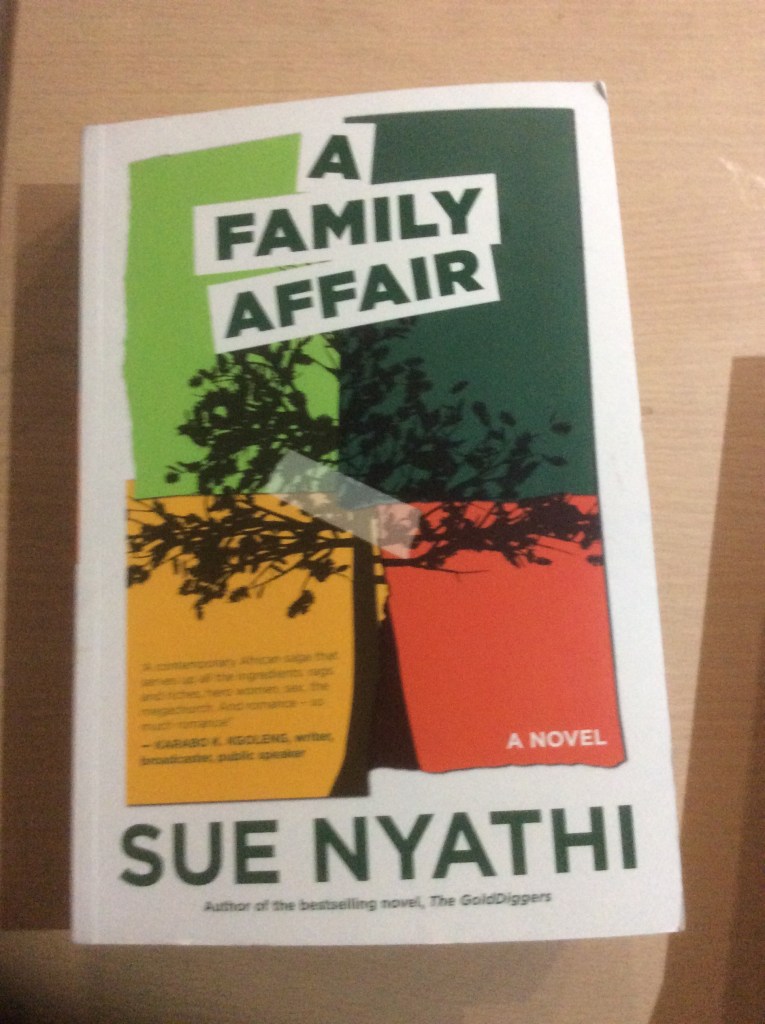
Book Review: A Family Affair By Sue Nyathi

By Nomathemba Pearl Dzinotyiwei

I’ve been saving Sue’s latest novel for a time when I have time to read uninterrupted. The wait was well worth it. There is always a temptation to retell the story when you enjoy it so much. This family saga set in Bulawayo has all the elements of a bestseller. It’s good to finally read a family saga in the tradition of Barbara Taylor Bradford in an African setting. Having lived in Harare and visited Bulawayo it brought back memories of growing in Zimbabwe before the economic collapse.

Sue’s characters and settings are completely relatable. We all have the black sheep sibling, the meddling aunt, the feckless uncle and delinquent teenage and religious fundamentalists to keep everyone in line. Sue manages to convey the pathos and despair of sexual and physical abuse, dire financial straits and the choices people make in desperation to survive and hold onto the people they love while weaving all of it into a great story.

She deftly portrays contemporary social issues such as the modern mega churches where people turn to faith in God to ease the pain and despair and find solutions for issues in their lives. Conservative views about women, their sexuality and relationship choices are also a key theme as the family grapples with the issue of unwed motherhood, separation and divorce in the lives of their three daughters. A man’s sexual sins are not judged with the same severity. Interestingly it’s the women who are more vocal and judgmental about what constitutes appropriate behaviour.

I enjoyed every page. I would recommend you read this and her other books Polygamy and Gold Diggers.

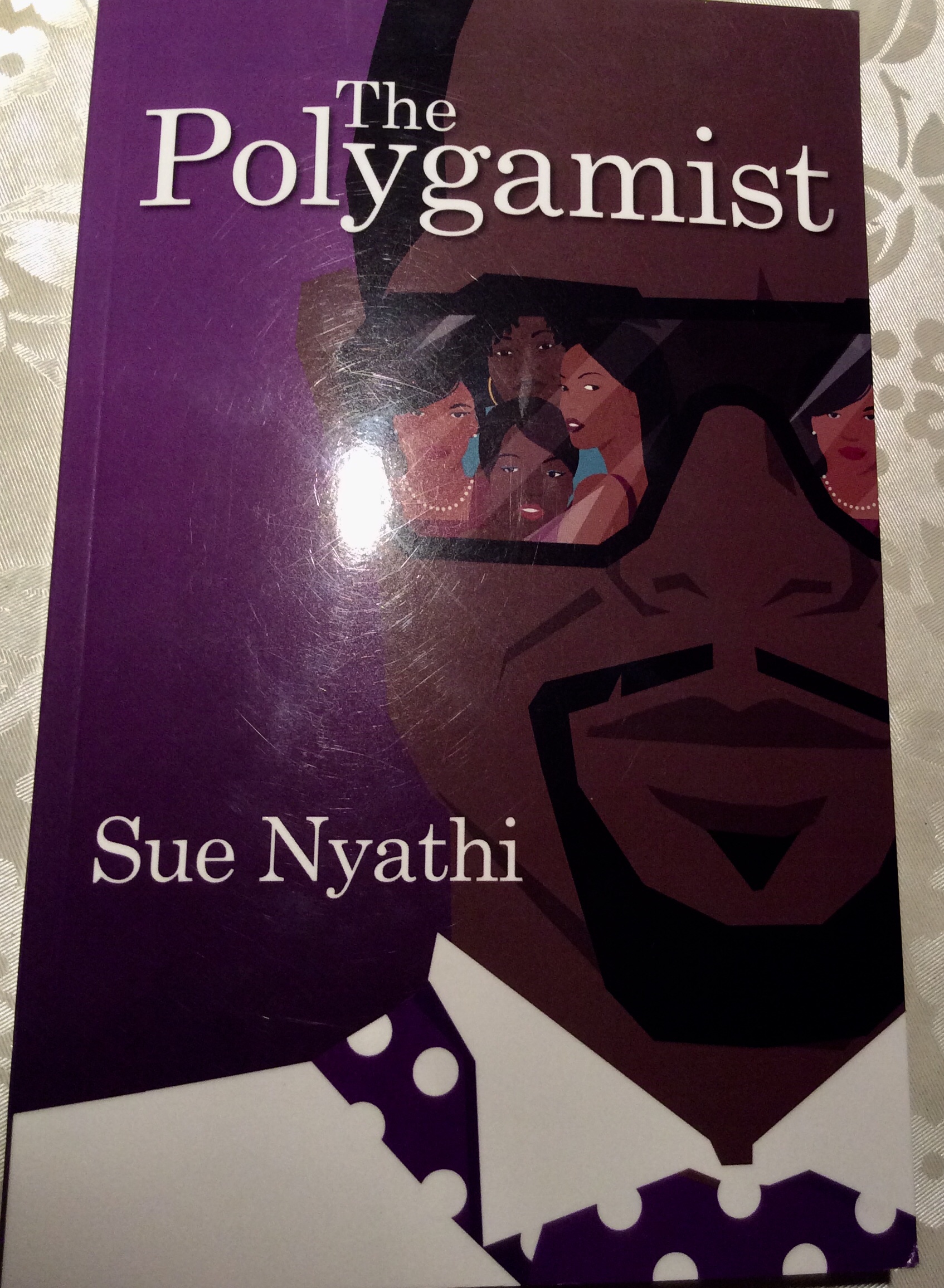
Book Review: The Polygamist by Sue Nyathi

By Nomathemba Pearl Dzinotyiwei

Heh leh Jonasi

Heh yeh Jonasi

Loving you has taught me

To never let go of a good thing

Loving you has taught me never to lie

I hate telling a lie…

This is the beginning of Stimela’s hit song I Hate Telling A Lie with Ray Phiri as lead vocalist and on lead guitar. This song played in my head when I started reading The Polygamist, Sue Nyathi’s debut novel, centered around a rich powerful man named Jonasi. However the protagonist is nothing like the serenading lover portrayed in the song. Jonasi in the novel, lies without compunction and never stops, lying even to himself.

The story begins with the account of Jonasi’s funeral with all the women in his life gathered to bid him farewell. Jonasi in death is far from the handsome virile lover, husband and father they experienced in life. Set in Harare, Zimbabwe, the city that never sleeps, there is a grim contrast in the lives of the have-nots living in the township and the fabulously well-heeled living in the Northern suburbs. Then as the economy tanks, even the wealthy feel the pinch as everyone tries to make a living, hustling in whatever way they know how.

The story is told from the point of view of each of the women as they experience the sorrows and fleeting joys of loving a selfish man who never really belongs to any of them. In his own words, he loves each of them for very different reasons. Each of the women’s stories is different. What motivated them to get into this relationship, to stay or in some cases to leave, albeit in different ways?

The children react in different ways as each child’s dream of the perfect family is shattered by the drama in the making, unmaking and remaking of the relationships between their father and each of their mothers. The extended family have their own view of the situation and treat it with delicacy to avoid upsetting Jonasi and losing out on the benefits

The novel is a gripping read. Sue has a wicked sense of humour and the ability to get you to laugh at what are dire situations in the book. There are such gems as ‘ my wife had more game than a soccer team’ and when the youngest of the women describes the older men she slept with saying: ‘ Their asses are so wrinkled sometimes I have to ask myself if it’s flesh I’m holding onto or a mohair throw.’ If you want to see more gems, follow her on @SueNyathi on Twitter.

The Polygamist takes a brutally honest look at marriages and love affairs. It is an unforgettable read that will make you rethink relationships and people’s motivations for entering and staying in them.

Why Is It So Hard To Find Love In This Present Generation? 

By Nomathemba Pearl Dzinotyiwei

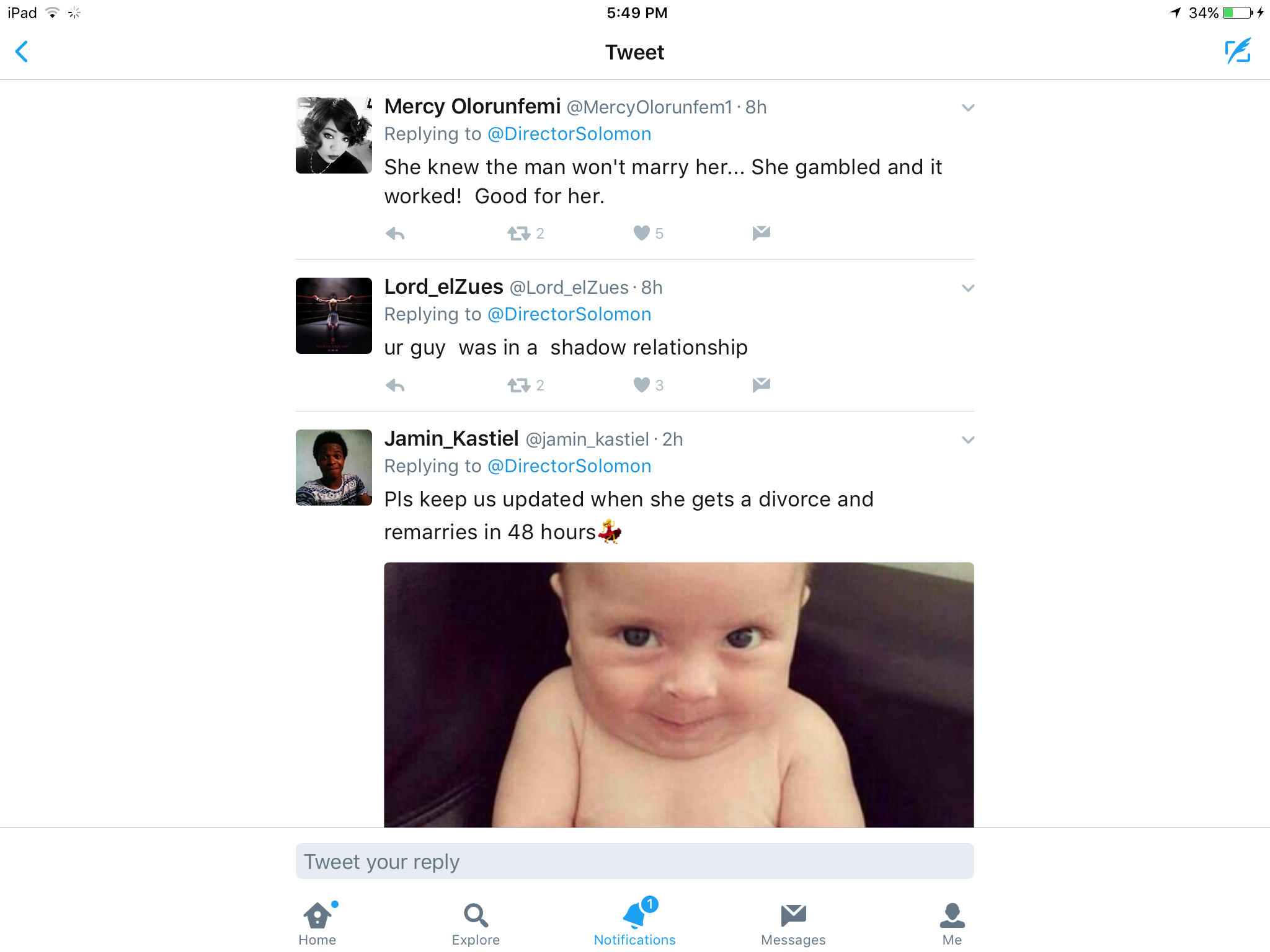
@BlueBlood_elia tweeted that line this week. We weighed in with our opinions,  some of them were profound while others were flippant.  I have many single women friends and I ask myself the same question sometimes. A single friend of mine recently posted on Facebook, how she just wanted a man “who would show up and stay”. I thought this was just a women’s issue until  @DirectorSolomon tweeted the following:
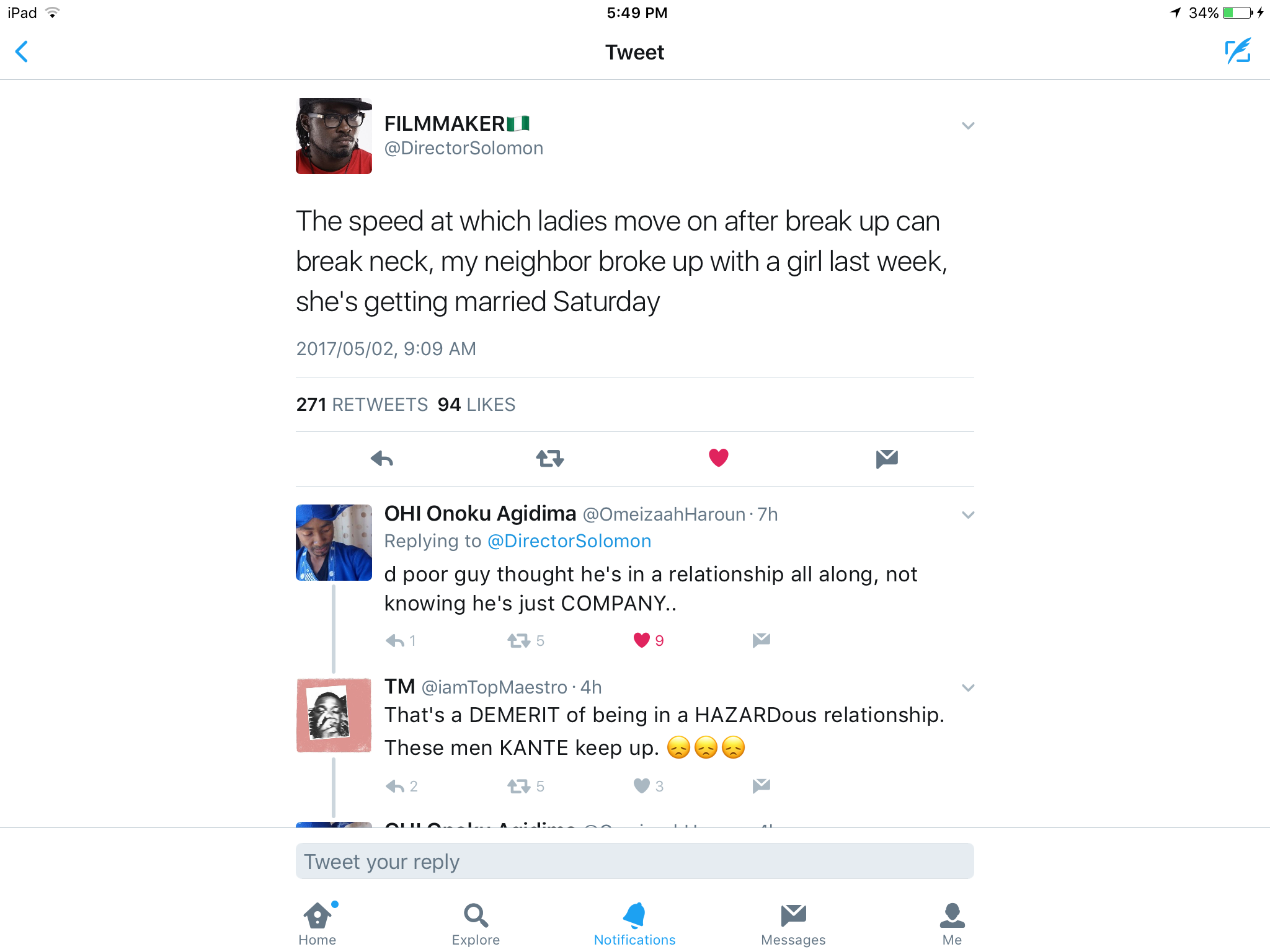

The responses ranged from hilarious to heart-breaking. My response to him was that this kind of stuff makes men skittish (nervously shy away from commitment) and for every girl that cheats on a guy there are dozens of single women who are searching, sometimes desperately, for a man to love them.

It is not easy to find love, not just in this one, but in every generation. My parents have been married for over 40 years and even they have close friends who never got married or went through multiple divorces. This is not a new problem, but it’s a sad state of affairs.

Dr. Caroline Leaf, a neuroscientist says we are “wired” for love, i.e. drama, stress and heartbreak etc. are not a natural state of affairs and they literally change our brain chemistry. Human beings are made in the image of God and God is love. Her approach is both biblical and scientific. Check out her YouTube videos, she’s phenomenal. By the way I’m no expert but I see many people in pain and have experienced some pain of my own in the past from bad choices. Are you in the swamp of despondency when it comes to love? if you are single and searching think about the following issues.

Who Are You and What Do You Attract?

This is the principle of  ‘As within, so without’. Your visible reality is a manifestation of your thoughts. Thoughts can become unconscious and habitual if you hold them long enough. Ok you don’t believe me. Think about it. Your constant thoughts create habits and patterns of decision making that have brought you to this point. Think back to the decisions you made in your last relationship, when it started, why it ended and how it ended. What were you thinking. How would things have been if you had different thoughts about the person. By the way, ending a relationship is not always a bad thing, particularly if it is not good for you.

Consider these questions:

The first question is who are you in the relationship equation? What are your needs? These needs are based on the story you tell yourself when you are on your own. Your story is so very much a part of you, you don’t realise it’s there and it determines your every move. This story is created by habitual thoughts from when we were children and trying to make sense of the world. This background story shows up with you in every situation and causes you to make automatic decisions that determine the outcome of a situation. Are you:

a) Mr. or Miss Right-Now. i.e. not looking for a serious relationship. The background story is most likely because you need a temporary escape from the pain of physical, emotional or sexual abuse and want someone to make you feel attractive and blot out the pain. In this case love and sex are the addictions of choice. This is a typical addict’s profile. Zoleka Mandela’s book When Hope Whispers is an excellent example, where she talks openly about her journey back from addiction. Psychologists have coined a term called limerence, which is the emotional high you get when you are in the early stages of a relationship. This had been investigated and identified as changes to brain chemistry that happen when you are in love. So you can be addicted to love and change partners frequently to feel like that over and over again.

b) Mr. or Miss I’ll-Make-Him or Her-Right-For-Me. This background story is , I’ll change the person into my ideal partner because I’m perfect or I’ve worked so hard to be this person and my partner needs to meet my unremitting standards. Deep down, the story is that I need to control every situation so that I do not get hurt or taken advantage of. Many abusers fit this profile because their abusive behaviour comes from a place of unacknowledged raw pain.

c) Mr or Miss I’ll-Make-Myself-Right-for Him or Her. The background story is, I’ll be whoever my partner wants me to be, because I feel so unworthy and unloveable. I’ll do whatever it takes to have them in my life because deep down I don’t believe that I deserve to be loved. Many victims of abuse fit this profile.

d) Mr or Mrs Married-But-Available? No need to state the obvious. However any of the first three background stories apply. Infidelity is really is not just about sex. Emotional infidelity is just as devastating for the spouses. However for infidelity you need both motive and opportunity. Temptation presents itself based on your background story. James 1.14 says each person is lured and tempted by his or her own desire. And if you have a motive from your background story, e,g. a) ‘I need sex as a temporary relief from my pain or stress ‘, you will find an opportunity to be unfaithful whether it’s your next door neighbour, a colleague or on Oxford Street.

The second question is who are you attracting when you look for Mr or Miss Right? Is it

a); b); c) or d)?
Relationship Arithmetic

Let’s do a little bit of relationship arithmetic, shall we? In my relatively short life, I’ve learnt the following from observation and experience. A mismatch of the four doesn’t work, that’s pretty obvious right? But, a perfect match of any of the four needs does not make for a fulfilling long-term relationship either. A coincidence of wants should make a perfect whole right? No? Why is that?

a+a = one night stand; booty call or ‘friends with benefits’. It’s ok if you both walk away unscathed. Sometimes one person ‘catches feelings’ eventually. Then there is awkwardness or drama if you still bump into each other. Or you have another another hook-up for all the wrong reasons, because you’re lonely, bored or drunk.

b+b = a prison without bars of nagging, manipulation, physical and or emotional abuse. There will be a prison break eventually. I guarantee it. You cannot change a person. A person needs to change by themselves and have really good personal motivation for doing so.

c+c = an illusion, a game of smoke and mirrors. This one ends in tears without fail. That sounds like the lady in @Director Solomon’s tweet. She probably made herself over for them and played the two guys, then picked the first guy who popped the question because she just wanted to get married. That is not genuine love, if she loved her fiancé, she would not have cheated on him until a week before the wedding. For the other guy, it’s like showing up for training every day, not knowing that there are trials in progress or there’s a scout watching.

d+d = a perfect storm. Refer to a+a, only add trauma for your children, depression, the drama of divorce and or suicide or murder to the mix. The truth is someone is always playing the other person  in an extra-marital affair, not just the spouse. Very few extra-marital affairs, studies say only 10% end up in marriage and many of those marriages end in divorce because of a relationship built on a shaky foundation of deceit.

So How Do We Find Love?

We know what doesn’t work. So what does work? Actually, that is the wrong question. The answer is that you don’t search for love. When you do, you will be disappointed because you will invariably look in the wrong places based on your mental programming, the background story. The truth is that there is no formula for finding love. Love finds you. You have to be the person that someone will fall in love with. The real you, the one that you are behind closed doors, when no one is looking.

These are just a few examples of what repels love. If you are bitter, twisted and resentful, that will eventually drive love away. If you are jealous, angry and controlling, you may hide it well but eventually the mask will slip, the person will see the real you and disappear from your life. If you are clingy and desperate because you need the other person to make you happy, then, what you fear most will happen, the person that you live will leave you, because the relationship is too much  work. Being happy is your own responsibility, not that of the other person. What are you willing and able to give? You cannot give what you don’t have. To attract the love, you want, change your background story. Martha Beck’s book Steering by Starlight has great advice. Dr Caroline Leaf and Iyanla Vanzant also have some great Youtube videos on that subject.

Attractive vs Loveable
There is a difference between an attractive person and a loveable person. An attractive person takes care of their external appearance, good skin, a good hairstyle, apparel that suits them, smells great and has the right toys, car, cellphone, handbag etc.  They know what to say, how to flirt, when to stop and when to make a move to get you interested in them. They make a great first impression even without saying a word. A woman’s  reaction to them is: “Damn! He fine! So hot I gotta fan myself” (sic). For guys, well, let me not speak for them.

A loveable person is genuinely interested in the other person. To do that, you have to forget your ego, how you look, sound etc. and focus on the other person. Get to know their heart. Spend more time talking. The club or a party is a great place to meet, but not the best setting for  you to truly get to know someone. Decide whether this is someone you want to spend time with. If they are not, it’s ok, move on, you can still be friendly, or not. It’s your choice.

A loveable person may not generally make a great first impression, but they make a lasting one because they make a connection from the heart. People can tell the difference between someone who is genuinely interested that they can trust with their feelings. The typical reaction to this type is, ” I really like this person, and it’s not just for their looks.”

Here are a couple of suggestions for letting love find you. Don’t limit yourself with pre-conceived ideas about who or what true love looks like, or what he or she does for a living or what car he or she drives. A person can get an education, a better job, buy a car, or buy designer shoes and acquire certain skills. A man’s life does not consist in the abundance of his possessions (Luke 12:15). However a person cannot buy a good heart. They cannot be honest, show up for you and show affection and concern consistently if it is not from the heart.

Make the Circle Bigger

Meet more people, more often, make that circle bigger. Spice up your life. Go places and do different things, things you enjoy and you will meet like-minded people. Don’t keep to the same boring weekend or work routine. We spend to much time with the same circle of people and never create opportunities to meet other people. Or when we do, we find reasons not to get to know them because they are not from our little universe.

Next time you meet someone, talk less, listen more, and listen with genuine interest. You may not make a love connection but you can make a lasting one, which who knows could grow into love, or lead you to the love of your life. Do this often enough and I believe love will find you. Finding love is easy. Keeping it is hard. I’ll save that for my next post. Until then, stay attractive and be loveable.