When Love Is Control — The Tragedy of a Man Who Destroys What He Can’t Be

By Nomathemba Pearl Dzinotyiwei

AI – Generated Image

He doesn’t hit her—not with his fists. His violence is quieter, more insidious.

He accuses. He interrogates. He isolates.

She no longer recognizes herself.

She used to be full of laughter, of dreams. Now, she tiptoes through each day, fearful of breathing the wrong way, posting the wrong thing, smiling too long at a waiter. Her husband watches everything—her journal, her social media, her phone. In his mind, she’s always on the verge of betrayal.

In reality, she is the betrayed.

He weaponizes sex—refuses her touch for weeks, then takes her body without regard for consent, claiming her like property, not a partner. It is rape, even if he wears a ring. And still, he insists he loves her.

But love doesn’t stalk.

Love doesn’t violate.

Love doesn’t destroy.

The Hidden Truth Behind His Cruelty

He has a secret: he is bisexual.

He cruises nightclubs under cover of night. Finds men who give him something he cannot admit he needs. And yet, he clings to his wife with desperate obsession—not because he loves her wholly, but because she represents the mask he refuses to remove.

To the world, she makes him look “normal.” Safe. Straight. In control.

In private, he punishes her for everything he cannot face within himself.

He is a man torn in two—ashamed of who he is, angry at what he feels, and terrified of losing the one person who validates his performance of masculinity. So he clutches tighter. Lies louder. Hurts deeper.

And she bleeds emotionally, spiritually, and physically under the weight of his fear.

Does He Deserve to Lose Her?

Yes.

Not because of his sexuality.

Not because he’s struggling with identity.

But because he refuses to do the work to heal himself and stop hurting her.

Being bisexual is not a crime. But being abusive is.

This isn’t about orientation—it’s about accountability. It’s about a man who uses manipulation, gaslighting, surveillance, emotional and sexual abuse to keep a woman in a prison of fear and dependency, while he secretly seeks the freedom he denies her.

He doesn’t want to lose her—not because he treasures her joy, but because he can’t control what he doesn’t possess.

But she is not his to possess.

The Tragic Irony

What he fears most—losing her to another man—has already begun. Not because she’s cheating, but because his neglect, cruelty, and betrayal have killed the intimacy she once gave freely.

If she finds tenderness elsewhere, it won’t be out of revenge—it will be an act of survival.

And that is the heartbreak of it all: he could have had her. Her laughter. Her loyalty. Her love. If only he had chosen honesty, healing, and respect over dominance and denial.

The Real Question Isn’t ‘Does He Deserve Her?’

It’s: ‘Does she deserve to keep suffering just to protect his secrets?’

The answer is no.

She deserves freedom. She deserves peace. She deserves love that doesn’t make her feel small, paranoid, or unsafe.

If another man sees her—truly sees her—and offers her the gentleness she’s been starved of, then perhaps that is not betrayal.

Perhaps that is justice.

Final Thought:

Some people want to be loved without having to become lovable.

But love is not owed.

It is earned—through truth, care, and the courage to stop hurting those we claim to love.

When a man would rather destroy his wife than face his reflection, he’s already lost her.

And maybe, in losing her, he will finally be forced to find himself.

But by then, she may be long gone—and that, too, is something he deserves.

Want to explore further? Read Forbidden Games, the latest novel by Pearl Deyi, now available on Amazon.

https://www.amazon.com/Forbidden-Games-Pearl-Deyi-ebook/dp/B0FFQNMKNW

When the Game Ends — The Player, the Married Woman, and the Pull of the Unavailable

By Nomathemba Pearl Dzinotyiwei

AI – Generated Image

He was the kind of man mothers warned their daughters about.

Wealthy. Charming. Impeccably dressed and emotionally unavailable. His life was a curated collection of conquests—women drawn in by his confidence, seduced by the security he offered, and forgotten before dawn. Relationships were distractions. Commitment was a trap. Love? A game he played to win, not to keep.

Then he met her.

She wasn’t flirting. She wasn’t free.

In fact, she was everything he usually avoided: emotionally complicated and married.

But she was also breathtaking in a quiet, haunting way—elegant in her restraint, compelling in her sorrow. She didn’t chase attention. She didn’t need his money. And when she smiled, it never reached her eyes.

He noticed her before she noticed him. And by the time their conversations grew from polite exchanges to lingering glances and stolen confidences, he was already too deep.

He’d played many games, but this time—he was losing.

The Irresistible Allure of the Unavailable Woman

For the seasoned player, attraction often hinges on novelty, control, and the thrill of the chase. But an unavailable woman, especially one in a marriage, offers a different kind of high. It’s not about the conquest anymore—it’s about the connection. It’s about why he wants her, not just how he’ll get her.

So what changes when she is different?

1. She Doesn’t Need Him—And That’s Magnetic

Most of his flings began with admiration. But she didn’t seem impressed. Not by his car, his watch, or his name. Her emotional world was rich—complex with pain, tethered by duty. She belonged to someone else, but she wasn’t fulfilled. She was surviving, not living.

Her indifference humbled him.

For the first time, a woman wasn’t a mirror to his ego—but a reminder of his emptiness.

2. She’s Real. Raw. Wounded.

Her honesty pierced him. She spoke of her husband’s anger, the loneliness in her bed, the way she’d withered into someone she barely recognized. Yet, she stayed. Out of loyalty. Out of fear. Out of hope that he might change.

She wasn’t pretending. She wasn’t perfect. She was human.

And her pain awakened something inside him that no pleasure ever had: compassion.

3. He Sees the Man He Could Be, Not Just the One He’s Been

Players build walls. It’s how they protect themselves from vulnerability. But with her, the walls cracked. He began to reflect—on his choices, on his reputation, on the hollowness behind the luxury. For the first time, he wanted to offer something more than pleasure.

He wanted to be safe. Reliable. Enough.

Not because she asked. But because she deserved it.

4. The Emotional Stakes Are Higher

When a woman is unavailable, especially emotionally, every moment counts. Every glance becomes sacred. Every brush of the hand carries meaning. It’s intimacy on the edge of a cliff—one wrong move, and it all disappears.

This intensity draws him in. Not to play—but to feel. Deeply.

When the Player Hangs Up His Boots

He doesn’t chase her for sport. He waits. He listens. He learns. For the first time, he understands that love is not about possession—it’s about presence.

Whether she ever leaves her marriage or not becomes secondary. What matters more is who he becomes in the process: a man capable of real love. A man transformed by the courage of a woman who, despite her own brokenness, taught him what it means to be whole.

Final Thoughts

Not every love story ends in union. But some encounters change us forever.

For the man who thought he’d seen it all, it took meeting a woman he could never truly have to realize what he truly wanted: something real. Something deep. Something worth giving up the game for.

Not because she belonged to someone else.

But because, for the first time, he wanted to belong to himself.

Sometimes the greatest lesson love teaches us is not how to win someone over—but how to be worthy of the love we’ve never earned before.

To explore this story further, read Forbidden Games, the latest novel by Pearl Deyi. Now available on Amazon.

https://www.amazon.com/Forbidden-Games-Pearl-Deyi-ebook/dp/B0FFQNMKNW

When Desire Meets Dissonance: A Woman’s Journey Through Emotional Clarity

By Nomathemba Pearl Dzinotyiwei

AI – Generated Image

She stands at the edge of a precipice, her heart caught between two men: one she vowed to love forever, and one who—without touching her—has awakened a part of her she thought had died.

Her husband is not cruel in the traditional sense. He does not strike her. He provides, yes—but not in the ways that matter most. His affection is rationed. His words, sharp when spoken at all. Her presence in the home feels more like a convenience than a connection. He controls through silence, withholds love as punishment, and has long stopped seeing her as someone to cherish.

Then, unexpectedly, she meets someone else.

He listens. He sees her. With him, she laughs freely again. Her body leans toward his without permission from her mind. It’s not an affair—not yet—but the emotional charge is unmistakable. She feels beautiful, wanted… alive.

And yet, she is tormented by guilt.

How can she be drawn to another man while still married? What does that say about her? Is she betraying her vows, or simply responding to a neglected truth within herself?

This is where the Theory of Emotions can be transformative.

Understanding Emotion: Not the Enemy, But a Messenger

The Theory of Emotions, especially as understood through psychology and cognitive science, posits that emotions are not random disruptions but informative signals. They reflect our unmet needs, internal conflicts, and the alignment—or misalignment—between our environment and our values.

In her case, the emotional pull she feels toward this other man may not just be about lust or escape. It could be a signal—an internal alarm—ringing out about the emotional starvation she has endured for too long.

Emotional Dissonance and Internal Conflict

The woman’s attraction is not inherently immoral; it’s a symptom of a deeper dissonance. She is emotionally disconnected in her marriage, yet bound by duty, loyalty, and perhaps religious or cultural expectations. This internal clash between what she feels and what she “should” feel creates psychological tension known as cognitive dissonance.

The Theory of Emotions invites her to explore this dissonance not with judgment, but with curiosity:

What need is this emotion pointing to? What truth am I avoiding by denying this attraction? What am I afraid will happen if I follow or suppress this feeling?

The Body Knows Before the Mind Accepts

Neuroscience supports that emotional processing often happens faster than cognitive reasoning. This means the butterflies she feels when she sees this man, the way her body warms at his voice—these reactions may be happening before she’s fully conscious of why. Her body is responding to emotional safety, resonance, and vitality—things she no longer associates with her husband.

Reading about emotional theory helps her recognize that feelings are not betrayals—they are data. They don’t dictate what she must do. But they beg to be understood.

What She Might Learn

She is not broken. Feeling attraction outside of a failing relationship is not unusual; it doesn’t make her immoral, it makes her human. Her needs are valid. Emotional neglect is a form of harm. Craving affection, attention, and connection is not weakness—it’s survival. Emotions need space. Suppressing feelings doesn’t make them disappear. Understanding them can lead to healthier choices—whether that’s healing the marriage, seeking therapy, or choosing a new path. Choice begins with clarity. Emotional literacy gives her the language to understand her experience and make informed, compassionate decisions—not reactive ones.

The Next Step

This woman may not be ready to leave her husband. She may never act on her attraction to the other man. But reading the Theory of Emotions gives her a new lens through which to view her inner world. It offers her the possibility of forgiving herself, of moving beyond guilt, and of reclaiming her right to joy and emotional truth.

Because in the end, emotions are not meant to control us—they’re meant to guide us.

And maybe, just maybe, this journey inward is the most faithful act she can make: not to a man, but to herself.

Recommended Reads:

“Emotional Agility” by Susan David “The Body Keeps the Score” by Bessel van der Kolk “Women Who Run with the Wolves” by Clarissa Pinkola Estés

If you’ve ever felt emotionally torn or trapped in your own life, know this: you are not alone. Your emotions are not a problem to fix—they are a voice longing to be heard.

Want to know what happens next? Read the novel Forbidden Games, available on Amazon.

https://a.co/d/cfaDeKZ

Forbidden Games

From the moment billionaire Alexander Martin spotted her across the quiet bookstore, he had to have her. Professional, calm, composed in her tailored suit and button-down blouse, Lindelwe Rantao was the last woman he would have pursued, married, loyal, off-limits. But he hadn’t built an empire by obeying limits.

What began as a game of pursuit, a challenge to shake her world, quickly unraveled into something far more dangerous. Lindi wasn’t just trapped in a loveless marriage; she was surviving a life that threatened to swallow her whole. And Alex’s desire to possess her shifted into a relentless need to protect her.

But love comes at a price. For her freedom. For his soul. And for secrets that could destroy them both.

Because falling for a married woman is reckless.
Falling for one with a jealous, abusive husband?
That’s war.

Read a sample and get your copy now on Amazon here.

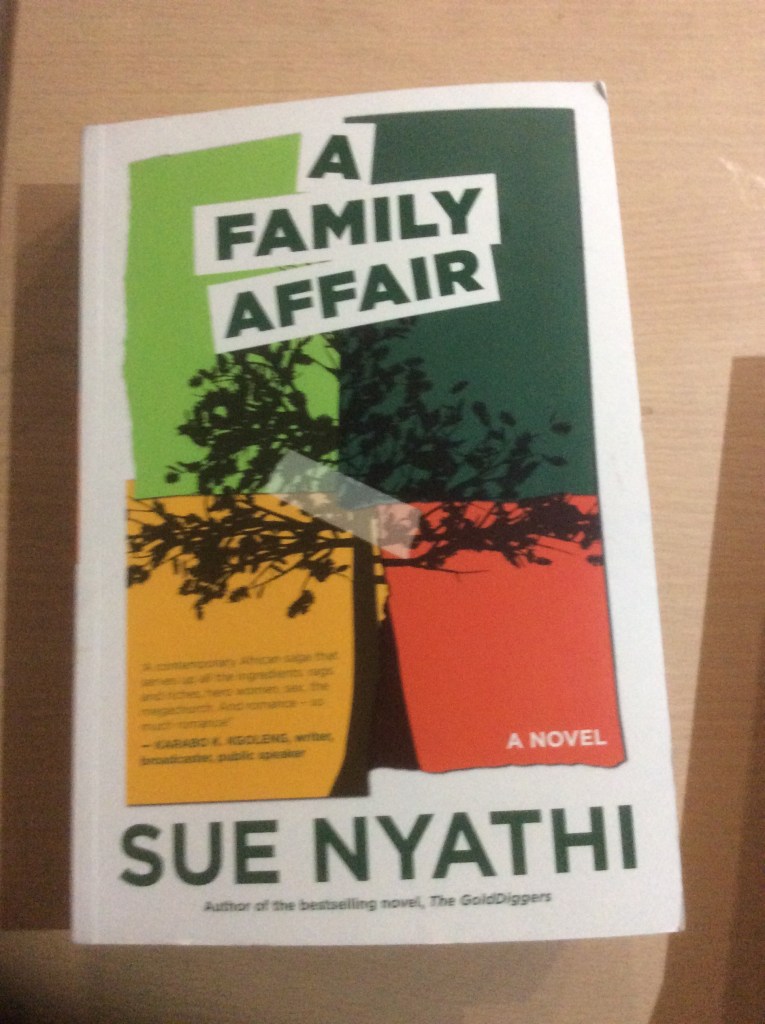
Book Review: A Family Affair By Sue Nyathi

By Nomathemba Pearl Dzinotyiwei

I’ve been saving Sue’s latest novel for a time when I have time to read uninterrupted. The wait was well worth it. There is always a temptation to retell the story when you enjoy it so much. This family saga set in Bulawayo has all the elements of a bestseller. It’s good to finally read a family saga in the tradition of Barbara Taylor Bradford in an African setting. Having lived in Harare and visited Bulawayo it brought back memories of growing in Zimbabwe before the economic collapse.

Sue’s characters and settings are completely relatable. We all have the black sheep sibling, the meddling aunt, the feckless uncle and delinquent teenage and religious fundamentalists to keep everyone in line. Sue manages to convey the pathos and despair of sexual and physical abuse, dire financial straits and the choices people make in desperation to survive and hold onto the people they love while weaving all of it into a great story.

She deftly portrays contemporary social issues such as the modern mega churches where people turn to faith in God to ease the pain and despair and find solutions for issues in their lives. Conservative views about women, their sexuality and relationship choices are also a key theme as the family grapples with the issue of unwed motherhood, separation and divorce in the lives of their three daughters. A man’s sexual sins are not judged with the same severity. Interestingly it’s the women who are more vocal and judgmental about what constitutes appropriate behaviour.

I enjoyed every page. I would recommend you read this and her other books Polygamy and Gold Diggers.

Sis! You Had One Job.

Picture courtesy of Pexels.com

‘Tell me about yourself’, The stranger says
Looking deep into my eyes
Potential lover?
Looks like husband material too,
At 2 metres plus.
‘What do you want to know?
The truth is the wrong answer will end the conversation
Just like that.

‘Tell me something. Anything! I want to get to know you.’
What he really wants to know is…
Am I just a pretty face?
Am I smarter than him?
Am I fun to be with?
What’s my body count?
If he turns on the charm, will I have sex with him?
On the first date?

‘Think carefully.
Watch your words,
Don’t give away too much,
But keep it interesting.’
That’s my social self talking.
Relentless cynic, inner critic
The ego that must always shine.

‘The way to a man’s heart is through his stomach. Say:’
‘I love to cook. What’s your favourite food?’
‘I exercise everyday. Keeping fit & healthy is important to me.’
Well it’s true. No more lockdown love handles.
My jeans fit perfectly, no muffin top.
If he’s a gym freak that should do it.
A quick Google search for Lewis Hamilton’s stats
Or the World Golf Rankings. He looks like the classy expensive type. I could just say. ‘I enjoy watching action movies.’
Netflix and chill is my vibe.
What man can resist that?

Instead, my essential self says
‘I am a spark of the Divine
My eyes shine with the light of a thousand moons
In my DNA hides the wisdom of the ages
I am creatively inspired
My love is infinite
Dive into the deep waters of my soul
If you dare.
An oyster carrying a rare and precious pearl
Is what you will find there.’

‘Uh! Oh. That’s really great.’ He checks his phone. ‘It’s been great chatting. I’m really sorry….’ I hear the ‘but’, seconds before it comes. ‘I’ll call you.’ ‘Ok. cool.’ I sip my coffee and wave. Nonchalantly. Goodbye husband material.

My social self *sighs and facepalms* ‘Really!’ She’s furious. It’s our first date in months. ‘You had to go there. You had one job.’ ‘All you had to do was make him like you.’

© Nomathemba Pearl Dzinotyiwei

Book Review: Nomaswazi by Busisekile Khumalo

The story begins with a recollection of a wedding. You would think they live the happily ever after. Instead find yourself on a high speed train ride that is the relationship between Nomaswazi and the man that left her at the altar. An innocent girl, she is crushed by the rejection and flees to Johannesburg.

One day she is minding her own business when he saunters casually back into her life and decides that he has no intention of leaving. She loves him, yet she hates him. He loves her, yet he feels undeserving of her after ditching her at the altar and trying to keep a lid on the demons of his past. He pulls out all the stops in his effort to get her back. The story will have you hooked, wondering what other curveballs the writer will throw and she has plenty. Busisekile’s imagination is unparalleled and her research is on point making the story so real.

With recollections of war, weapons smuggling, intrigue, hot erotic encounters as well as a fatal sibling rivalry, this story set mainly in rural eSwatini will keep you up late as you try to find out whether Nomaswazi and her man eventually make it down the aisle and get their happily ever after.

Book Review: The Y in Your Man is Silent Book 1; Book 2 by Yvonne Maphosa

By Nomathemba Pearl Dzinotyiwei

“He’s not your man, he’s OUR man.” That is the essence of the story in these two books. Whether she’s called the mistress, the side-chick or side dish, the other woman has many names in every language. This story is told from her point of view. An innocent, nerdy engineering student named Lastborn Fierce Nkomo from Zimbabwe falls for the charm of a handsome, dashing Ghanaian professor named Elikplim who’s a few years older than her. He’s a caring, sensitive man, a worthy contender in the Boyfriend Olympics, that is until he marries someone else. Despite that, the epic cross country love affair set in Cape Town and Johannesburg continues with Akon’s music as their soundtrack.

Just when you think you know what happens next, the author literally pulls the rug from under the feet of your mind and sends you tumbling as the couple lurch from one disaster to another, major and minor. Unlike most romantic dramas, in fact drama doesn’t even begin to describe it, the author unapologetically refuses to let them to catch a break. Rolling in money from his engineering practice with his best friend and partner in crime at every level called Lumka, Elik is the ultimate blesser. A generous man, not only with his money, he’s also extremely liberal with his umm… candy cane. There was so much cheating going on, even the players were getting played, I felt like I needed therapy after Book 1 and halfway through Book 2. I watched Star Wars then finished the story.

The story gives the other woman’s perspective of the extra-marital affair. Komla, the wife, favoured by the family, is not entirely innocent and makes a few fatal mistakes in her desperate quest to save her marriage. Betrayed repeatedly by Elik, physically and emotionally abused in turn by his wife, her sister and his other relatives; Fierce, named after a freedom fighter and true to her name, fights her wiser, more sensible self, her family, her friends and Elik’s wife and family to hold onto her love for him, repeatedly forgiving him and taking him back. She experiences a dramatic and cruel rejection by her own family, just as she is preparing to make things right by finally becoming an honest woman. The journey to redemption is equally arduous as the couple try to work out why and how their individual messes come together to create the hot mess that is their relationship.

With progressively steamy scenes as the story goes on, with break-up sex, make-up sex, revenge sex, theatrical break-ups and equally sudden make-ups, Fierce and her ‘Ghana Man’ as Fierce’s Aunt calls him, will take you on an emotional rollercoaster ride. The ending is no less dramatic. A third book is definitely in order otherwise the suspense will kill anyone who dares to read both books.

As a self-published work, there is a lot of artistic license, so there is phrasing that would cause the grammar and syntax Nazis to take umbrage. Otherwise it’s a gripping and unforgettable read which needs its own Netflix series. I hope the universe is listening.

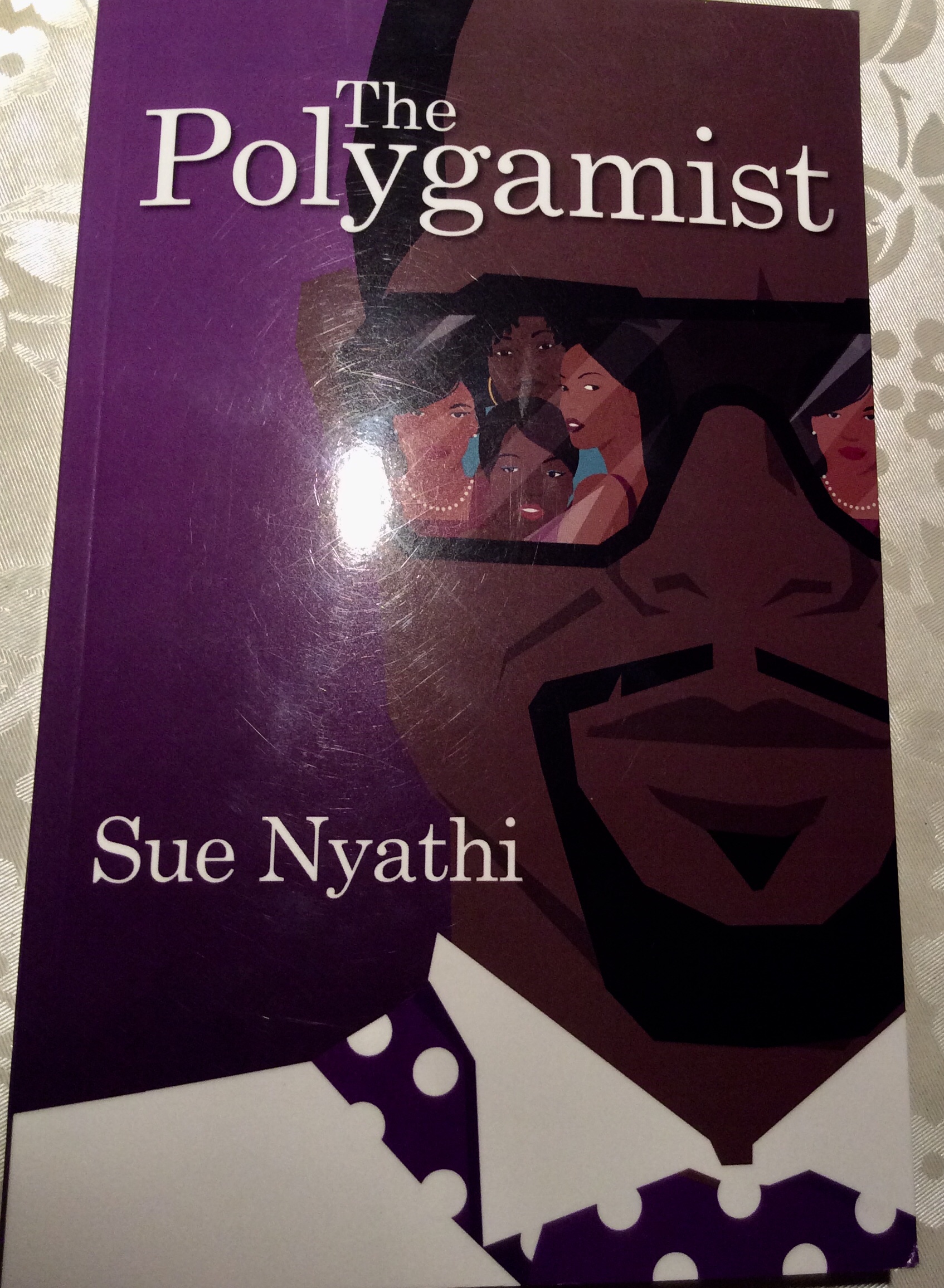
Book Review: The Polygamist by Sue Nyathi

By Nomathemba Pearl Dzinotyiwei

Heh leh Jonasi

Heh yeh Jonasi

Loving you has taught me

To never let go of a good thing

Loving you has taught me never to lie

I hate telling a lie…

This is the beginning of Stimela’s hit song I Hate Telling A Lie with Ray Phiri as lead vocalist and on lead guitar. This song played in my head when I started reading The Polygamist, Sue Nyathi’s debut novel, centered around a rich powerful man named Jonasi. However the protagonist is nothing like the serenading lover portrayed in the song. Jonasi in the novel, lies without compunction and never stops, lying even to himself.

The story begins with the account of Jonasi’s funeral with all the women in his life gathered to bid him farewell. Jonasi in death is far from the handsome virile lover, husband and father they experienced in life. Set in Harare, Zimbabwe, the city that never sleeps, there is a grim contrast in the lives of the have-nots living in the township and the fabulously well-heeled living in the Northern suburbs. Then as the economy tanks, even the wealthy feel the pinch as everyone tries to make a living, hustling in whatever way they know how.

The story is told from the point of view of each of the women as they experience the sorrows and fleeting joys of loving a selfish man who never really belongs to any of them. In his own words, he loves each of them for very different reasons. Each of the women’s stories is different. What motivated them to get into this relationship, to stay or in some cases to leave, albeit in different ways?

The children react in different ways as each child’s dream of the perfect family is shattered by the drama in the making, unmaking and remaking of the relationships between their father and each of their mothers. The extended family have their own view of the situation and treat it with delicacy to avoid upsetting Jonasi and losing out on the benefits

The novel is a gripping read. Sue has a wicked sense of humour and the ability to get you to laugh at what are dire situations in the book. There are such gems as ‘ my wife had more game than a soccer team’ and when the youngest of the women describes the older men she slept with saying: ‘ Their asses are so wrinkled sometimes I have to ask myself if it’s flesh I’m holding onto or a mohair throw.’ If you want to see more gems, follow her on @SueNyathi on Twitter.

The Polygamist takes a brutally honest look at marriages and love affairs. It is an unforgettable read that will make you rethink relationships and people’s motivations for entering and staying in them.

Book Review: Ghana Must Go by Taiye Selasi

By Nomathemba Pearl Dzinotyiwei

The totally unexpected beginning of this story had me thinking ‘Who starts a novel like that?’ The closest to come to that would be how Margaret Atwood, in an ad for an online masterclass, when she says she would have rewritten the beginning of Little Red Riding Hood to say: ‘It was dark inside the wolf.’ Taiye Selasi’s technique kept me riveted for the next 318 pages.

The story draws you in to the chronicles of three generations of a family. Starting with an interracial marriage between Maud a Scotswoman and John Nwaneri, in Nigeria, their daughter Somayina, who dies young leaving her husband Olukayode Savage and their young daughter Folasade. After the tragic death of her father in an outbreak of violence in the Muslim North, Folasade emigrates to the United States of America, where she meets Kweku, a Ghanaian medical student. They get married and raise a family: Olu, who follows in his father’s’ footsteps, the twins: Taiwo, a girl and Kehinde a boy, who share that sacred bond and then Folasade, nicknamed Sadie, the last-born daughter who nearly didn’t make it.

The family’s American Dream, however, morphs into a nightmare when he fails to save the life of a millionaire’s mother, who happens to be a benefactor of the hospital. To appease the family, the hospital unjustly fires the good doctor, one of their finest surgeons and thus begins the family’s downward spiral into tragedy.

The novel, much like a movie, pans, zooms in and fades out, with flashbacks into the family’s lives as they deal with the disappearance and attempted reappearance of the husband and father from their lives after he loses his job. Folasade calls on her native Nigerian hustling instincts to pick up the pieces and keep going. Each child is affected differently and finds their own way of dealing with the separation of their parents and the impact of the decisions their mother had to make to support them.

The family reunites in Ghana many years later to bury Kweku, now a successful surgeon in a local hospital. He has remarried and built his dream home with an achingly beautiful garden, planted and tended by a geriatric yogi called Mr Lamptey, the eccentric carpenter who built the house. They all react differently on arrival in this country. It’s home, yet not home, this strange land that their father came from.

In the run-up to the funeral, the children get to know their father’s family, come to understand their father better and what drove him. They each find their own connection to this place, to begin to understand and resolve some of their personal issues, including the retelling of painful and deeply-buried secrets. In this land they begin to understand their gifts and find their place in the world. This unfolding of events gives credence to the belief that only when you know where you come from, will you know where you’re going. It partly explains Africans’ obsession with ‘going home’, especially for immigrants and their children born on foreign soil.

The most poignant part of the story is how Folasade, having moved back to Africa, mourns her estranged husband and makes peace with his new wife Ama. In one of those stories of female solidarity that is so often not told, the two women, understanding they have both lost him, mourn him together and support each other.

Ghana Must Go, makes reference to the xenophobic sentiment in Nigeria which led to the mass expulsion of Ghanaians living in the country. It is a story of personal struggle and sacrifice against the backdrop of war, poverty and making a life in a foreign land. It reveals the beauty and cruelty that comes with being part of a family as well as a personal search for belonging and a spiritual place of rest. It is an altogether unforgettable read.